
Reviewed · WWI BATTLEFIELD TOURS
PRIVATE Australian Western Front Battlefields 3-Day Tour Ypres to Amiens
The most moving part of this three-day journey is its personal link to the battlefields. Guide Soren Hawkes has family connections to the sites, and he can tailor parts of the route if you are researching an Australian ancestor. You move from Ypres to Amiens through the places where Australian troops fought, died, and helped shape the final year of the war.
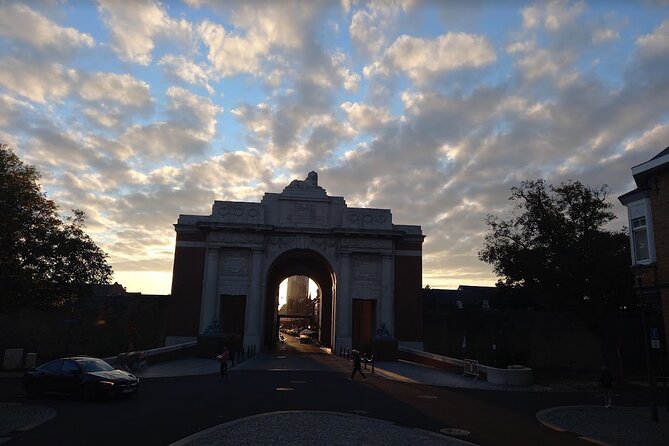
I like the private format, because you can spend more time at a cemetery or memorial that matters to your family. I also like the careful mix of battle sites, museums, and modern towns, from the Menin Gate ceremony to lunch in Arras and a drop-off at your Amiens hotel or station.
The main consideration is pace. Three full days cover a great deal of ground, and the tour includes many short stops. Meals and accommodation are not included, so you need to plan those costs and choose lodging that fits the route.
Key points to know before booking
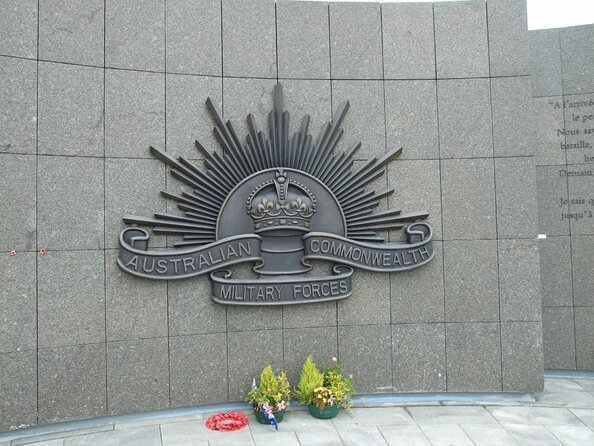
- Soren Hawkes brings a personal connection: His family links to the battle sites add a human angle, and family research can shape the route where possible.
- The route crosses the Western Front: Begin in Ypres and finish in Amiens, or travel in the opposite direction.
- Australian stories lead the way: Messines, Fromelles, Bullecourt, Pozieres, Villers-Bretonneux, and Le Hamel all receive focused attention.
- The Menin Gate ceremony is included: You attend the 8 p.m. Last Post at Ypres, a long-running daily act of remembrance.
- The tour is genuinely private: Only your own group takes part, with transport and guiding arranged around your interests.
- Budget for extras: Meals, accommodation, and any personal spending are separate from the tour price of $1,965.48 per person.
Why this route matters to Australian visitors
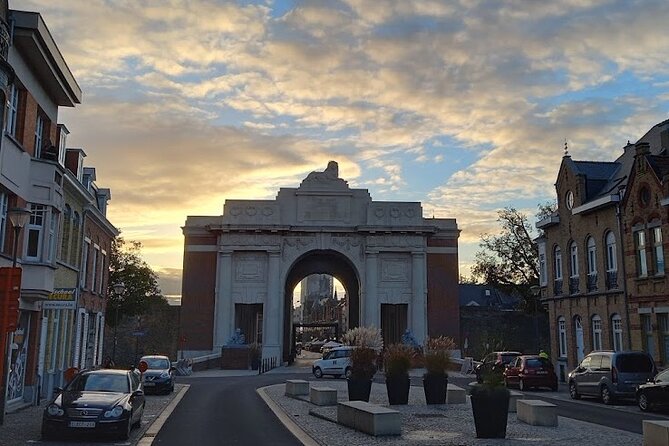
This is not a quick stop at one memorial. It is a connected story across Belgium and northern France, following Australian troops from the Ypres Salient through the battles around Arras and the Somme.
You see how the ground changed from one sector to another. At Messines, the focus is the 1917 attack and the huge mines used beneath the German lines. Around Passchendaele, the story turns to the difficult Australian advance through a battlefield that became a byword for mud and loss. Later, near Amiens, you reach the more mobile fighting of 1918 and the operations linked with Sir John Monash.
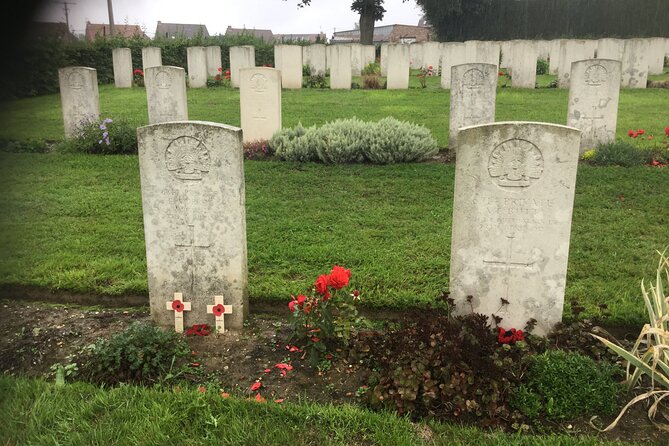
I appreciate that the tour does not treat cemeteries as interchangeable photo stops. Each one has a particular story. Tyne Cot shows the scale of Commonwealth losses. Fromelles brings you face to face with the discovery and identification of Australian soldiers found in a mass grave. At Adelaide Cemetery, you hear about the unknown Australian soldier taken from the site in 1993.
The route also gives you time in places that help you rest and think. Ypres has its Cloth Hall, cathedral, and Flemish food. Arras provides a proper lunch break in its handsome central squares. Amiens gives you a chance to explore independently after the guided days end.
Other Western Front sites within reach of Ypres:
- From IEPER Private 4-hour Tour of the Ypres Battlefield
★ 5.0 · 154 reviews - In Flanders Fields and Passchendaele Half Day Morning Tour
★ 5.0 · 117 reviews - Ypres: An exploration of the deadly salient battlefields
★ 5.0 · 76 reviews
Day one: Messines, mines, Passchendaele, and Ypres
The first day begins at 9 a.m. and covers the Ypres Salient, from Messines toward Passchendaele. This is a full day, and the order of stops may be adapted to your interests and plans.
At Messines Ridge, you follow the Australian advance during the 1917 fighting. The visit lasts about two hours, giving Soren time to explain the wider action rather than reducing it to a single monument. If you have an ancestor connected with the battle, this is one of the places where family research can guide the discussion.
The Christmas Truce Memorial at Plugstreet Wood is a shorter stop, about 30 minutes. Here the subject is the famous 1914 Christmas Truce. It offers a change of tone from the later battles, reminding you that the war began with moments of contact and humanity between opposing soldiers.
At Spanbroekmolen Mine Crater, the story centers on the massive explosion of June 7, 1917. You then visit Hill 60, where the First Australian Tunnelling Company completed another major mining operation. Hill 60 is only scheduled for about 10 minutes, so do not expect a long walk or extended independent visit. Its value comes from the explanation of what happened beneath the ground.
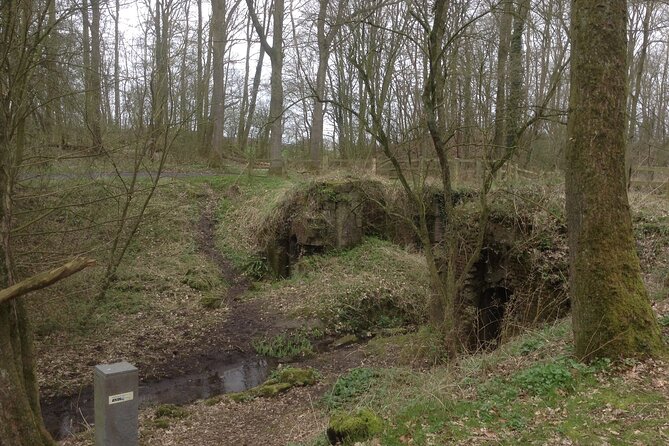
Polygon Wood adds a more physical stop. You walk through the woods, see concrete bunkers, visit the cemetery, and view the Australian 5th Division monument. This is a useful point in the day for understanding how the battle was fought across wooded ground rather than only from maps and memorial walls.
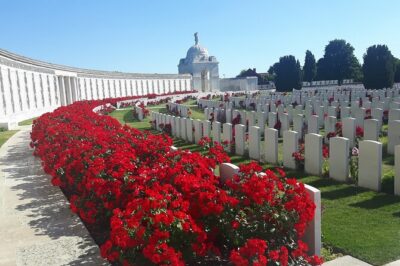
The drive continues along the line of the Australian advance. At Tyne Cot Cemetery, you encounter the scale of the Commonwealth War Graves system. Around 12,000 soldiers are buried there, and only about 3,000 have identified names. Two Australian Victoria Cross recipients are also buried at the cemetery.
The listed schedule gives Tyne Cot only a minute, which is clearly not enough for a full visit. Treat that time as a guide in a flexible private day rather than a promise that you will be rushed through the cemetery. If Tyne Cot is important to you, raise it when planning the day.
Essex Farm Cemetery brings a different kind of story. It was a hospital site, and it is associated with Lieutenant Colonel John McCrae and the poem In Flanders Fields. The stop lasts about 20 minutes, enough for a focused explanation and a quiet look around.
You then have an hour at the In Flanders Fields Museum in Ypres. This is the main indoor visit of the day, and it helps organize the many battlefield stories into a wider picture. The museum is particularly useful after seeing the sites in person because names, maps, and objects can put the morning into context.
In Ypres, you see the Cloth Hall and cathedral and have some free time in town. Flemish stew is suggested as a local dish, but lunch is not included, so allow for your own meal budget.
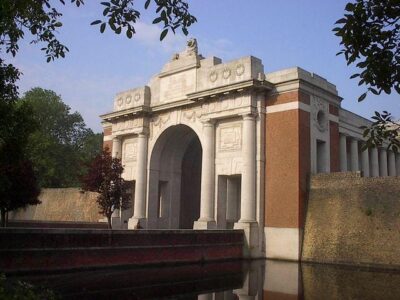
The day ends at the Menin Gate for the Last Post ceremony at 8 p.m. The local fire brigade buglers have carried out the ceremony every night since 1927, apart from the period of Nazi occupation during the Second World War. It is a formal, solemn close to a demanding day. Plan your lodging with the late finish in mind.
Langemark Cemetery is also listed on day one, where you see how Germany commemorated its war dead. About 44,000 German soldiers are buried there. The contrast with Commonwealth cemeteries gives you a more complete view of how different nations remembered the same conflict.
Day two: Fromelles, Arras, and the road to Amiens
Day two turns south toward Fromelles, one of the most painful chapters in the Australian story. The Museum of the Battle of Fromelles explains the battle and the discovery in 2008 of a mass grave containing 250 Australian soldiers. You have about 45 minutes inside.
The nearby cemeteries make the subject personal. At Le Trou Aid Post Cemetery, Soren explains the story of Pompey Elliott and the losses suffered by the Australian 5th Division. Pheasant Wood Military Cemetery is linked to the soldiers found in the mass grave. At VC Corner Australian Cemetery, you see the mass grave and look across the former battlefield from the Australian trench lines.
This cluster of stops is one of the strongest sections for anyone interested in military history, family research, or the work of identifying the missing. The drawback is emotional weight. Fromelles is not a light morning of sightseeing, and you may want some quiet time afterward.
Australian Memorial Park presents the battlefield from the German side and includes the Cobbers statue. The sculpture shows Australian soldiers helping wounded comrades, a fitting counterpoint to the tactical discussion. The stop lasts about 20 minutes.
Arras provides the day’s main break. You have about an hour for lunch in the city, known for its striking squares and UNESCO World Heritage status. Lunch is at your own expense, but this pause is valuable. A three-day battlefield trip needs moments away from cemeteries and military maps, and Arras gives you one.
After lunch, the focus returns to Bullecourt. The Bullecourt Digger tells the story of a battle associated with the deaths of 10,000 Australian soldiers over two weeks. At the Slouch Hat Memorial, you see remnants of tanks and hear more about the fighting.
You arrive in Amiens around 5 p.m. Soren can point out places to eat and good views before dropping you at your hotel or the railway station. This is practical help, especially if you are not familiar with Amiens and want to make the most of the evening.
Because the tour ends in Amiens rather than returning to Ypres, it works well as part of a one-way trip through northern France. You can also choose the reverse route, beginning in Amiens and ending in Ypres.
Day three: The Somme, Monash, and Villers-Bretonneux

The final day begins in Albert, where you see the basilica and hear the story of the Leaning Virgin. It is a brief 10-minute stop, but the basilica gives you a clear local landmark before the tour moves into the Somme battle sites.
At Lochnagar Crater, you see the 30-meter-deep crater created by a mine blown on July 1, 1916. The discussion covers the opening day of the Somme and the deaths of 20,000 British soldiers. This is a 30-minute stop and one of the clearest physical reminders of the scale of the underground warfare.
The First Australian Division Memorial covers Pozieres, described here as a six-week battle that cost 24,000 Australian lives for a ruined village about one mile long. At the Windmill Memorial, you see the former German trench system known as OG1 and OG2 and the site of what was once a windmill.
The Tank Corps Memorial turns to technology. Tanks were first used in battle in this area, and Soren explains their early development, tactics, and role. This broadens the day beyond infantry losses and helps you see how the war was changing by 1916.
Lunch is at Le Tommy, a cafe described as being devoted to the Australian sacrifice. The meal is not included, and the scheduled time is brief, so ask about the day’s timing if you prefer a longer lunch.
At École Victoria, you hear the story of the French school funded by pennies donated by Australian children in the 1920s. This is one of the tour’s most unusual stops because it links postwar remembrance with ordinary families far from the front.
Adelaide Cemetery returns the focus to the missing. You hear about the unknown Australian soldier exhumed from this site in 1993. The story gives a human face to the long work of identifying the dead.
The Australian National Memorial is the main memorial visit of the final day. It commemorates 20,000 Australians missing in the area, and you have about an hour there. The memorial’s position also helps you connect the surrounding sites into one final view of the campaign.
You then get an hour at the Sir John Monash Centre. This is a useful indoor finish, with time to explore rather than simply receive a short roadside explanation. The final battlefield stop is the Australian Corps Memorial at Le Hamel, where you hear about Monash’s operation, known for its speed, lower losses, and several historical firsts.
The tour ends with a drop-off at your Amiens lodging or the railway station. Confirm your departure plans carefully, since the final day contains many stops and the schedule can feel full.
Same city, a different sort of day:
- From Brussels: Flanders Fields Remembrance Full-Day Trip
★ 4.4 · 65 reviews - From Ypres, The Christmas Truce to Passchendaele Ypres Based WW1 private tour
★ 5.0 · 29 reviews - In Flanders Fields and Passchendaele Grand Tour
★ 5.0 · 25 reviews - From Ypres: WWI Battlefields Private Tour
★ 5.0 · 25 reviews
What the private format is worth
At $1,965.48 per person, this is a substantial purchase. The value depends on how much you want from the experience. You are paying for three days of private transport, a guide, route planning, museum visits listed as included, and the ability to shape the discussion around your interests.
For a family tracing an Australian soldier, the private format can be especially useful. Soren can tailor the route where possible, rather than following a fixed group schedule. You can also ask for more attention at a particular cemetery or battle site.
The price does not cover accommodation or meals. You need to add three days of lodging, lunches, dinners, and any other personal costs. Complimentary bottled water is provided each day, which is helpful but only a small part of the overall budget.
The tour receives a five-star rating from three published reviews, with especially strong praise for Soren’s care, preparation, reliability, and company. One account describes the trip as deeply emotional, while another calls it an eye-opening and memorable experience. Those comments fit the nature of the route, but you should understand that the praise centers on the guide as much as on the sites.
Who should book this battlefield tour?
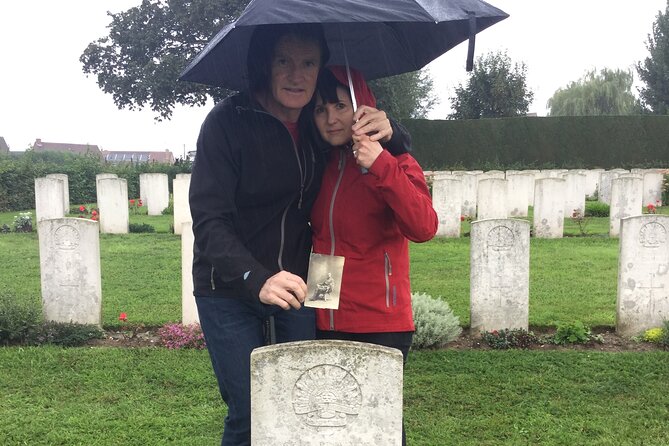
I would choose this tour if you have an Australian military ancestor, want a detailed Western Front route, or prefer a private guide over a large coach group. It also suits people who want to combine battlefield visits with time in Ypres, Arras, and Amiens.
You should be comfortable with long days, repeated cemetery visits, and a subject that can be emotionally heavy. The schedule includes many stops, some lasting only 10 to 20 minutes, so it is designed for broad coverage rather than slow, solitary exploration at every site.
Most people can participate, service animals are allowed, and the tour is near public transportation. Confirmation is sent within 48 hours, subject to availability. Pickup is offered, and the start time is 9 a.m.
You can cancel for a full refund up to 24 hours before the start time. Cancellations or changes made later are not accepted for a refund.
Should you book it?
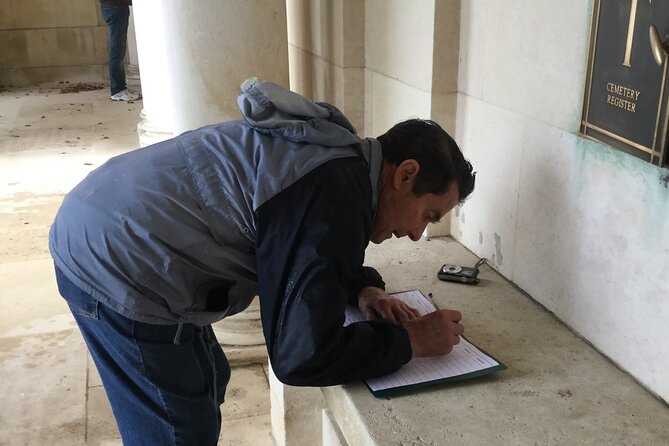
Book this tour if the Australian connection is central to your trip and you want the Western Front explained by one guide across three linked days. The family connection of Soren Hawkes, the flexible private setup, and the range of sites give the journey more purpose than a simple memorial checklist.
Think twice if you want leisurely museum visits, generous meal breaks, or a low-cost excursion. This is an intense, full itinerary with extra expenses and a lot of ground to cover. For the right visitor, though, the route from Messines to Le Hamel creates a powerful understanding of what Australian soldiers faced and how their service is remembered.
FAQ
Where does the tour start and finish?
The usual route starts in Ypres and ends in Amiens. You can also choose to travel in the opposite direction.
How long does the tour last?
The tour lasts approximately three days, with three full days of visits and transport.
What time does the tour begin?
The stated start time is 9 a.m.
Is this a private tour?
Yes. Only your own group participates in the private activity.
Who is the guide?
The guide is Soren Hawkes. He has family links to the battle sites and can tailor the tour around ancestor research where possible.
Are meals included?
No. All meals are at your own expense. Lunch breaks are scheduled in places such as Arras and at Le Tommy.
Is accommodation included?
No. You choose and pay for your own accommodation.
Is transport included?
Transport and guided visits are included, and pickup is offered. The tour ends with a drop-off at your Amiens hotel or the Amiens railway station.
Is entry to the museums included?
Entry is included for the In Flanders Fields Museum and the Museum of the Battle of Fromelles. The schedule also includes the Sir John Monash Centre, with one hour to explore.
Is bottled water provided?
Yes. Complimentary bottled water is provided each day.
Can I cancel the tour?
You can cancel at least 24 hours before the start time for a full refund. Cancellations or changes made less than 24 hours before the start time are not accepted for a refund.
Just added in Ypres
- From LIlle or Bruges, Christmas Truce to Passchendaele Ypres 1 day WW1 private★ 5.0 · 5 reviews
- From Ypres, The Christmas Truce to Passchendaele Ypres Based WW1 private tour★ 5.0 · 29 reviews
- In Flanders Fields and Passchendaele Grand Tour★ 5.0 · 25 reviews
- Full Day Canadian WW1 Vimy and Somme Battlefield Tour from Ypres★ 5.0 · 6 reviews
- Discover Tournai while playing! Escape game – The alchemist★ 4.0 · 3 reviews
- e-Scavenger hunt Ypres: Explore the city at your own pace★ 4.5 · 6 reviews
- From Ypres 4hr Christmas Truce and Monster Mines of Messines PRIVATE Tour★ 5.0 · 5 reviews
- From Ypres: WWI Battlefields Private Tour★ 5.0 · 25 reviews
WWI Battlefield Tours, compared.
Great War Flanders Fields Minibus Tour w/ Lunch
Read our review →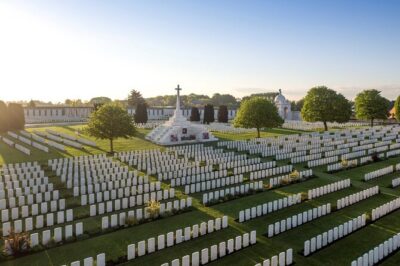
Flanders Fields Remembrance Tour from Brussels
Read our review →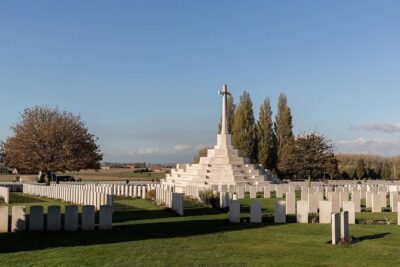

In Flanders Fields and Passchendaele Half Day Morning Tour
Read our review →
An exploration of the deadly salient battlefields
Read our review →
Remembrance Tour: The Battle of the Bulge in the Ardennes
Read our review →Browse the lists this tour appears in