
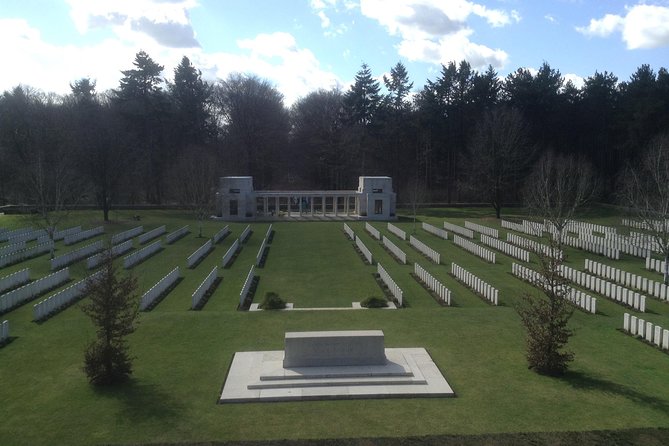
Reviewed · WWI BATTLEFIELD TOURS
From Ypres, The Christmas Truce to Passchendaele Ypres Based WW1 private tour
The most moving part of this private Ypres battlefield tour is the way it links famous sites with small human stories. You will trace the Christmas Truce at Messines, see the crater made by an Australian mine at Hill 60, walk among original trenches, and finish at the Menin Gate, where 55,000 missing soldiers are named.
I like the custom route and Soren’s family-history research. If you have a relative who served in the Ypres Salient, send the details ahead of time. I also like the practical setup: hotel pickup in Ieper, bottled water, and transport between sites. The main drawback is the price, $420.49 per person, and the minimum of two people, so this is best for a small party that wants depth rather than a quick overview.
Key points to know before booking
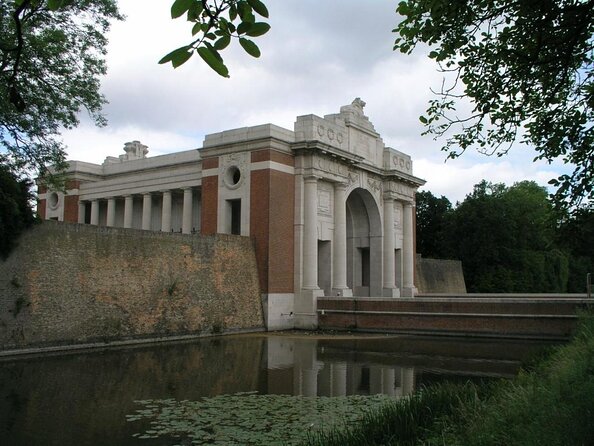
- Messines connects several powerful stories: the Christmas Truce, mine craters, the Battle of Messines, and the crypt where Adolf Hitler was treated after being wounded.
- Soren tailors the day to your family history: the tour can include research into relatives and specific graves.
- You visit original battlefield remains: Sanctuary Wood has preserved trenches, while Polygon Wood includes concrete bunkers.
- The route covers major Australian sites: Hill 60, Broodseinde, Zonnebeke, Passchendaele connections, and the Australian 5th Division monument.
- Tyne Cot adds scale and silence: around 12,000 Commonwealth soldiers are buried there, with another 55,000 names recorded at Menin Gate.
- This is a full eight-hour day: lunch is not included, and pickup is limited to Ieper unless you book a different departure option.
Why a private Ypres tour makes a difference
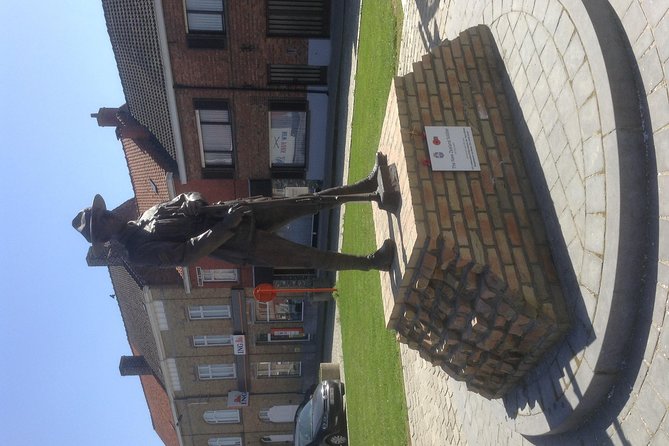
The Ypres Salient can look deceptively ordinary today. Roads, farms, woods, and towns have replaced much of the wartime setting. Without someone to explain where the trenches ran, why a road mattered, or how troops moved from one position to another, you may see attractive countryside and miss the battlefield beneath it.
That is where this tour earns its keep. Soren has lived around Ypres for 15 years and focuses on the ground itself, not just dates and generals. He explains how earlier fighting in 1914 connects with the Australian actions of 1917, then uses the route to show how one position led to the next.
The private format matters. Your group can ask questions without holding up a coach full of people. Soren can also adjust the level of detail. If you already know the broad story of the First World War, he can focus on tactics, units, and family records. If you are new to the subject, he can build the story from the ground up.
The tour has a 4.9 out of 5 rating from 29 published ratings, with 97 percent recommending it. More important for your planning, the strongest praise centers on the same things: Soren’s preparation, personal attention, clear explanations, and willingness to connect the battlefields with individual soldiers.
Other Western Front sites within reach of Ypres:
- From IEPER Private 4-hour Tour of the Ypres Battlefield
★ 5.0 · 154 reviews - In Flanders Fields and Passchendaele Half Day Morning Tour
★ 5.0 · 117 reviews - Ypres: An exploration of the deadly salient battlefields
★ 5.0 · 76 reviews
Messines Ridge and the Christmas Truce
The day begins at 9 a.m. with pickup in Ieper. The first stop, Messines Ridge, receives about two hours, making it the longest visit of the day. That extra time is useful because this area carries several layers of history.
You will hear about the Battle of Messines and visit the mine craters left by the huge underground explosions. You will also see the scene associated with the Christmas Truce, one of the First World War’s most familiar moments. The tour does not treat the truce as a sentimental story floating apart from the war. It places the event in the setting where British and German soldiers faced each other across the lines.
Another unusual stop here is the crypt where Adolf Hitler was treated for wounds. It is a detail that can surprise you, but it also shows how the same ground connects the First World War with later European history.
Messines is a good place to ask Soren about scale. The mine craters help you understand the force used to break the German position, while the nearby roads and fields show how exposed soldiers were once they left cover. Admission is free, and bottled water is provided during the day.
Hooge Crater Cemetery and the Menin Road
The stop at Hooge Crater Cemetery lasts about 15 minutes. That may sound brief, but cemetery visits work best when they have a clear purpose. Here the focus is Pat Bugden VC, a 20-year-old Australian recipient of the Victoria Cross.
You will also stand on the Menin Road beside the former Australian gun positions used in the assault on Passchendaele. The road is not simply a name on a map. It was a key route for moving troops, ammunition, and wounded men, and it helps you picture why control of roads mattered so much.
This is one of the faster stops, so do not expect a long cemetery walk. Its value comes from the sharp contrast between one young soldier’s story and the wider military operation around him.
The Black Watch and earlier fighting in 1914
At The Black Watch site, Soren explains that the ground served as Australian headquarters in September 1917. He also covers actions that took place there in November 1914.
That link between 1914 and 1917 is one of the tour’s strengths. The Ypres Salient was not a single battle with one beginning and one end. The same fields were fought over repeatedly, and an explanation of the earlier action helps you understand why later commanders cared about particular ridges, woods, and roads.
There is no admission charge. The stop also illustrates why a guide is useful here: the importance of the site is mainly historical, and the key evidence is in the explanation rather than a large modern monument.
Other Christmas markets and lights around Ypres:
Polygon Wood, bunkers, and the Australian 5th Division
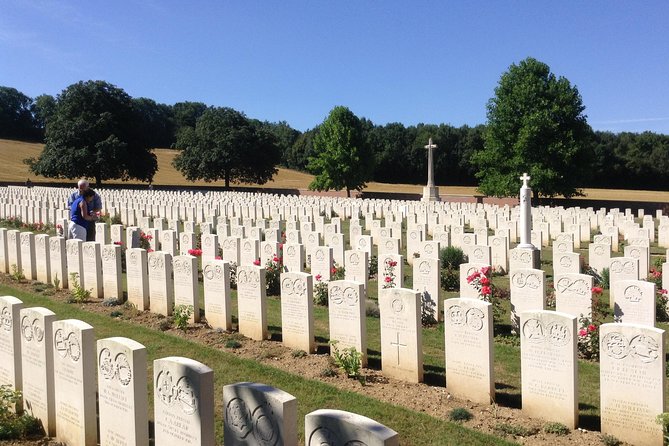
At Polygon Wood, you will walk through the woods and see concrete bunkers left from the fighting. The tour also includes a cemetery and the Australian 5th Division monument.
This is one of the more physical sections of the day. You are not only looking at a memorial from a roadside. You are moving through a wooded area where fortifications still help show how soldiers used cover and defensive positions.
Allow about 30 minutes. Comfortable shoes are sensible, since the day includes outdoor sites and a walk through the woods. The stop is especially useful if you want to connect the Australian advance with the places where men actually sheltered, fought, and were buried.
Hill 60 and the mine fired at 3:10 a.m.
Hill 60 is one of the clearest examples of how underground warfare shaped the Ypres battles. Soren tells the story of Captain Woodward and the 1st Australian Tunnelling Company, then points out the large crater made when the mine exploded at 3:10 a.m. on June 7, 1917.
The crater gives you something concrete to look at while hearing about the planning below ground. It also adds variety to the day. You move from cemeteries and memorials to a physical scar created by an engineering operation.
The visit lasts about 45 minutes. That is enough time for the story to develop without making the stop feel rushed. As at several other locations, admission is free.
Broodseinde, Zonnebeke, and the route toward Passchendaele
Broodseinde and Zonnebeke are driving sections rather than long walking stops. You will follow the line of the Australian advance and pass through the area connected with Passchendaele.
These stretches are easy to underestimate. They give the tour continuity. Instead of jumping from one isolated memorial to another, you can see how the route runs across the Ypres Salient and how the army’s movement unfolded from one area to the next.
The tradeoff is simple: you spend less time on foot at these places. If you want to stop at every battlefield marker, this itinerary may feel fast. If you prefer a clear story with several major visits, the driving sections help keep the eight-hour day manageable.
Tyne Cot Cemetery and the scale of loss
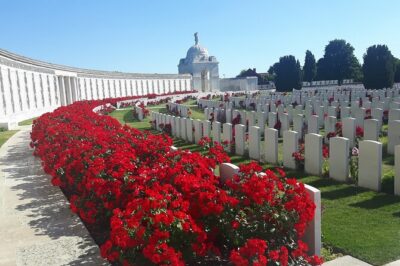
Tyne Cot Cemetery is given about 45 minutes. It is the world’s largest Commonwealth War Graves Commission cemetery, with around 12,000 soldiers buried there. Only about 3,000 of those graves carry identified names, which makes the place especially stark.
Two Australian Victoria Cross recipients are buried at Tyne Cot. If you have family research to follow, give Soren the name in advance. The private format allows the cemetery visit to mean more than a general walk past rows of headstones.
Tyne Cot can be emotionally demanding. It is also a place where numbers become real. The scale is too large to take in at once, so I find it helps to pause at individual graves and inscriptions rather than trying to absorb the entire cemetery in one glance.
John McCrae’s field hospital site
The tour then visits the hospital site where Lieutenant Colonel John McCrae composed In Flanders Fields. The stop lasts about 30 minutes.
This is not just a literary footnote. McCrae wrote the poem while working amid the wounded and dead of the Ypres fighting. Visiting the site helps connect the familiar words with the conditions that shaped them.
If you know the poem well, you may find this stop particularly affecting. If you do not, Soren’s explanation gives it context without turning the visit into a simple poetry lesson.
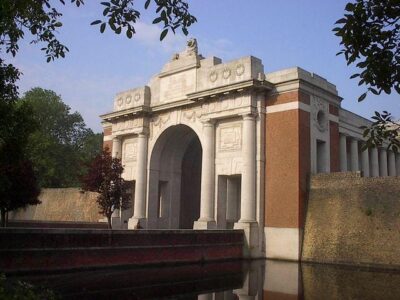
Menin Gate and 55,000 missing names
The Menin Gate is the final major memorial stop, with about 20 minutes allotted. Soren explains why it was built and tells some of the stories behind the 55,000 names of soldiers missing in action.
The gate is one of Ypres’s best-known sights, but it can lose its meaning if treated as a quick photo stop. Listen for the distinction between a named grave and a name on a memorial. The soldiers listed here have no known burial place.
Ending at Menin Gate works well. After seeing trenches, craters, cemeteries, and roads, you finish with a memorial built around absence. It brings the day back to the people who disappeared from the battlefield and from their families’ lives.
Sanctuary Wood’s original trenches and museum
Sanctuary Wood Museum is the one stop with an admission charge included in the tour. You will see original First World War trenches and a small museum, with about 40 minutes to explore.
This is a useful final visit because it lets you see battlefield remains at close range. The trenches are more direct than a monument or cemetery. They show the cramped, defensive spaces that shaped daily life for soldiers.
The museum is described as quaint rather than large, so keep your expectations in line. This is not a major national institution. Its value comes from the original trenches and the personal feel of the collection.
Price, pace, and what you receive
At $420.49 per person, this is not a budget sightseeing trip. The cost makes more sense for two or more people who want a private vehicle, a full day with a guide, hotel pickup in Ieper, and a route adjusted to their interests.
You are paying for interpretation as much as transport. A self-drive day can reach many of these places, but you would need to research the battle sequence, cemetery records, Australian units, and exact locations beforehand. You would also need to manage the route and decide how long to spend at each stop.
The strongest value comes if you have a family connection. Soren has researched relatives for people on the tour, helped identify specific graves, and followed up with links to books, films, podcasts, and further research. That kind of preparation can turn a general battlefield visit into a personal day.
The pace is full but not described as punishing. There are short stops, driving sections, cemetery visits, and walks through woods and trenches. Lunch is not included, so plan for that when judging the day’s timing. Pickup is offered from Ieper-based locations only, and at least two people are required.
Free cancellation is available up to 24 hours before the start time. Confirmation arrives within 48 hours of booking, subject to availability. Service animals are allowed, the tour is near public transportation, and most people can participate.
Who should book this Ypres battlefield tour?
I would choose this tour if you want the military story explained in place, especially if your interests center on Australian units, Passchendaele, Messines, or family research.
It suits couples, families, and small groups who value privacy and questions. It is also a strong choice for someone who knows the basic First World War story but wants the ground between the famous sites explained.
I would think twice if you want a short, inexpensive introduction, dislike cemetery visits, or prefer to spend a long time at one museum. Eight hours is a serious commitment, and the subject matter is often sad. The private format also means the cost is harder to justify for a solo visitor, since the minimum booking is two people.
Should you book it?
Book this tour if you want context, personal attention, and a route that reaches far beyond the Menin Gate. Soren’s preparation for family connections is a major reason to choose it, and the mix of craters, cemeteries, bunkers, trenches, and memorials gives the day real variety.
Skip it if you only want to see a few famous sights or need a low-cost outing. For most people with a strong interest in the First World War, especially anyone tracing an ancestor, the private format and detailed guiding make the price worthwhile.
FAQ
Where does the tour start?
The tour starts with pickup from Ieper-based locations at 9 a.m. Pickup from Lille, Arras, or Bruges is not part of this option.
How long does the tour last?
The tour lasts approximately eight hours.
Is the tour private?
Yes. Only your group participates, and the route can be customized for your interests.
What language is offered?
The tour is offered in English.
Is lunch included?
No. Lunch is not included in the tour price.
What is included?
Bottled water and admission to the trench museum are included.
How many people are required to book?
A minimum of two guests is required.
Just added in Ypres
- From LIlle or Bruges, Christmas Truce to Passchendaele Ypres 1 day WW1 private★ 5.0 · 5 reviews
- In Flanders Fields and Passchendaele Grand Tour★ 5.0 · 25 reviews
- Full Day Canadian WW1 Vimy and Somme Battlefield Tour from Ypres★ 5.0 · 6 reviews
- Discover Tournai while playing! Escape game – The alchemist★ 4.0 · 3 reviews
- e-Scavenger hunt Ypres: Explore the city at your own pace★ 4.5 · 6 reviews
- PRIVATE Australian Western Front Battlefields 3-Day Tour Ypres to Amiens★ 5.0 · 3 reviews
- From Ypres 4hr Christmas Truce and Monster Mines of Messines PRIVATE Tour★ 5.0 · 5 reviews
- From Ypres: WWI Battlefields Private Tour★ 5.0 · 25 reviews
WWI Battlefield Tours, compared.
Great War Flanders Fields Minibus Tour w/ Lunch
Read our review →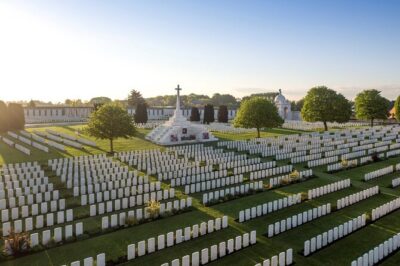
Flanders Fields Remembrance Tour from Brussels
Read our review →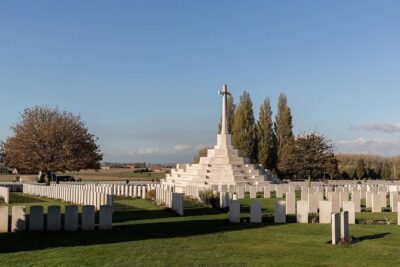

In Flanders Fields and Passchendaele Half Day Morning Tour
Read our review →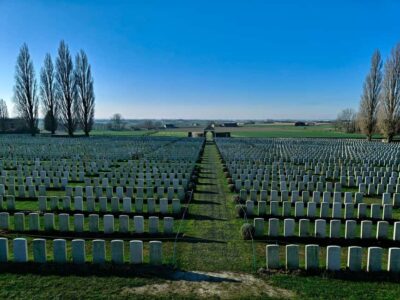
An exploration of the deadly salient battlefields
Read our review →
Remembrance Tour: The Battle of the Bulge in the Ardennes
Read our review →Browse the lists this tour appears in