

Reviewed · WWI BATTLEFIELD TOURS
From Ypres: WWI Battlefields Private Tour
The most moving part of this Ypres tour is the way it links battle sites to individual lives. You walk original trenches at Sanctuary Wood, stand beside the huge Caterpillar mine crater, and then enter cemeteries where the cost of the fighting becomes personal. Søren Hawkes and Sabine bring maps, family research, and clear battlefield explanations rather than simply pointing out monuments.
I like two things here. First, the tour can be shaped around your family or national connection, including Australian, Canadian, New Zealand, South African, and British units. Second, the private vehicle lets you cover scattered places without wasting time finding country lanes. The main drawback is the short four-hour length: this is a strong introduction, but serious military-history fans may want more time.
Key points to know before booking
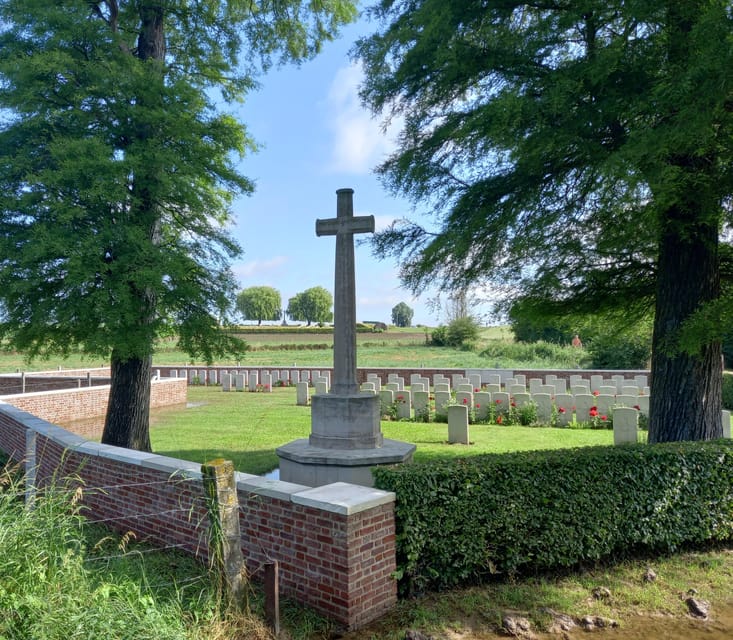
- Walk original First World War trenches: Sanctuary Wood gives you a direct, uneven-footed look at trench warfare.
- Stand over the 1917 Caterpillar mine crater: This large crater at Hill 60 B marks one of the area’s most dramatic underground attacks.
- Visit Tyne Cot Cemetery: Allow time to take in the scale, with around 12,000 war dead buried or commemorated here.
- Follow a national or family story: The route can focus on Australian, Canadian, or New Zealand campaigns and include ancestral graves where possible.
- See the Brooding Soldier: This memorial marks the first German gas attack of 1915.
- Travel privately from Ypres: Pickup and drop-off are included, with mineral water, museum admission, and an English-speaking guide.
Why this private Ypres tour works
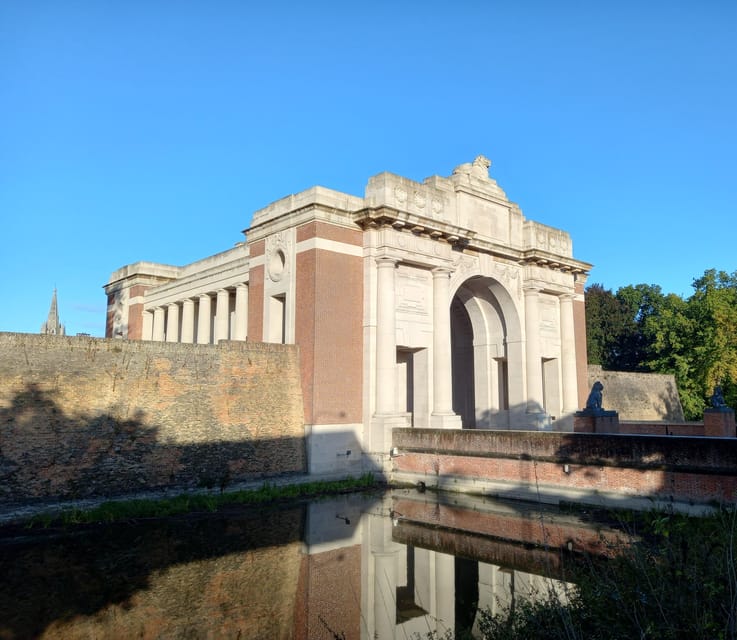
The Ypres Salient is spread across farmland and small roads, so a car-based tour makes good sense. The important sites are not lined up neatly beside one another, and the meaning of each place depends on understanding how the front moved around it.
You meet your guide in Ypres, either at your accommodation or at the railway station. From there, the route heads into the countryside. The published tour lasts four hours and costs $530 per group of up to four people. That sounds high beside a group bus tour, but it works out differently when shared by four people: $132.50 each for a private vehicle, personal guiding, and a route shaped around your interests.
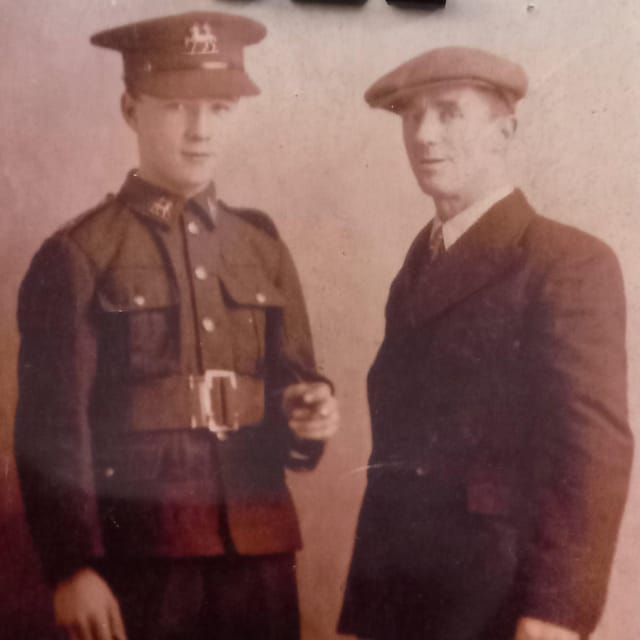
The biggest value is not the driving. It is the interpretation. Søren has used visitors’ family records and service details to trace particular soldiers, and he has even read a grandfather’s diary and service record before a tour. If you have names, regiments, dates, or cemetery details, send them in advance. The guide can research where possible and connect a grave or memorial to the ground where that person served.
Sabine has also led tailor-made tours, including routes centered on New Zealand relatives and key Kiwi positions. Both guides are described as warm, engaging, and able to explain difficult military subjects without turning the experience into a dry lecture.
Other Western Front sites within reach of Ypres:
- From IEPER Private 4-hour Tour of the Ypres Battlefield
★ 5.0 · 154 reviews - In Flanders Fields and Passchendaele Half Day Morning Tour
★ 5.0 · 117 reviews - Ypres: An exploration of the deadly salient battlefields
★ 5.0 · 76 reviews
Hill 60 and the Caterpillar crater
The first major stop is the Caterpillar mine crater at Hill 60 B. You spend about 30 minutes here, including a guided walk.
The crater is the physical result of a huge underground mine explosion in 1917. You do not need to be a military specialist to understand why this stop matters. The ground itself shows how the war was fought below as well as above it. The scale of the crater gives you a firm sense of the force used in the attack.
Hill 60 is also a favorite stop for some visitors because it feels less formal than a cemetery. You are looking at damaged ground and battlefield remains rather than a polished memorial setting. That makes comfortable shoes important. The route involves walking, and weather can change quickly in Flanders, so bring a coat or waterproof layer even on a mild morning.
Your guide uses maps and battlefield context to explain what happened around the position. This is especially useful because the countryside can look peaceful now. Without that explanation, a crater can be little more than a large hollow in the earth.
Sanctuary Wood and the original trenches
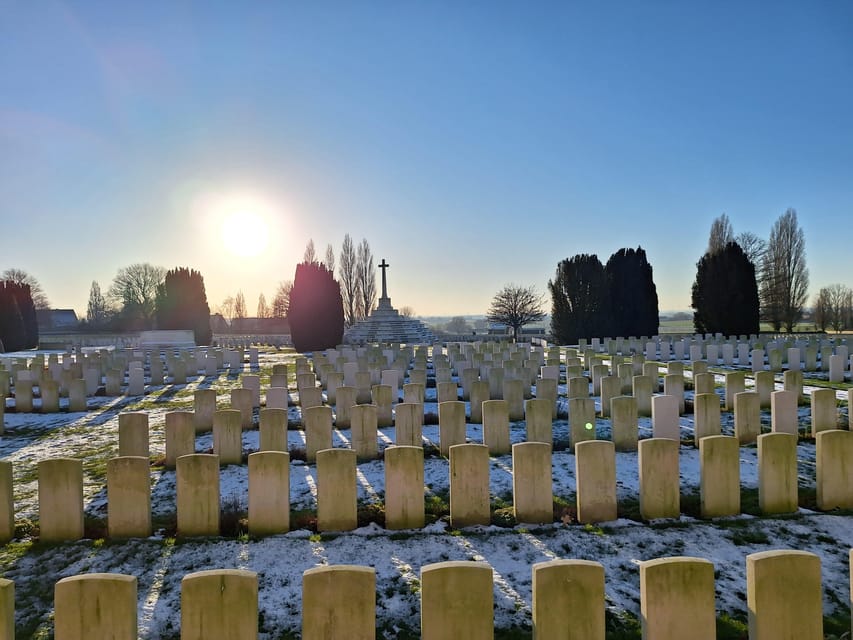
Sanctuary Wood Museum gets about 50 minutes, with a guided visit. The key draw is the chance to walk along original trenches.
This is one of the tour’s best stops for understanding the physical conditions faced by soldiers. A memorial stone or cemetery can show the number of dead, but trenches show the narrow, cramped setting in which men lived and fought. Watch your footing and expect an outdoor visit rather than a polished indoor museum experience.
The stop also helps you picture the 1917 route toward Passchendaele. The tour follows Australian, Canadian, New Zealand, South African, and British troops as they attacked through the Ypres area. If your interest is tied to one of those forces, tell the guide before departure. The Canadian and Australian versions of the tour place extra focus on the relevant actions, while the New Zealand route follows the 1917 Kiwi story.
Fifty minutes is enough for a guided introduction and time to look around, but it is not a full study visit. If trenches are your main reason for coming to Ypres, you may want to ask how much time can be devoted to this stop when you book.
Tyne Cot Cemetery and the scale of loss
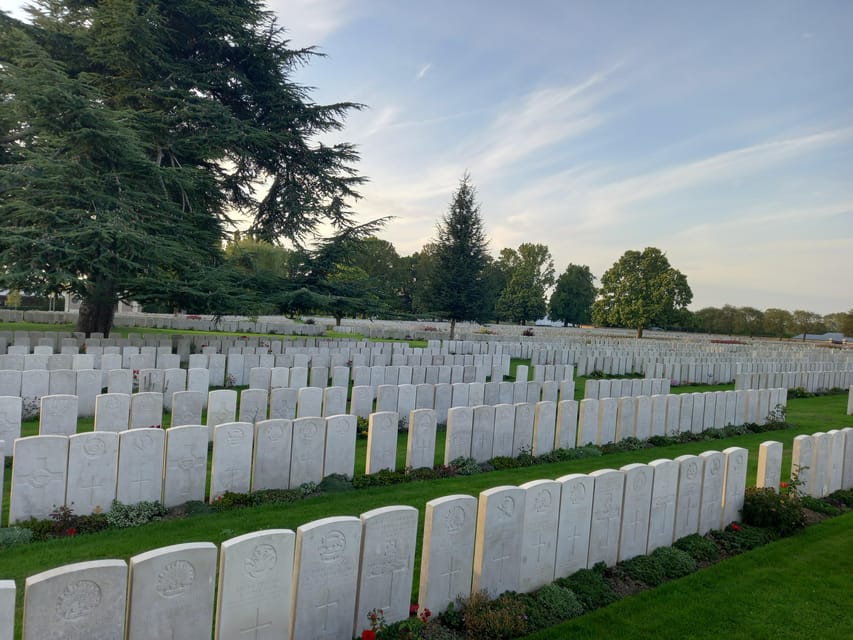
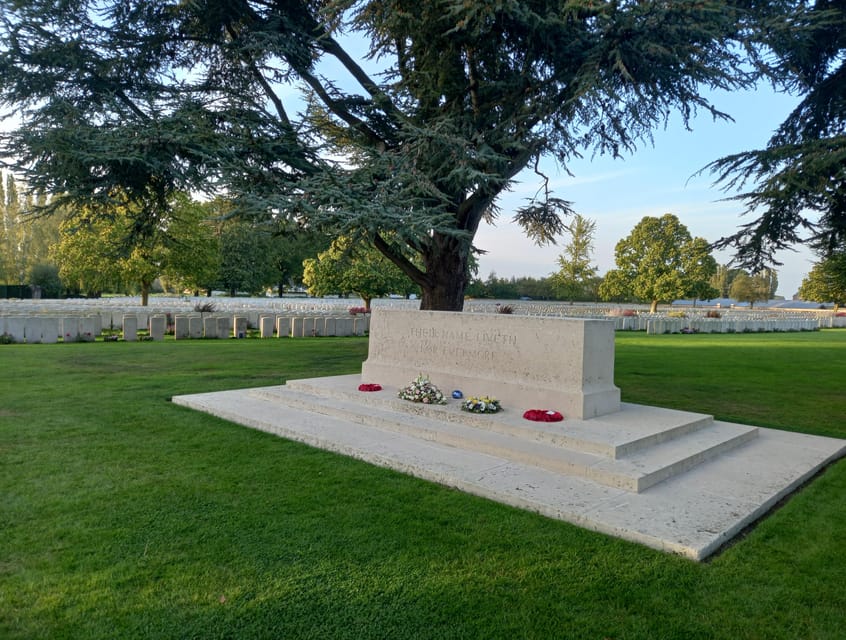
Tyne Cot Cemetery receives another 50-minute guided visit. This is the largest and most solemn stop on the route, with around 12,000 war dead buried or commemorated there.
The cemetery’s size changes the way you understand the fighting. A single grave can be intimate, especially if you have a family name to find. Thousands of graves and names make the loss impossible to reduce to one regiment or one battle. I would not rush this stop. Use some of the guide’s time for questions, then take a few quiet minutes on your own.
This is where family research can transform the tour. One Canadian visitor had the route shaped around an ancestor, while another tour included a search for a Victoria Cross recipient. The guides can help connect names to the wider campaign where the information is available. You should bring any details you have, but do not expect every family mystery to be solved on the spot.
Tyne Cot can also feel busy compared with smaller sites, particularly because it is one of the best-known places near Ypres. A private guide helps you focus on the parts that matter to you instead of trying to take in everything at once.
A few more things to do in Ypres worth a look
- From Ypres, The Christmas Truce to Passchendaele Ypres Based WW1 private tour
★ 5.0 · 29 reviews - From LIlle or Bruges, Christmas Truce to Passchendaele Ypres 1 day WW1 private
★ 5.0 · 5 reviews - From Ypres 4hr Christmas Truce and Monster Mines of Messines PRIVATE Tour
★ 5.0 · 5 reviews - PRIVATE Australian Western Front Battlefields 3-Day Tour Ypres to Amiens
★ 5.0 · 3 reviews
The Brooding Soldier memorial
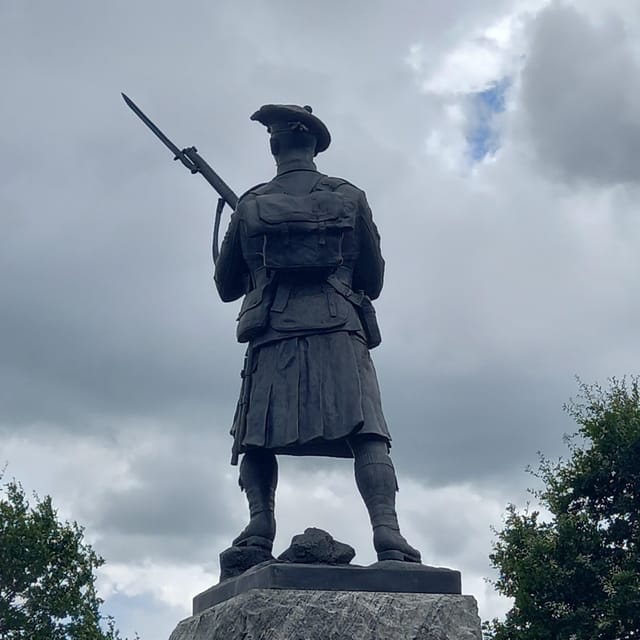
The Brooding Soldier takes about 20 minutes. This memorial marks the 1915 German gas attack, described here as the first-ever German gas attack.
The monument gives the tour an important shift in focus. Much of the route concerns the 1917 battles and the advance toward Passchendaele. The Brooding Soldier brings you back to the earlier phase of the war and to the arrival of chemical weapons on this part of the front.
Twenty minutes is a sensible amount of time for the memorial itself. The value comes from the explanation around it: what happened, why the site matters, and how it fits into the sequence of battles in the Ypres Salient. The stop is brief, but it prevents the tour from presenting 1917 as an isolated event.
John McCrae’s dressing station
The stop connected with John McCrae and In Flanders Fields lasts about 35 minutes and is listed as a photo stop. This is the place associated with the dressing station where McCrae wrote the famous poem.
The site is important because it links a global wartime symbol to a real medical and battlefield setting. You can pause, take photographs, and hear the circumstances that gave the poem its setting. The stop is less about a large monument and more about the connection between a particular place and a piece of writing known around the world.
If you are interested in literature, medicine, or Canadian participation in the war, this may become one of your most memorable stops. The guide can also place McCrae’s story within the wider events around Ypres, rather than treating the poem as a separate cultural footnote.
Essex Farm Cemetery and the return to Ypres
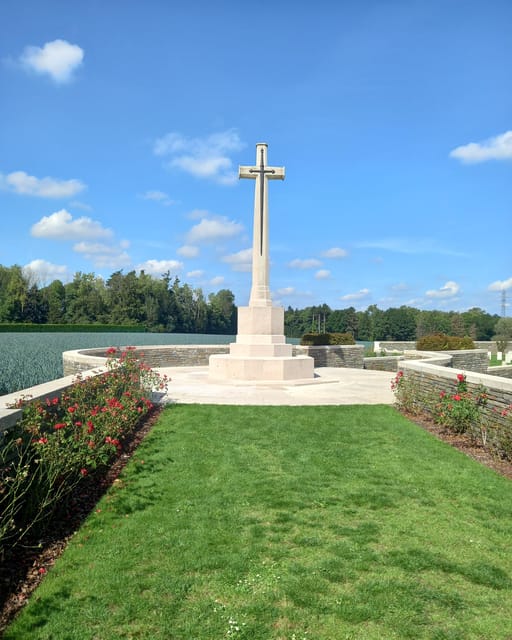
The final listed stop is Essex Farm Cemetery, with about 10 minutes for a guided visit before returning to Ypres.
This is a short stop, but it adds another cemetery and another chance to see how military events and burial places sit close to ordinary roads and fields. Ten minutes will not allow a long search for names, so tell your guide in advance if Essex Farm has a particular family importance.
The return to Ypres completes a route that moves from underground explosions and trenches to memorials, graves, and remembrance. Because the tour is private, the guide can adjust the balance. You might spend longer at a family grave and less time at a site that matters less to your group, subject to the four-hour schedule.
How much can fit into four hours?
The itinerary is well packed. It includes six principal stops, driving between them, guided explanations, walking, and time for photographs. You will see a lot, but you will not study every battlefield in detail.
That is why I would treat this as a focused first visit, not the final word on the Ypres Salient. The route gives you a strong base. Afterward, you will understand the locations well enough to decide which places deserve a longer return visit.
Several groups found that their tours ran beyond the planned four hours, especially when family research or extra sites became important. Do not count on extra time, but the guide’s flexible approach can be useful when the history takes an unexpected turn.
The private format also matters for questions. You can stop to ask about a unit, cemetery inscription, map, or battlefield movement without worrying about holding up a large group. Søren is known for using charts and maps that help you get your bearings on the winding country roads.
Transport, walking, and what to bring
Hotel pickup and drop-off in Ypres are included, as is pickup at Ypres Railway Station. The vehicle has been described as clean, comfortable, and air-conditioned. Mineral water and the museum entrance fee are included, while food is not.
Bring comfortable shoes. Sanctuary Wood and Hill 60 involve walking, and the ground may be uneven. Pack weather-appropriate clothing and a camera. You will move between outdoor sites, and the tour remains useful in mixed weather, but there is no reason to make yourself uncomfortable.
The experience is listed as wheelchair accessible. Since several stops include outdoor ground and walking, it is sensible to confirm the exact access needs of your group before booking. The tour is in English and is offered for a private group.
Cancellation is free up to 24 hours before departure, and you can reserve now and pay later. Starting times depend on availability, so check the schedule that fits your stay in Ypres.
Who gets the most from this experience?
I would choose this tour if you have a family connection to the First World War, especially an Australian, Canadian, or New Zealand connection. It is also a good choice if you want an efficient introduction to the major sites without organizing country roads and cemetery locations yourself.
The tour suits adults and older children who can handle solemn subject matter and some walking. It is less suitable if you want a long museum visit, a full-day military study, or time at every possible regiment-specific site.
You should also consider the group size. At $530 for up to four people, the price makes more sense for a family or small group than for one person. The private setting is the reason to pay more: you get personal attention, flexible pacing, and the chance to follow your own story.
Should you book this Ypres battlefield tour?
Book it if you want the Ypres battlefields explained through places, maps, and people rather than a quick list of monuments. The strongest reasons are the original trenches, the Caterpillar crater, the scale of Tyne Cot, and the chance to trace an ancestor.
I would skip it only if you need a full-day tour or prefer to explore entirely on your own. For most first-time visitors based in Ypres, four hours with Søren or Sabine offers a thoughtful and practical start. Send your family information before you arrive, wear sturdy shoes, and leave room for a few quiet minutes at the cemeteries.
FAQ
Where does the tour begin and end?
The tour begins in Ypres and returns to Ypres. Pickup is available at your Ypres accommodation or at Ypres Railway Station.
How long does the tour last?
The scheduled duration is four hours. Some tours may take longer when the route includes extra places or extended family research, but extra time is not guaranteed.
What sites are included?
The route includes the Caterpillar mine crater at Hill 60 B, Sanctuary Wood Museum, Tyne Cot Cemetery, the Brooding Soldier memorial, John McCrae’s dressing station, and Essex Farm Cemetery.
Can the tour focus on my family member?
Yes. If you have an ancestor who served or died in the battles, the guide can tailor the route to include that person where possible. Send names and service details ahead of time.
Are different national routes available?
Yes. The available routes focus on the Australian 1917 Ypres battlefields, the Canadian 1915 and 1916 to 1917 battlefields, or the New Zealand 1917 battlefields.
Who guides the tour?
The tour is conducted in English by a live guide. Guides named for this experience include Søren Hawkes and Sabine.
Is transportation included?
Yes. Hotel pickup and drop-off are included, along with transport between the sites. Mineral water and museum admission are also included.
What should I bring?
Bring comfortable shoes, a camera, and clothing suited to the weather. Food is not included.
Just added in Ypres
- From LIlle or Bruges, Christmas Truce to Passchendaele Ypres 1 day WW1 private★ 5.0 · 5 reviews
- From Ypres, The Christmas Truce to Passchendaele Ypres Based WW1 private tour★ 5.0 · 29 reviews
- In Flanders Fields and Passchendaele Grand Tour★ 5.0 · 25 reviews
- Full Day Canadian WW1 Vimy and Somme Battlefield Tour from Ypres★ 5.0 · 6 reviews
- Discover Tournai while playing! Escape game – The alchemist★ 4.0 · 3 reviews
- e-Scavenger hunt Ypres: Explore the city at your own pace★ 4.5 · 6 reviews
- PRIVATE Australian Western Front Battlefields 3-Day Tour Ypres to Amiens★ 5.0 · 3 reviews
- From Ypres 4hr Christmas Truce and Monster Mines of Messines PRIVATE Tour★ 5.0 · 5 reviews
WWI Battlefield Tours, compared.
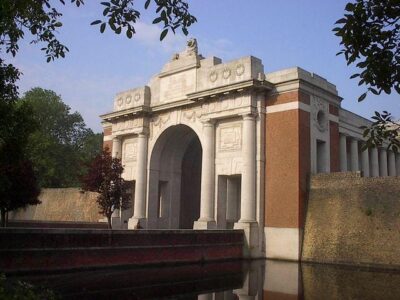
Great War Flanders Fields Minibus Tour w/ Lunch
Read our review →
Flanders Fields Remembrance Tour from Brussels
Read our review →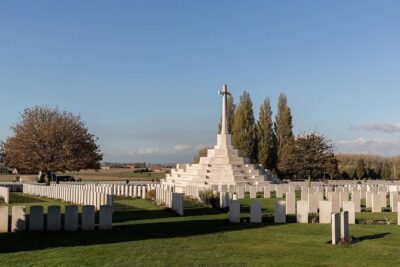

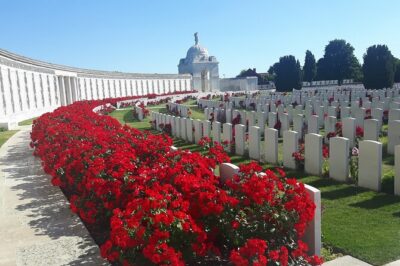
In Flanders Fields and Passchendaele Half Day Morning Tour
Read our review →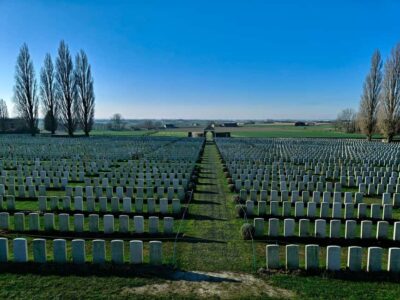
An exploration of the deadly salient battlefields
Read our review →
Remembrance Tour: The Battle of the Bulge in the Ardennes
Read our review →Browse the lists this tour appears in