

Reviewed · WWI BATTLEFIELD TOURS
From IEPER Private 4-hour Tour of the Ypres Battlefield
The most moving part of this private Ypres battlefield tour is the way it connects broad military events with individual soldiers. At Hill 60, Tyne Cot, and Essex Farm, you are not just looking at monuments. You are following the ground where men fought, suffered, and were buried.
I like the flexible pace and the chance to bring family research into the day. Guides Soren and Sabine use maps, photographs, and battlefield knowledge to make confusing events easier to follow. The main consideration is that four hours goes quickly. You see five important places, but anyone wanting a full study of Flanders Fields will need a longer tour.
Key points to know before booking
- A private tour for up to four people: The $399.25 group price works out to about $99.81 each for four people, with only your party taking part.
- Five major First World War sites: Hill 60, Sanctuary Wood, Tyne Cot Cemetery, Saint Julien Memorial, and Essex Farm Cemetery each reveal a different part of the Ypres story.
- Original trenches at Sanctuary Wood: This is the most physical part of the visit, with wartime trench remains and a small museum.
- Strong support for family-history visits: Send details about an ancestor before the tour if you have them. Soren has researched military records and battle locations for guests.
- Easy pickup in Ypres: The guide can meet you at Ypres train station or at a local hotel or bed-and-breakfast.
- Morning or afternoon departure: You can fit the tour around your train plans, though the schedule is subject to availability.
Why this four-hour Ypres tour works
Ypres, known locally as Ieper, is a good place to begin a First World War visit because the battlefield sites are spread through the countryside around the town. A car saves you time and helps you understand how the locations relate to one another.
This is not a large coach outing. Your group has a private vehicle, with pickup offered at Ypres train station or at your accommodation. That matters if you are arriving by train, carrying luggage, or traveling with older relatives. One family even arranged a different drop-off point, and the guide carried their bags during the tour.
The group limit is four people. For a family or a small group of friends, the price is easier to justify than four separate tickets on a larger excursion. At the full group size, the cost is about $100 per person. For one or two people, it is a much more expensive half-day, but the private format gives you room to ask questions and adjust the focus.
The guides are a major part of the experience. Soren is frequently named as the guide, while Sabine also leads tours. Both are described as highly engaged with the subject, and Sabine grew up in Ypres. Expect a guide who explains rather than simply points out monuments. Maps and historic photographs are used to show where trenches, units, and attacks fitted into the wider battle.
The tone is serious, as it should be, but not stiff. Soren is known for adding a little humor when appropriate, which can help younger people stay with a difficult subject. Families with children from about six to ten years old have found the pace manageable, and the guide adjusts his explanations to the group.
Other Western Front sites within reach of Ypres:
- In Flanders Fields and Passchendaele Half Day Morning Tour
★ 5.0 · 117 reviews - Ypres: An exploration of the deadly salient battlefields
★ 5.0 · 76 reviews - From Brussels: Flanders Fields Remembrance Full-Day Trip
★ 4.4 · 65 reviews
Hill 60 and the underground war
Your first stop is Hill 60, where you spend about 40 minutes. The name suggests a natural hill, but this ground was heavily altered by fighting. Its importance comes from the underground mining war, when British forces dug tunnels beneath German positions and packed them with explosives.
The key event covered here is the massive mine explosion of June 7, 1917. Your guide explains what happened and why control of this raised ground mattered. Maps are especially useful here because the battlefield can be difficult to read from the surface. A good explanation helps you picture the old front lines, even where modern roads and fields have softened the view.
Hill 60 is a strong opening because it shows how the war was fought in more than one way. Artillery, infantry attacks, trenches, gas, and tunneling all formed part of the struggle around Ypres. It also gives your guide a chance to establish the larger sequence of battles before you visit cemeteries and memorials.
Do not expect a long walk or an elaborate visitor center at this stop. The value is in the explanation and the setting. If you have a personal connection to a regiment or soldier, tell the guide in advance so the story at Hill 60 can be placed in context.
Sanctuary Wood, trenches, and a small museum
Sanctuary Wood Museum receives about 45 minutes and includes admission. This is likely to be one of the most memorable stops for visitors who want to see physical traces of the war.
The original First World War trenches make the fighting feel less abstract. At Sanctuary Wood, you can walk among trench remains and pass through a tunnel. The site also has a modest museum with wartime objects and displays. It is not a polished modern museum experience, and that is part of its appeal. The setting feels direct and personal rather than carefully staged.
I like this stop because it gives your eyes something concrete to hold onto. A lecture about trench warfare can blur together. Standing beside the narrow earthworks, then looking at historic photographs, makes the conditions easier to understand.
The surface may not suit every visitor. If you have walking restrictions, recent surgery, or difficulty with uneven ground, tell the guide before the tour. One guide has adapted the route for a guest recovering from surgery, and the private format makes that kind of adjustment possible. You should also allow more time if your group wants to study the museum closely, since 45 minutes is enough for a focused visit but not an exhaustive one.
Tyne Cot Cemetery and the scale of loss
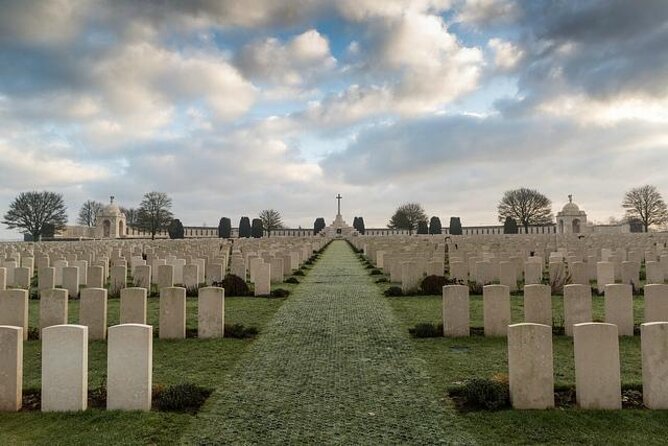
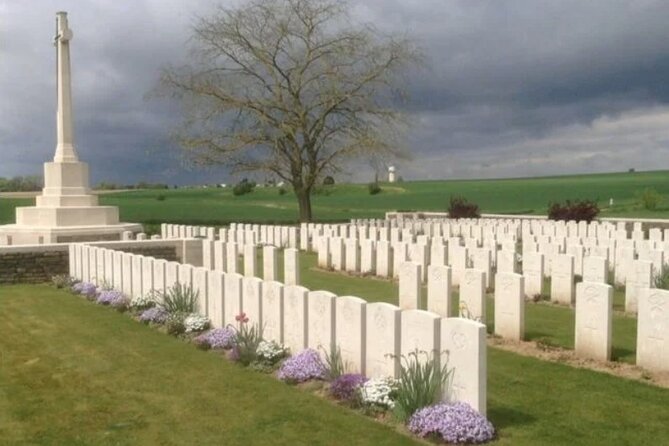
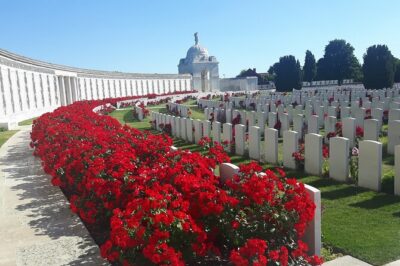
Tyne Cot Cemetery is allocated about 45 minutes and admission is free. It is the largest Commonwealth War Graves Commission cemetery in the world, with around 12,000 soldiers buried there. Only about 3,000 have identified names, a figure that gives the site a particularly heavy emotional weight.
This is not a place to rush through with a camera and a quick explanation. The rows of headstones and the memorial walls show the enormous scale of the fighting around Ypres. Your guide helps you read the cemetery, explaining who is buried there and how the site relates to the battles.
Two Australian Victoria Cross recipients and one Canadian Victoria Cross recipient are buried at Tyne Cot. These details add a personal layer to the larger numbers, but the real power of the cemetery is the contrast between individual identities and mass loss.
I would use this stop to ask questions about the Commonwealth forces represented here. The tour can be especially meaningful for visitors from Australia, Canada, New Zealand, Britain, or other countries whose soldiers fought in Flanders. Soren has adjusted explanations for Canadian and New Zealand families, highlighting their national connection without losing sight of the wider story.
Forty-five minutes is a sensible amount of time for a first visit. You can walk through the cemetery, hear the essential background, and have a quiet moment without turning the stop into a full research session. If you have a particular name, regiment, or date, give the guide those details before departure.
A few more things to do in Ypres worth a look
- From Ypres, The Christmas Truce to Passchendaele Ypres Based WW1 private tour
★ 5.0 · 29 reviews - From Ypres: WWI Battlefields Private Tour
★ 5.0 · 25 reviews - From LIlle or Bruges, Christmas Truce to Passchendaele Ypres 1 day WW1 private
★ 5.0 · 5 reviews - From Ypres 4hr Christmas Truce and Monster Mines of Messines PRIVATE Tour
★ 5.0 · 5 reviews
Saint Julien and the first gas attack
The Saint Julien Memorial is a shorter stop, about 15 minutes. Its subject is not small, however. Here you learn about the first German chlorine gas attack of the First World War, launched on April 22, 1915, against French soldiers.
The story also includes the Canadian troops who held the line as the gas cloud moved across the front. A brief stop works well here because the memorial is mainly a place for orientation and explanation rather than an extended museum visit.
This is where the tour helps correct a common misunderstanding about the Ypres battles. The fighting was not only a matter of infantry charges across open ground. Chemical weapons changed the nature of the conflict and created new forms of fear, confusion, and suffering.
The 15-minute timing means you should expect a focused talk, not a long walk. That is useful on a half-day tour because it leaves enough time for the cemetery and trench stops. If gas warfare is your main interest, ask Soren or Sabine for additional context during the drive.
Essex Farm and the story behind In Flanders Fields
Essex Farm Cemetery takes about 30 minutes. The site was once connected with a wartime hospital, and it is associated with Lieutenant Colonel John McCrae, who composed the poem In Flanders Fields there.
The poem helped make the poppy an enduring symbol of the First World War. At Essex Farm, that familiar image is tied to a real medical site and to the conditions surrounding the wounded and dying. It gives the tour a quieter, more reflective ending.
This stop is valuable even if you are not a poetry enthusiast. McCrae’s poem is often treated as a general symbol, but standing at the hospital site adds a specific place and human setting. Your guide can explain how the poem and the poppy became linked with remembrance.
Thirty minutes is enough to understand the connection and look around without making the final stop feel rushed. After Hill 60, Sanctuary Wood, Tyne Cot, and Saint Julien, Essex Farm offers a gentler close to the route.
The advantage of a guide who researches your family
The strongest reason to choose this tour over a standard sightseeing drive is the personal attention. If your ancestor served near Ypres, send the service record or whatever information you have before the day. Soren has researched soldiers for families, locating relevant battlefields and helping them follow an ancestor’s movements.
That can change the day from a general history lesson into a family visit. One group followed the service of George Osborne, who served with the West Surrey Regiment in both world wars. Sabine researched his movements and even found documentation connected with a second Military Medal.
Another family learned where an ancestor had fought and died close to Ieper. The guide used that information to adjust the route and explain the surrounding sites in a more personal way. This is not a promise that every soldier can be traced during a short tour, but the guide clearly welcomes the research and makes an effort to connect names with places.
You do not need an ancestor to enjoy this tour. The same care helps if you are Canadian, Australian, New Zealand, British, American, or simply interested in the First World War. Still, people with military records in hand get the most distinctive version of the experience.
Pace, transport, and practical comfort
The tour lasts about four hours, with the listed stops totaling roughly three hours. The remaining time is used for driving between sites, getting in and out, and moving through the route without a frantic schedule.
Pickup is available at Ypres train station. Message the guide with your arrival time, and the meeting can be arranged there. Pickup is also offered at Ypres hotels and bed-and-breakfasts. If your accommodation does not appear on the booking information, send the name and ask.
The tour uses a private vehicle, described by one group as a comfortable hybrid SUV. That is useful in wet or cold weather and saves you from arranging separate transport between cemeteries and battlefield sites. You can also ask about a different drop-off point if your plans change, though any changes should be arranged ahead of time.
The tour is offered in English, with morning and afternoon options. Confirmation is sent within 48 hours of booking, subject to availability. Service animals are allowed, and the activity is near public transport.
The private arrangement also helps with questions, photographs, and walking speed. Most people can participate, but Sanctuary Wood may be less comfortable for anyone with limited mobility. Tell the guide early so the route can be handled sensibly.
What the $399.25 price includes
The listed price is $399.25 per group of up to four people. That includes the private guide, transport during the tour, pickup in Ypres, and admission to Sanctuary Wood Museum. The other listed sites are free to enter.
For four people, the math is favorable for a private half-day. You pay about $99.81 per person, and you avoid the time and stress of finding each site yourself. For two people, the per-person cost is close to $200, so the value depends on how much you want personal guidance and family-history help.
I would not choose this tour simply to save money. I would choose it because Ypres is easier to understand with someone who can explain the geography and the sequence of battles. Driving from one site to another without that context can leave you with a collection of cemeteries and monuments but little sense of how they fit together.
The tour is booked, on average, 61 days ahead. That suggests you should not leave it until the last moment, especially if your train schedule or hotel stay gives you only one possible half-day.
Who should book this tour?
I would recommend it most strongly to first-time visitors to the Ypres battlefields, families with an ancestor connected to the area, and small groups who want to ask plenty of questions. It also suits people who prefer a calm private vehicle tour to a fixed coach schedule.
Families can work with it too. The subject is difficult, but the guide can use clear stories, photographs, and some appropriate humor to hold younger attention. The private setting means you can pause or ask for a simpler explanation without feeling you are slowing down a large group.
You might want a longer experience if you are a serious military-history enthusiast or want to examine many individual cemeteries. Four hours covers the main sites but cannot explain every battle, regiment, or memorial in the Ypres Salient.
Should you book the Ypres battlefield tour?
Book it if you want the main sites explained by a guide who can adapt the day to your group. Hill 60 gives you the mining story, Sanctuary Wood provides original trenches, Tyne Cot shows the human scale of the fighting, Saint Julien covers gas warfare, and Essex Farm links the battlefield to In Flanders Fields.
The best reason to book is the personal approach. Send ancestor details in advance, ask about Canadian, Australian, New Zealand, or British connections, and tell the guide about walking limits. If you have only a short stay in Ypres, this is an efficient way to see the key places without treating them as disconnected stops.
Skip it only if you want a very long, specialist study of the battlefields or prefer exploring entirely alone. For most first visits, the private format, local pickup, and careful explanations make the $399.25 group price reasonable, especially with four people sharing the cost.
FAQ
How long is the Ypres battlefield tour?
The tour lasts approximately four hours.
How many people can join the private tour?
The private activity is for your group only, with up to four people included in the group price.
Where can the guide pick me up?
Pickup is available at Ypres train station and at Ypres hotels or bed-and-breakfasts. Contact the provider if your accommodation is not listed.
Is the tour offered in English?
Yes. The tour is offered in English.
Which sites are included?
The route includes Hill 60, Sanctuary Wood Museum, Tyne Cot Cemetery, Saint Julien Memorial, and Essex Farm Cemetery.
Is admission included?
Admission to Sanctuary Wood Museum is included. The other listed stops have no admission charge.
Can I cancel the booking?
Yes. You can cancel at least 24 hours before the experience starts for a full refund. Cancellations or changes made less than 24 hours before the start time are not accepted for a refund.
Just added in Ypres
- From LIlle or Bruges, Christmas Truce to Passchendaele Ypres 1 day WW1 private★ 5.0 · 5 reviews
- From Ypres, The Christmas Truce to Passchendaele Ypres Based WW1 private tour★ 5.0 · 29 reviews
- In Flanders Fields and Passchendaele Grand Tour★ 5.0 · 25 reviews
- Full Day Canadian WW1 Vimy and Somme Battlefield Tour from Ypres★ 5.0 · 6 reviews
- Discover Tournai while playing! Escape game – The alchemist★ 4.0 · 3 reviews
- e-Scavenger hunt Ypres: Explore the city at your own pace★ 4.5 · 6 reviews
- PRIVATE Australian Western Front Battlefields 3-Day Tour Ypres to Amiens★ 5.0 · 3 reviews
- From Ypres 4hr Christmas Truce and Monster Mines of Messines PRIVATE Tour★ 5.0 · 5 reviews
WWI Battlefield Tours, compared.
Great War Flanders Fields Minibus Tour w/ Lunch
Read our review →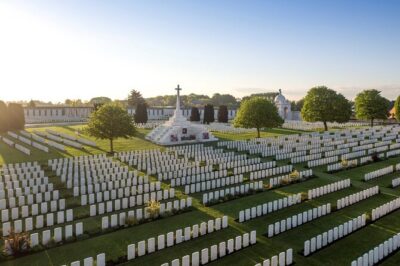
Flanders Fields Remembrance Tour from Brussels
Read our review →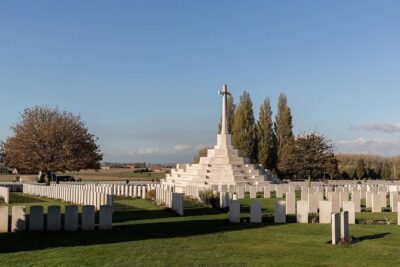
In Flanders Fields and Passchendaele Half Day Morning Tour
Read our review →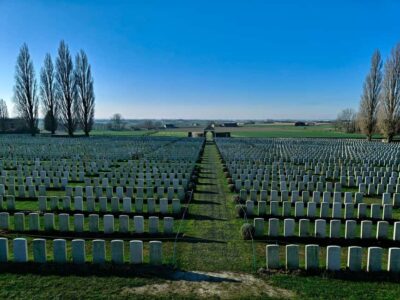
An exploration of the deadly salient battlefields
Read our review →
Remembrance Tour: The Battle of the Bulge in the Ardennes
Read our review →
Historic Battle of the Bulge Sites Tour from Brussels
Read our review →Browse the lists this tour appears in