
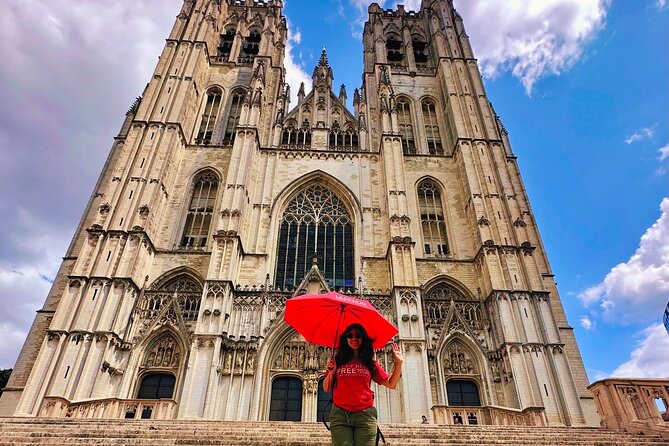
Reviewed · HISTORICAL TOURS
Private Tour: The Dark Side of Brussels
Brussels has a darker side beneath its chocolate shops and ornate squares. This private two-hour walk links grand churches, old neighborhoods, the enormous Palais de Justice, and the Marolles, with stories that reach from Gothic devotion to public executions. Sebastian and Dan are among the guides associated with the experience, and both bring a lively, informed style.
I like the route’s mix of famous landmarks and ordinary streets. I also like that the tour ends in the Marolles, rather than circling back to the postcard center. The main drawback is time: nine stops in about two hours means brief visits, and the tour suits walkers who want a brisk overview more than those seeking long interior visits.
Key points to know before you book
- The route connects central Brussels with the Marolles, giving you a broader look at the city than a Grand Place-only walk.
- Dark history is the theme, including stories linked to crime, punishment, churches, and public executions.
- The Palais de Justice provides wide city views from its hilltop setting.
- The daily Place du Jeu de Balle flea market adds a lively, local-feeling stop to the route.
- Private guiding allows a more personal pace, with only your group taking part.
- The tour costs $105.02 per person and runs for about two hours, making group size important to the value.
Brussels after the chocolate-box image

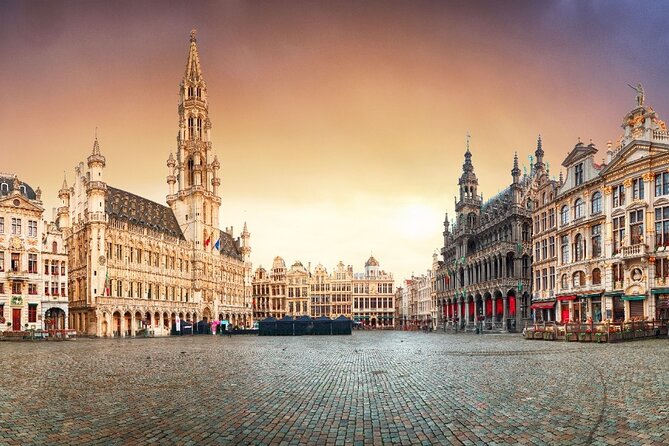
Most first-time visitors meet Brussels through its polished center: the Grand Place, gilded facades, comic murals, beer halls, and chocolate counters. This tour takes a different line through the city. It looks at the streets, churches, courts, and neighborhoods where Brussels’ less comfortable stories took place.
The title sets the tone, but do not expect a theatrical haunted walk. The experience is a historical city tour with a darker thread. You will hear about old justice, religious power, grim punishments, and the people who lived on the edges of respectable Brussels.
The private format matters here. Your guide can answer questions without stopping a large group every few minutes. If you are especially interested in Gothic architecture, local neighborhoods, or the city’s history of crime and punishment, say so early. Guides named Sebastian and Dan have led the walk, and the strongest comments about the experience focus on their clear explanations, friendly manner, and ability to make the stories fun without losing their serious side.
You should also set the right pace in your mind. The schedule allows around ten minutes at most stops, with only five minutes at the final church. That is enough for a good explanation, a look around, and a few photographs. It is not enough for a detailed church visit or a long museum-style lecture.
More Historical Tours in Brussels
- Brussels: Historical Walking Tour with Chocolate & Waffle Tasting
★ 5.0 · 1,165 reviews - Brussels: Historical Tour with Chocolate & Waffle Tasting
★ 4.8 · 642 reviews - Evening Tour: The Dark Side of Brussels
★ 4.5 · 435 reviews
From Grand Place to the Sablon
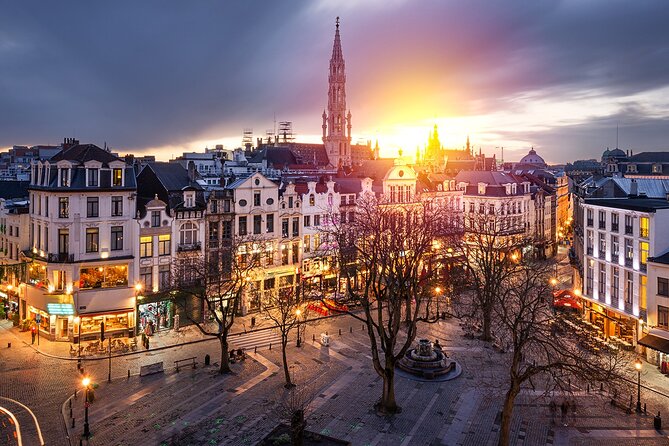
The stated meeting point is Grand Place, written locally as Grote Markt, at the heart of Brussels. This is a practical place to begin because it is easy to recognize and puts you close to several of the route’s central sights.
The walk first reaches Place du Grand Sablon. The description presents this area as a market space filled with food, crafts, and local color. In practice, the value of this stop is the contrast between Brussels’ elegant historic center and its everyday market life. You get a sense of how the Sablon works as more than a pretty square.
Allow roughly ten minutes here. That sounds short, but it gives your guide time to explain the area and point out details you might pass without context. If you want market browsing, plan to return on your own. This tour is moving onward, not giving you time to shop.
Next comes Place Saint-Jean, another small historic square. Its church and surrounding architecture provide a quieter pause from the larger public spaces. The stop is less about a major headline sight and more about how Brussels is built from compact squares, church fronts, cafes, and narrow connections between districts.
I like this part of the route because it gives the walk some rhythm. You move from a large civic setting to a smaller neighborhood square, then onward through areas with different social and architectural character. The drawback is that short stops can feel quick if you want to study the buildings.
Tour Anneessens and Rue de Rollebeek
Tour Anneessens brings the walk into a district described through its mixed architecture, diverse community, markets, and modern city life. This is a useful part of the experience because it moves away from the best-known tourist scenes. You are not just ticking off monuments. You are seeing how Brussels changes from one neighborhood to the next.
The tour then reaches Rue de Rollebeek, a cobbled street with cafes and small shops. Its appeal is easy to understand: this is the sort of street where the city feels close at hand. The old surfaces and smaller scale offer a break from the grand public buildings.
You might find this section especially useful if you are deciding where to wander after the tour. A private guide can explain how the street fits into the surrounding Sablon area, while you get a quick first look at its shops and corners. Since the stop lasts about ten minutes, treat it as an introduction rather than a shopping break.
There is also a practical point here. The tour covers several neighborhoods on foot, and the route includes cobblestones and a hill later in the walk. The supplied information says most people can participate, but comfortable shoes remain a sensible choice.
Notre Dame du Sablon and the Gothic centerpiece
Notre Dame du Sablon is one of the route’s major architectural stops. This Gothic church is known for its stained-glass windows and detailed design, and it gives the tour a strong visual center.
The church is also important to the tour’s darker mood. Religious buildings in old European cities are not only places of beauty. They connect to power, public life, burial customs, charity, and the way earlier societies understood crime and punishment. Your guide’s explanation is what turns the facade and windows into part of a larger story.
You have about ten minutes here. That is enough to appreciate the exterior and, if access allows, get a quick look inside. Do not book this walk expecting a long, quiet church visit. The value comes from placing the church within the route, not from a full architectural study.
The Sablon setting adds to the stop. The area combines formal squares, historic buildings, cafes, and streets that feel more relaxed than the Grand Place zone. This is one of the points where the tour’s blend of beauty and darker subject matter works best.
Other ways into the past around Brussels:
- Brussels 3-Hour Guided Art Nouveau Tour
★ 4.0 · 282 reviews - Historical Walking Tour: The Story of Brussels – by Legends
★ 5.0 · 164 reviews - Brussels: Art Nouveau Pass – Entry to Three Locations
★ 4.0 · 108 reviews - Brussels: Museum Art & History Entry Ticket
★ 4.5 · 58 reviews
The Palais de Justice and Brussels from above
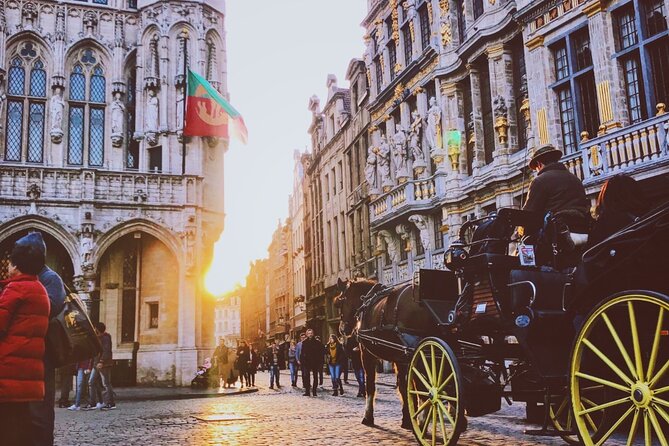
The Palais de Justice is the visual heavyweight of the walk. Its huge neoclassical form dominates the hill, and the building is described as one of the world’s largest courthouses. Even from outside, its scale makes a strong impression.
This stop gives the tour a natural place to discuss law and punishment. The building is not merely an impressive photograph. It connects directly to the tour’s interest in justice, judgment, and the darker parts of civic life.
The hilltop position also provides broad views across Brussels. That makes the stop useful even if architecture is not your main interest. You can pause, look out over the city, and understand the relationship between the upper districts and the Marolles below.
The tradeoff is that a major building like this can invite more time than the schedule permits. Ten minutes is enough to take in the exterior and hear the main explanation, but not enough to explore every detail. If the courthouse is a particular priority, ask your guide whether the timing can be adjusted.
Petit Sablon’s quiet garden and medieval guilds
Square du Petit Sablon offers a change of mood. This formal garden is surrounded by 48 bronze statues representing medieval guilds. The setting is tidy, green, and carefully arranged, with plenty of small details for a guide to point out.
This stop helps explain how trade and skilled work shaped Brussels. The guild figures are not random decoration. They give you a visual link to the city’s working past, balancing the grand churches and judicial buildings with the trades that supported urban life.
I like this square as a breathing space in the route. After the weight of the Palais de Justice, it lets you slow down for a moment. It is also a good photo stop, though again, the ten-minute schedule favors a quick look rather than a leisurely garden visit.
The sequence matters. The tour does not present Brussels as a collection of unrelated sights. It moves between religious authority, civic power, skilled trades, and working neighborhoods. That structure gives the walk more purpose than a simple list of landmarks.
Place du Jeu de Balle and the Marolles
The walk’s most down-to-earth stop is Place du Jeu de Balle, in the Marolles. The square hosts a flea market every day, with old photographs, second-hand clothes, vintage furniture, trinkets, and other used goods.
This is where the tour feels most connected to present-day Brussels. The market gives you a look at buying, selling, bargaining, and neighborhood life. It is less polished than the Sablon and more casual in tone.
Your guide can help you understand why the square matters to the Marolles rather than treating it as just a place to hunt for souvenirs. The atmosphere is described as welcoming, and that makes the stop a good counterpoint to the tour’s grim stories.
The timing still matters. Ten minutes lets you see the market and get oriented, but it is not enough for serious browsing. If you spot something worth buying, you may need to return later. The tour ends nearby, so this is one of the easiest places to revisit after the walk.
The Marolles also gives the tour a strong finish because it feels like a real neighborhood, not only a monument zone. You finish with a better sense of Brussels as a lived-in city.
Ending at Kapellekerk
The final stop is the Church of Our Lady of the Chapel, usually called Kapellekerk. The church is Gothic, and its name refers to a chapel founded here in 1134.
The planned stop is only about five minutes, so expect a closing explanation rather than a long visit. Its location in the Marolles is more important than the amount of time spent inside. The tour ends here at Rue des Ursulines, close to the local streets and market area you have just explored.
This is a practical ending point. You are not left at an isolated attraction or required to retrace the route to Grand Place. You can continue through the Marolles, return to Place du Jeu de Balle, or make your way onward by public transport.
Is $105.02 per person good value?
At $105.02 per person, the price is easiest to judge by group size. Since this is a private activity, the cost buys personal guiding rather than a seat in a large walking group. For two people, it is a substantial expense for two hours. For a family or small group sharing the experience, the value improves.
The guide is the central part of what you are paying for. There are no admission tickets listed, and the route is made up of public squares, streets, churches, and exterior landmarks. You are paying for the route design, historical explanation, local context, and flexibility that comes with a private guide.
I would book it if you want a focused introduction to Brussels and prefer to ask questions as you go. I would hesitate if you want extended interior access, lots of free time, or a slow photography walk.
The tour is booked on average 34 days ahead, so planning early is sensible if your dates are fixed. You receive confirmation at booking, and free cancellation is available until 24 hours before the start time. Changes or cancellations inside that window are not accepted for a refund.
Who should take this walk?
This experience suits you if you have already seen the Grand Place or want something less predictable than a standard city overview. It is especially useful for first-time visitors who want a quick map of several central neighborhoods, and for returning visitors who prefer streets and local history to a checklist of famous sights.
It also fits history-minded travelers who enjoy difficult subjects handled with a touch of humor. The strongest guide comments emphasize clear information, interesting stories, and a friendly personality. That combination matters because the subject can be heavy.
Families and mixed-interest groups may also find the private format helpful. One person can ask about churches, another about the market, and another about the city’s darker legal history. Most people can participate, service animals are allowed, and the route is near public transportation.
You should think twice if mobility is a concern, if you dislike brisk walking, or if you want a tour centered on food, beer, or museum interiors. The supplied details describe the experience as suitable for most participants, but they do not promise a fully accessible route or extended seating.
Should you book The Dark Side of Brussels?
Book it if you want Brussels explained through its less polished stories and varied neighborhoods. The combination of Sablon churches, the Palais de Justice, medieval guild statues, the Marolles flea market, and Kapellekerk gives you a strong two-hour introduction to the city’s many sides.
The best reason to choose it is the private guide. Sebastian and Dan are named guides connected with the experience, and the guiding style is informative, warm, and flexible. Just keep your expectations realistic: this is a brisk outdoor walking tour with short stops, not a slow church tour or a full-day history course.
If that sounds right, the $105.02 price can make sense, especially for a group sharing the private booking. If you want a quick route into Brussels’ darker past and everyday neighborhoods, this is a worthwhile choice.
FAQ
Where does the tour begin?
The tour begins at Grand Place, also called Grote Markt, at 1000 Brussels, Belgium.
Where does the tour end?
The tour ends at Kapellekerk, listed as Brux.-Chap/Brus.-Kap. on Rue des Ursulines in Brussels.
How long does the experience last?
The tour lasts approximately two hours.
Is the tour private?
Yes. Only your group participates in the private activity.
What language is offered?
The experience is offered in English.
What is included in the price?
A professional guide is included. The listed stops do not require admission tickets.
How much does the tour cost?
The listed price is $105.02 per person.
Can I cancel for a full refund?
Yes, if you cancel at least 24 hours before the experience start time.
Are service animals allowed?
Yes, service animals are allowed.
Can most people participate?
The tour information says most participants can take part, and the route is near public transportation.
Just added in Brussels
- Standard vehicle from Brussels airport to city of Antwerp★ 5.0 · 4 reviews
- Luxury vehicle from Brussels airport to the city of Brussels★ 4.0 · 5 reviews
- Transfer Brussels Airport (BRU) –> City Center 7 PAX (ONE WAY)★ 5.0 · 7 reviews
- PRIVATE MPV TRANSFER FROM/TO BRUSSELS AIRPORT (Max 6 pax) ONE-WAY★ 5.0 · 4 reviews
- Luxury Minivan from Brussels airport to the city of Brussels★ 4.0 · 7 reviews
- Transfer Brussels Airport –> Brussels MB V Class 7 PAX (ONE WAY)★ 5.0 · 4 reviews
- Transfer Brussels Airport –> City MB E Class 1-3 PAX (ONE WAY)★ 5.0 · 6 reviews
- Brussels: City Walk with Audioguide in 7 Languages on your Phone★ 3.5 · 4 reviews
Historical Tours, compared.
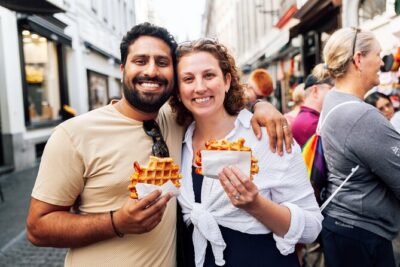
Historical Walking Tour with Chocolate & Waffle Tasting
Read our review →
THE Storytelling Tour of Bruges | First Day Must | History & Tips
Read our review →
Browse the lists this tour appears in