
Reviewed · HISTORICAL TOURS
THE Storytelling Tour of Bruges | First Day Must | History & Tips
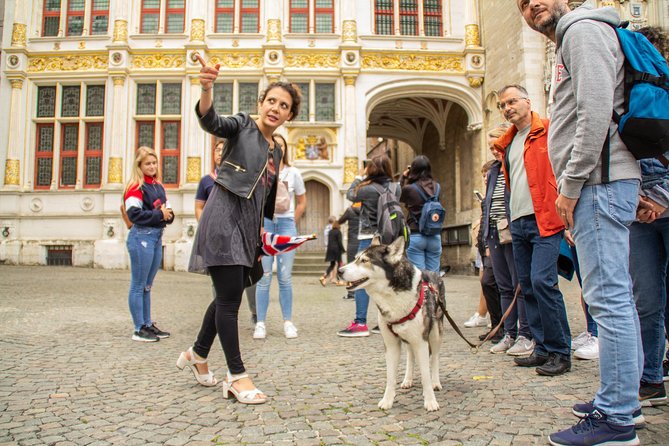
Bruges is easiest to understand when someone connects its handsome buildings to the people, trade, power, and odd stories behind them. This walk does that well, using the Belfry, Markt, canals, bridges, and old squares as a stage for a lively account of the city. Guides such as Pascal, Nick, Arthur, and Alasdair are known for turning dates and buildings into stories you can remember.
I like the compact route, which gives you a clear first look at Bruges without wearing out your feet. I also like the practical extras, including suggestions for restaurants, museums, chocolate, waffles, and local businesses. The main consideration is that this is a pay-what-you-want walking tour, so the very low online price is not the full expected cost. You should also be ready for cobblestones and one small bridge with steps.
Key points before you book
- A strong first-day orientation: The route links the Belfry, Markt, canal views, Burg Square, and several smaller corners of central Bruges.
- Story-led rather than lecture-led: Guides use humor, drama, gestures, and local anecdotes to make the past easier to follow.
- Very low booking price, separate gratuity: The online fee is $3.62 per person, while tips are expected at the end, with most people choosing €10 to $50 per person.
- Small booking limit: You may book up to six people together. The overall activity can include as many as 24 people.
- Easy central meeting point: Find the guide in front of the Belfry Tower on the Markt, usually identified by yellow umbrellas.
- A walking tour with practical limits: It lasts about two to three hours, uses cobbled streets, and requires a little care on the bridge and steps.
Why this makes sense on your first morning in Bruges
The best use of a city walking tour is not to check off every sight. It is to help you read the city for the rest of your stay. This Bruges walk does that by moving through the old center in a sensible sequence, beginning at the Markt and ending in another central location.
The route is short in distance but full in storytelling. That matters in Bruges, where a pretty canal, narrow lane, or ornate facade can look much the same until you know what gave it meaning. You get the broad outline of Bruges as a trading city, a political center, a religious city, and a place shaped by changing fortunes.
The guide style is a major part of the experience. Pascal is especially associated with an energetic, theatrical presentation, while Nick brings a local connection as someone born and raised in Bruges. Other guides, including Arthur, Alasdair, Thijs, and Gosha, are also named in the tour feedback. You should expect a personal performance rather than a formal museum lecture.
That approach suits you if you enjoy history with jokes, gestures, and memorable characters. It may suit you less if you want exact architectural detail at every stop or a quiet, slow look inside major monuments.
More Historical Tours in Bruges
- Historical Walking Tour: Legends of Bruges
★ 5.0 · 2,541 reviews - Evening Tour: The Dark Side of Bruges
★ 5.0 · 956 reviews - Historical Walking Tour: The Story of Bruges – by Legends
★ 4.7 · 483 reviews
Meeting the guide beneath the Belfry
The start is on the Markt, at 8000 Brugge, in front of the Belfry Tower. This is a busy square and the meeting point deserves attention. The practical clue is the guide’s yellow umbrella, which is meant to make the group easy to spot a few minutes before the start.
One person had trouble locating the guide, so do not simply wait somewhere on the edge of the square. Go directly to the Belfry side of the Markt and look for the yellow umbrella. Keep your booking confirmation handy, and allow a few minutes to identify the group.
The route is conducted in English. Confirmation arrives at booking, and the activity is near public transportation. Service animals are allowed, and most people can take part, but the old center is not a smooth modern walking environment.
The Belfry and Markt: Bruges in two opening scenes
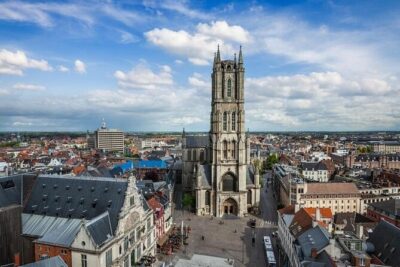
The Belfry is a smart place to begin. It is one of Bruges’ defining landmarks and a clear symbol of civic power in the Middle Ages. The guide uses it to explain how important the city became and why a tall tower in a medieval town carried more than decorative value.
You will spend about 10 minutes here, with no separate admission ticket included or required for this outside stop. If you want to climb the Belfry later, that is a different activity, so do not confuse this orientation with a tower visit.
From there, the group moves to the Markt, the broad medieval trading square. Allow about 15 minutes. This is where the city’s commercial identity becomes easier to picture, with the guide setting the square within Bruges’ role as a center of trade and public life.
I like this opening because it gives you two useful reference points. The Belfry explains civic authority, while the Markt shows the public and commercial heart of the city. After the tour, you can return here and see the space with more context instead of treating it as just a photogenic plaza.
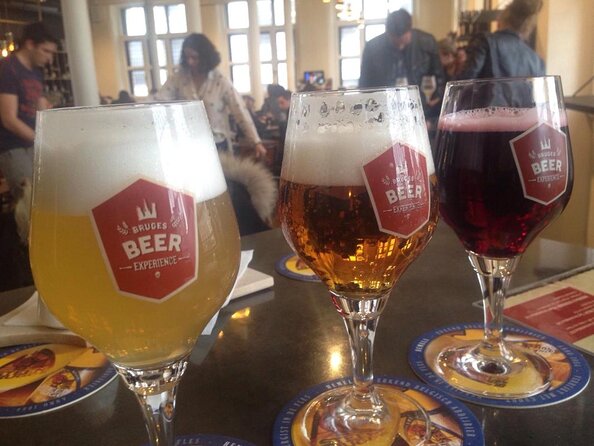
As you pass the Bruges Beer Experience, the guide briefly explains what the attraction offers and why you might choose to visit. This is a short recommendation stop, not a full tasting or museum admission.
Canal views at Rozenhoedkaai
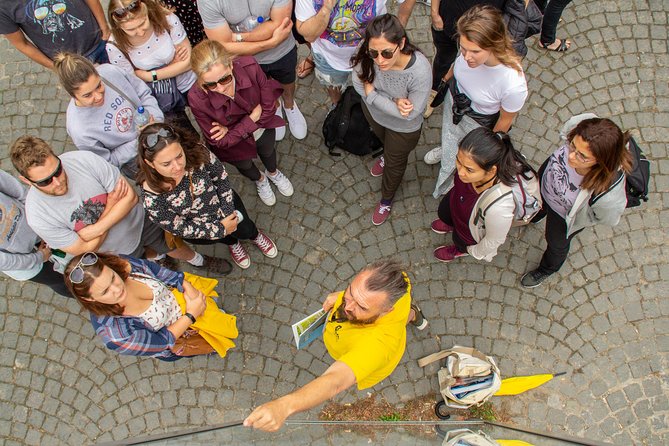
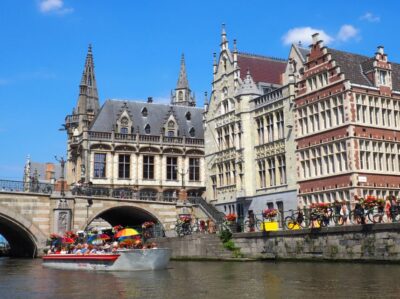
The Quai du Rosaire, also called Rozenhoedkaai, is the classic Bruges photograph. The stop lasts about five minutes, but it earns its place because the view brings together water, old buildings, bridges, and reflections in one compact scene.
The guide explains why this became the postcard view of Bruges. That context is useful because the spot can otherwise feel like a place to snap a picture and move on. You learn what makes the composition so effective and why this particular stretch became so closely tied to the city’s public image.
The stop is short, so you should not expect a long period for personal photography. If the canal view is important to you, note the location and return later when the group has moved on.
Other ways into the past around Bruges:
- Private Historical Tour: The Highlights of Bruges
★ 5.0 · 315 reviews - 2-Hour Historical Walking Tour in Bruges with Praline Included
★ 5.0 · 291 reviews - Bruges: Historium Bruges Medieval Experience Ticket
★ 4.3 · 220 reviews - Bruges: Private Historical Highlights Walking Tour
★ 4.7 · 191 reviews
Bonifaciusbrug, a tiny bridge with a large reputation
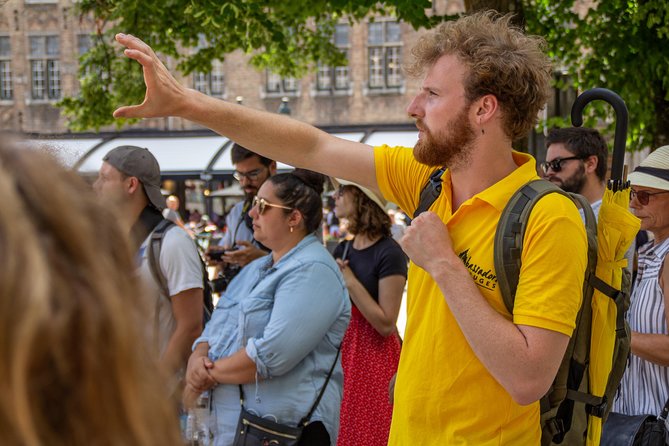
Bonifaciusbrug is one of Bruges’ smallest and most romantic bridges. The group spends about 10 minutes here, hearing the less familiar story connected with it.
This is the kind of stop that gives the walk character. The Belfry and Markt are obvious city symbols, while Bonifaciusbrug feels more intimate. The guide’s job here is not simply to point at a bridge, but to explain why a small crossing became part of Bruges’ romantic identity.
There are a few steps, and the streets are made from cobblestones. Wear shoes with a secure grip and expect a slower pace than you would on a flat pavement route. The physical demands are modest, but they are worth knowing before you book.
Site Oud Sint-Jan and the story of care
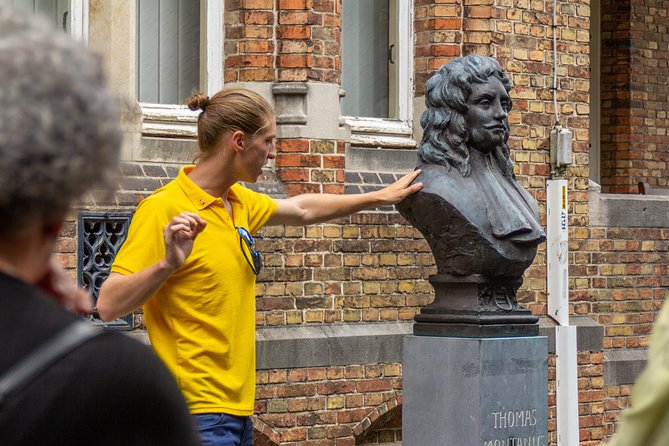
Site Oud Sint-Jan is one of the oldest hospitals in the world, and the tour spends about 10 minutes here. It adds a different layer to Bruges, moving away from trade and civic power toward medicine, charity, religion, and daily life.
This stop can be especially useful if your picture of Bruges is limited to canals and grand facades. An old hospital shows how the city cared for sick people and how institutions shaped the urban center. The guide may also point out nearby details that are easy to miss when walking alone.
The route does not turn into an extended hospital visit, so think of this as historical orientation rather than a full interior tour. One guide has also been praised for highlighting the hospital and herb gardens, which suggests that this section can be particularly rewarding when the surrounding details are included.
Burg Square, where Bruges governed itself
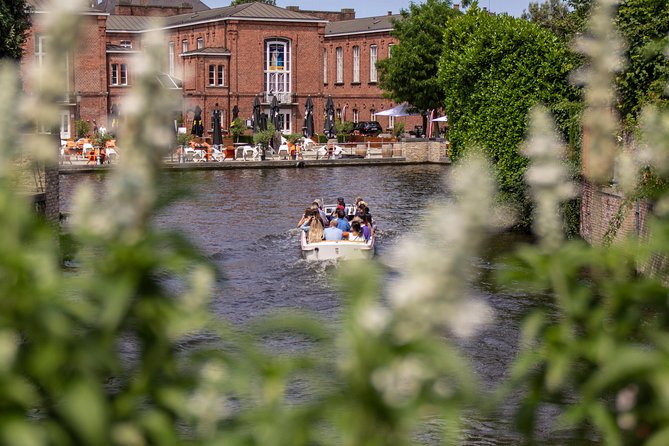
Burg Square is the political heart of Bruges and has more than a thousand years of history. The group spends about 10 minutes here, looking at the architecture and the long civic story attached to the square.
This is one of the most useful stops for understanding how Bruges operated. The Markt represents trade and public gathering, while Burg Square represents administration and authority. Seeing both helps you understand why the city developed several powerful centers rather than one single grand plaza.
The guide also points out local chocolate options, including pralines sold by Olivier, made by his father and brother. That detail gives the stop a modern, personal touch. Bruges can sometimes feel like a preserved stage set, but a family-run chocolate business brings you back to the city as a living place.
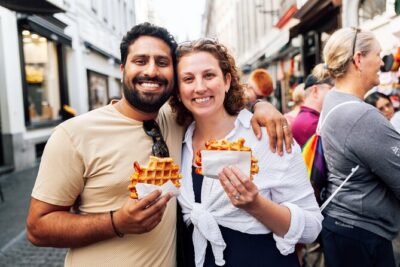
The tour may also include chocolate and waffle samples, depending on the guide and the stops used that day. Treat these as small extras rather than a promised tasting itinerary.
Huidenvettersplein and the final turn
Huidenvettersplein was once considered the worst square in Bruges and is now an attractive little corner. The stop is only about five minutes, but its story neatly reinforces one of the tour’s themes: cities change, and their reputations change with them.
This is a good place to think about how Bruges has been cleaned up, preserved, marketed, and reinterpreted over time. The guide can help you separate the postcard image from the less polished city that existed before tourism became so important.
The activity ends in a different location from the Markt. The exact ending point is provided with the booking details, so check it before planning a tight connection or timed museum visit.
The guides make or break the walk
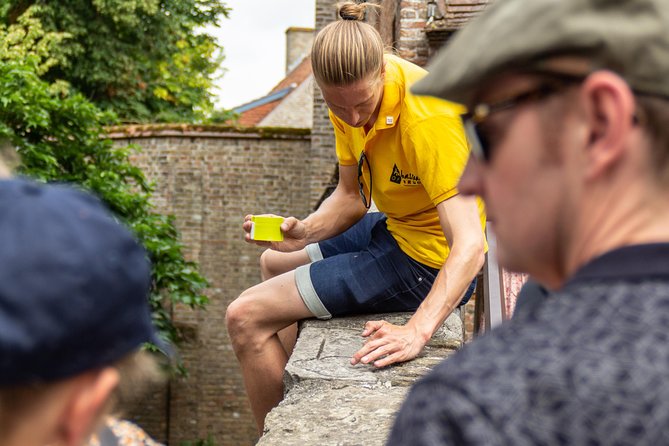
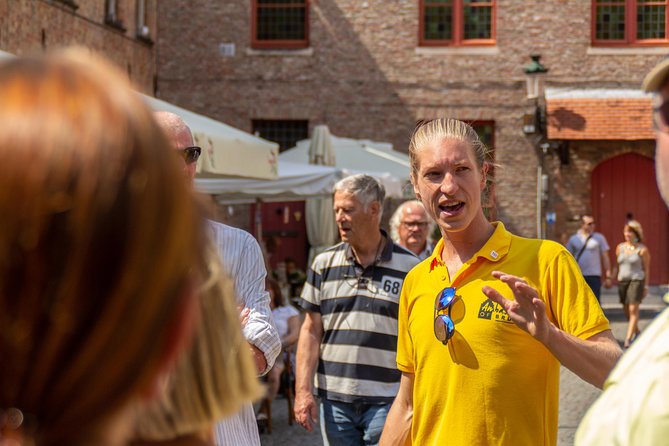
The strongest part of this experience is the quality of the storytelling. The most praised guides do not simply recite facts. They use humor, dramatic delivery, personal feeling, and clear explanations to keep the group involved.
Pascal is described as a particularly strong storyteller, with an energetic style that can feel almost like a one-person historical drama. Nick brings a local connection and a visible affection for Bruges. Arthur is praised for mixing historical context with useful advice, while Alasdair is noted for an easy-to-follow English presentation and a playful touch.
You may also meet Thijs or Gosha. The style can vary from guide to guide, which is normal for a multi-guide operation. The common thread is a story-first approach. If your guide is theatrical, let the performance work for you. The humor is not decoration; it is how the details stay in your head.
One useful caution is that Bruges has many stories, and not every colorful tale should be treated as hard fact. If you want a strictly academic presentation, ask follow-up questions and keep in mind that local storytelling can include legend, interpretation, and dramatic flourishes.
Price, gratuity, and the real value
The online price is listed at $3.62 per person. That is remarkably low for two to three hours of guided orientation, but it is not the complete expected cost because the tour operates on a pay-what-you-want basis.
Tips are welcome and expected at the end. The stated range is €10 to $50 per person, which is unusually broad. In practical terms, you should budget for a gratuity that reflects the time, energy, and quality of the guide rather than assuming the booking fee covers the service.
Even with a generous tip, the experience can offer good value if you are new to Bruges. You get a compact route through the main old-center sights, historical context, local suggestions, and a chance to ask questions. The value is strongest when you use the walk to plan the rest of your time.
It is less useful if you already know Bruges well or mainly want access to interiors. Admission tickets are not part of the tour, and most of the stop time is spent outside.
Group size, pace, and practical comfort
The booking limit is six people per reservation. Larger parties cannot split themselves into multiple bookings, and groups over six should contact Ambassadors Tours & Activities about arranging a private tour. The overall activity can include up to 24 people.
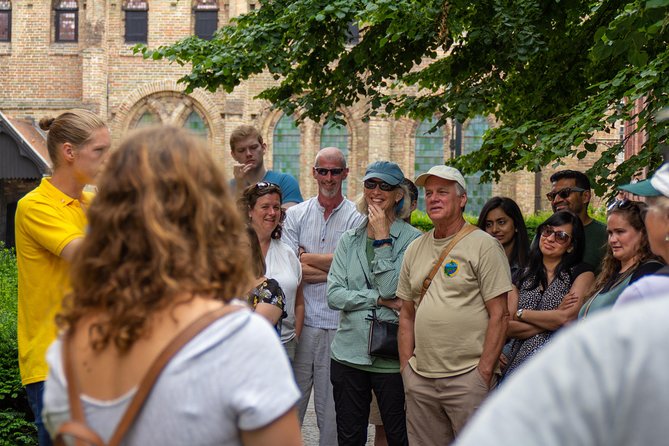
That creates a middle ground. You may get a small group with a personal feel, or a larger gathering where you need to stay close to the guide. The guide’s yellow umbrella helps, but the old center can become crowded.
The walk normally lasts two to three hours. The route is described as comfortable in distance, and one guide was praised for choosing a manageable route. Still, cobblestones cover many streets, and there is a small bridge with a few steps.
Bring weather protection. The tour requires good weather and can be canceled if conditions are poor. If that happens, you are offered another date or a full refund. You can also cancel for a full refund up to 24 hours before the start time. Changes or cancellations inside that window are not refunded.
Who should book this Bruges walk?
I would recommend it most strongly to first-time visitors, day trippers, couples, families, and solo visitors who want an easy introduction before choosing museums, restaurants, or longer sightseeing stops.
It is also a good fit if you enjoy learning through stories rather than long formal explanations. Children and adults can follow the humor and movement, though the two to three hour length and cobblestones may be tiring for some younger children.
You should think twice if you want a silent photography walk, a detailed architectural survey, or a tour with extensive indoor access. You should also be comfortable with the gratuity system and with the possibility that the guide’s storytelling includes legends alongside documented history.
Should you book it?
Book this walk if you are arriving in Bruges without much context and want the city to make sense quickly. The route covers the essential central landmarks, but its real strength is the way guides such as Pascal, Nick, Arthur, and Alasdair connect those places through stories, humor, and local advice.
The best plan is to schedule it early in your stay, then return to the places that catch your interest. Budget for a tip, meet carefully beneath the Belfry, wear sensible shoes, and expect a lively presentation rather than a quiet lecture. For a first look at Bruges, that is a small price for a much better sense of where you are.
FAQ
Where does the Bruges storytelling tour start?
It starts at Markt 8000 in Bruges, in front of the Belfry Tower. Look for the guide with a yellow umbrella a few minutes before the scheduled start.
How long does the tour last?
The walk takes approximately two to three hours.
What language is the tour offered in?
The tour is offered in English.
Is the tour suitable for people with limited mobility?
Most people can participate, but many streets are cobbled and the route includes a small bridge with a few steps.
How many people can book together?
A maximum of six people can book together. The overall activity can have up to 24 participants. Larger groups should contact Ambassadors Tours & Activities about a private tour.
Is gratuity included in the $3.62 price?
No. The online price includes the booking fee, but gratuities are separate, welcome, and expected at the end. The stated typical range is €10 to $50 per person.
What happens if the weather is poor or I need to cancel?
The activity may be canceled because of poor weather or because the minimum number of participants is not reached. You will then be offered another date or a full refund. You can cancel at least 24 hours before the start for a full refund.
Just added in Bruges
- 2-Hour Private Walking Tour of Bruges★ 5.0 · 13 reviews
- Ticket Expo Body Worlds in Bruges, Belgium★ 4.5 · 11 reviews
- 6 Hour Bruges Shore Excursion from Zeebrugge Cruise Port★ 4.5 · 23 reviews
- Explore the Instaworthy Spots of Bruges with a Local★ 5.0 · 3 reviews
- The Waffles ‘n Coffee Breakfast in Bruges Centre★ 4.5 · 9 reviews
- Australian Battlefields Private Tour in Flanders from Bruges★ 5.0 · 15 reviews
- Discover the secrets of Bruges by playing!★ 4.5 · 7 reviews
- Bruges Walking Tour with Audioguide on Your Smartphone★ 4.5 · 14 reviews
Historical Tours, compared.
Historical Walking Tour with Chocolate & Waffle Tasting
Read our review →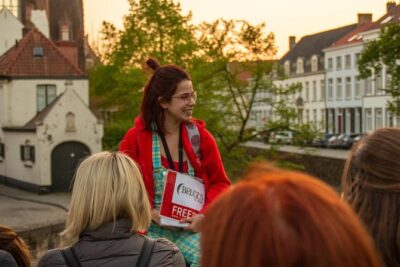
Browse the lists this tour appears in