
Reviewed · HISTORICAL TOURS
Historical Walking Tour: Legends of Gent
Ghent’s best stories are tucked into its streets, bridges, towers, and odd corners, and this two-hour walking tour strings them together well. You move from the medieval port to Gravensteen Castle, the cathedral, the Belfry, and the graffiti lane, while guides such as Tatiana, Kasia, Kenny, Sophia, Robin, and Camilla bring in jokes, local food tips, and tales of stubborn Ghent citizens.
I like the route’s strong first-day value and its mix of major sights with less obvious stops such as the House of Alijn and Werregarenstraat. I also like the flexible pay-at-the-end setup, though you should confirm the payment arrangement when you arrive, since one booking report describes a serious dispute over being asked to pay again. The walk lasts about two hours, and cobblestones, weather, and a group of up to 35 can affect your comfort.
Key things to know before you book
- See Ghent’s main center on foot: The route links 13 historic stops, from St Michael’s Bridge to St Nicholas Church.
- Expect stories, not interior visits: Several sites are viewed from outside, and entrance fees are not included where admission is listed.
- The guides make the difference: Tatiana, Kasia, Kenny, Sophia, Robin, Florian, and Camilla are singled out for humor, clear explanations, and local tips.
- Pay at the end: The experience uses a pay-what-you-want format, with an advertised booking price of $3.62 per person.
- Plan for a full two hours standing: The walk is not described as strenuous, but you remain on your feet over cobblestones.
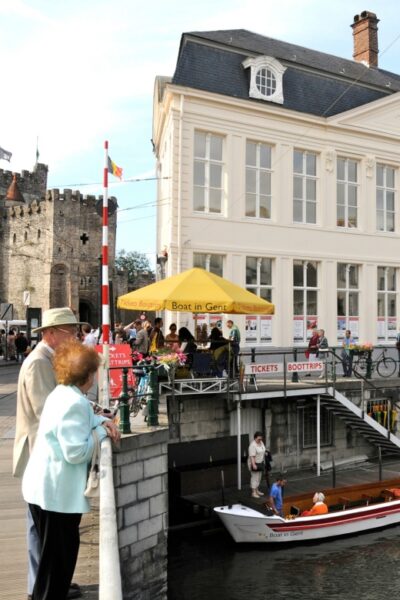
- Start near St Michael’s Bridge: Meet at Hostel Uppelink, Sint-Michielsplein 21, and finish near the Belfry on Sint-Baafsplein.
Why this Ghent walk works as a first look
Ghent can feel confusing at first. Its canals, towers, old guild buildings, castle, and narrow lanes are close together, but the city’s past is not always easy to read from the stone. This tour gives you a basic map of central Ghent while explaining why the city became wealthy, difficult to govern, proud, and occasionally rebellious.
I would use it early in a visit. Afterward, you can return to the places that caught your attention, such as the Ghent Altarpiece in St Bavo’s Cathedral, the Belfry, or Gravensteen. The walk does not try to replace a full museum visit. Its job is to give each landmark a story and put the center in order.
The English-speaking guides are a key part of the experience. Tatiana is praised for lively storytelling and a clear love of the city. Kasia is described as warm, funny, informed, and attentive to people dealing with hot weather. Kenny, Sophia, Robin, Florian, and Camilla also receive strong praise for making the past easy to follow.
That range matters because a walking tour depends on delivery. The same square can feel dull under a flat script or memorable when a guide explains the local joke behind it. Here, the format allows questions, and the guides often add suggestions for food, beer, chocolate, and things to do after the walk.
More Historical Tours in Ghent
- Ghent: 50-Minute Medieval Center Guided Boat Trip
★ 4.5 · 5,637 reviews - Ghent: 40 Minute Medieval Center Guided Boat Tour
★ 4.4 · 884 reviews - Evening Tour of the Dark Side of Gent
★ 5.0 · 646 reviews
St Michael’s Bridge and Ghent’s three towers
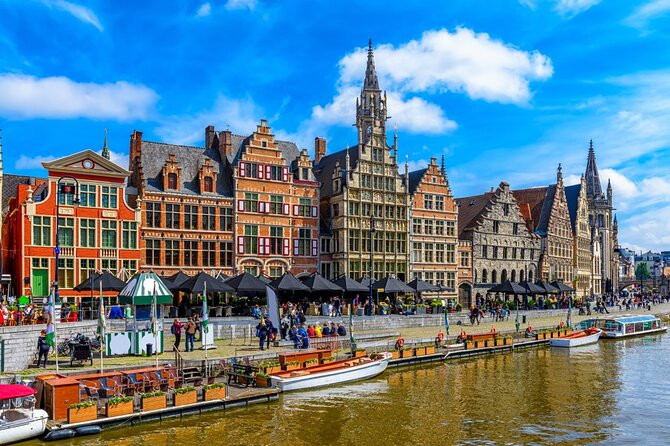
The tour begins at St Michael’s Bridge, a smart choice because it gives you an immediate view of Ghent’s skyline. From here, the three famous towers appear in sequence: St Nicholas Church, the Belfry, and St Bavo’s Cathedral.
This opening also introduces Ghent as a medieval trading center. That context helps explain why the city has such an impressive collection of churches, public buildings, warehouses, and merchant houses. You are not just looking at attractive stone. You are seeing the remains of a place that gained power through commerce and then fought to protect its independence.
The bridge is also a useful orientation point. If you are new to Ghent, the view helps you understand how the historic center is arranged. Have your camera ready, but listen closely too, since the guide uses this first stop to frame the rest of the walk.
Graslei, Korenlei, and the old port
At Graslei and Korenlei, the tour moves beside the water and into the city’s trading past. The guide points out which buildings were tied to shipping and commerce when this stretch served as Ghent’s port.
This is one of the most attractive sections of the route, but the explanation gives it more weight than a simple canal photo stop. Look up at the façades and consider their original purpose. The waterfront was a working part of the city, not just a scenic promenade.
You spend about 10 minutes here, so this is an introduction rather than a detailed architectural study. That is a fair trade on a city overview. If you want time for photographs or close study, plan to return later.
Design Museum Gent and the city’s stubborn streak
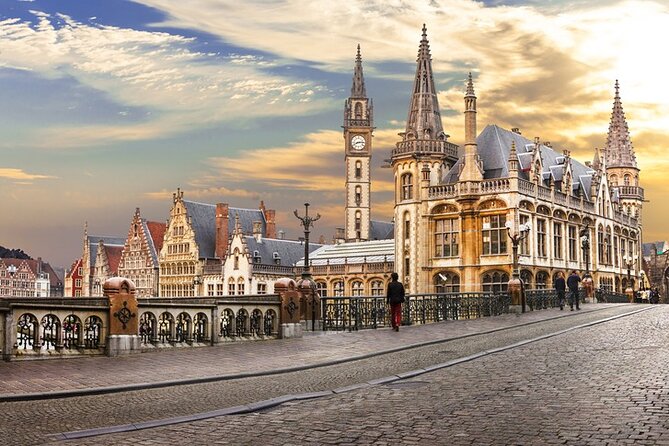
The stop outside Design Museum Gent adds a welcome change of subject. Instead of focusing only on medieval trade or church architecture, the guide uses the museum and one of its features to explain the stubborn, rebellious character associated with the people of Ghent.
The museum itself is not included as an admission visit. You hear the story from outside, then continue. This is a good reminder that the tour is built around interpretation and movement, not paid entry at every stop.
I like this pause because it connects the city’s past to its local identity. Ghent is presented not only as an old city with pretty buildings, but also as a place with a strong sense of independence and a willingness to resist authority.
More Walking Tours in Ghent
- Ghent: Belgian Chocolate Walking Tour with Tastings
★ 4.9 · 259 reviews - Gastronomic Walking Tour of Gent – Tasters included
★ 5.0 · 199 reviews - Ghent: City Highlights and Hidden Gems Guided Bike Tour
★ 4.7 · 196 reviews - Ghent: Private 2-Hour Walking Tour
★ 4.7 · 134 reviews
The Great Butchers’ Hall and the darker side of trade
At Het Groot Vleeshuis, you look across the water toward the medieval covered Great Butchers’ Hall. The guide shares darker facts about the building, which gives the tour some edge.
This stop helps balance the handsome waterfront views. Medieval commerce was practical and sometimes grim, and the guide does not treat the old center as a picture-perfect stage with all the difficult parts removed. You get a glimpse of how food, regulation, and city life were connected.
The stop lasts about 10 minutes and does not require admission. It is a quick story, but it adds useful texture to the trading history introduced at the start.
Gravensteen, Ghent’s castle in the city center
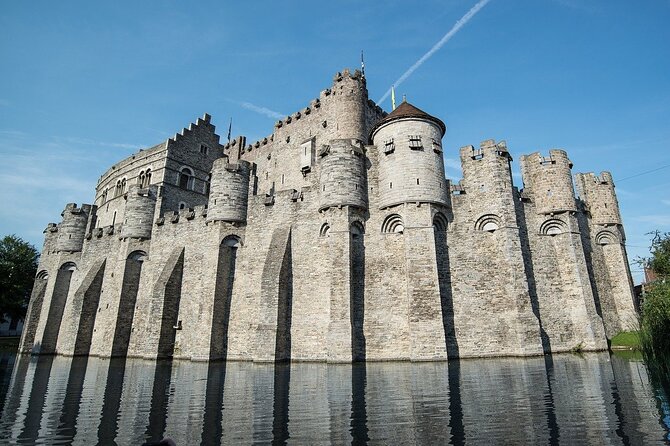
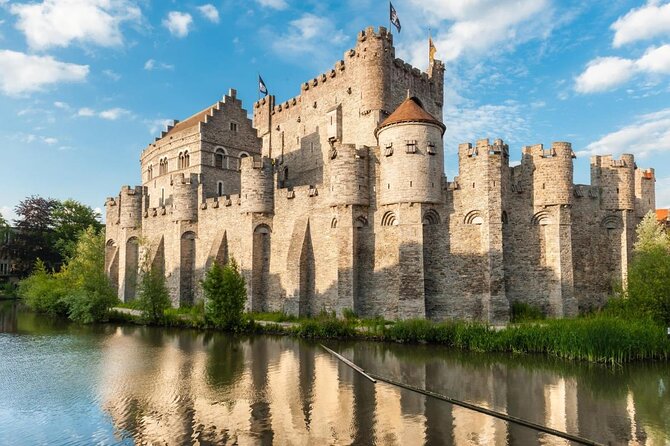
Gravensteen is the route’s most dramatic sight. The Castle of the Counts sits in the middle of Ghent, not far from the old port, and is unusually well preserved. The tour explains its past from the outside.
That location is part of the appeal. You do not need to leave the center to see a real medieval castle. Its walls, towers, and position beside the surrounding streets make it easy to understand how power once operated inside the city.
Admission is not included, so you should treat this stop as a preview. If castles are your main interest, return for the interior on your own. The walking tour gives you context and a reason to look closer, but 10 minutes cannot cover the full building.
St Veerleplein, the square of death and life
The square in front of Gravensteen is known as the square of death and the square of life. The guide explains the contrast, turning what might seem like an ordinary open space into one of the route’s more memorable story stops.
This is the sort of detail that makes a local walk useful. You can photograph the castle without knowing anything about the square, but the story gives the space a human scale. It also shows how public places in a medieval city could serve very different purposes over time.
The tour keeps moving, which helps maintain energy. If you prefer long pauses at each landmark, the pace may feel brisk. If you want a broad introduction, the steady rhythm works well.
The House of Alijn and everyday Ghent
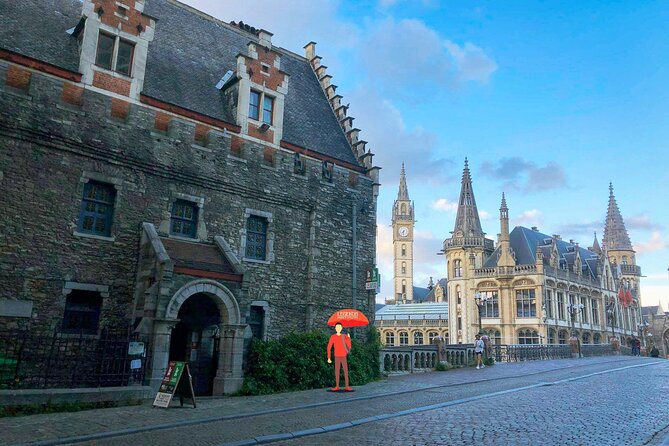
Huis van Alijn, or the House of Alijn, is described as a former hospital and the only remaining god house in Ghent. The guide explains the unfortunate story behind its use as a hospital.
This stop shifts attention away from rulers and grand churches. It asks you to think about ordinary care, illness, and community life. You do not get a long museum visit here, but the building’s past adds another layer to the city.
That range is one of the tour’s strengths. In a single walk, you hear about merchants, rulers, prisoners, church art, street artists, and people who needed medical care. Ghent becomes more than a collection of monuments.
Vrijdagmarkt and the man at its center
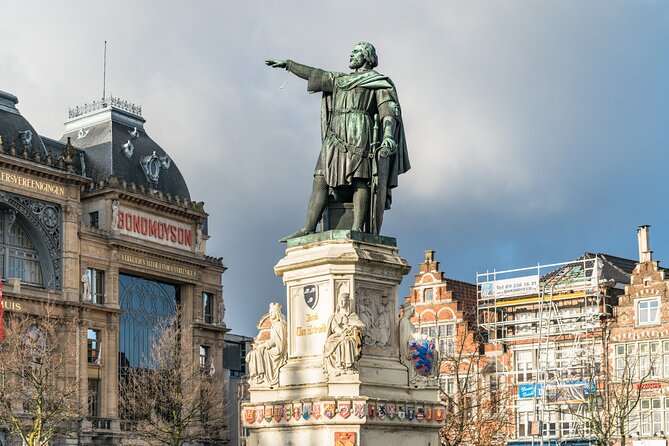
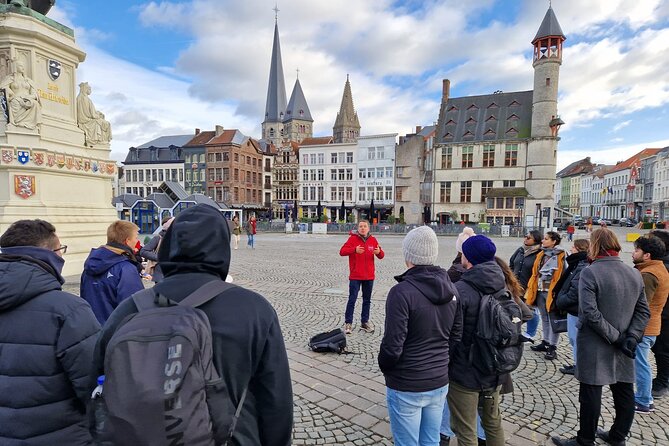
Vrijdagmarkt has played an important role in Ghent’s past, and the statue in the middle gives the guide another opening for local history. The square has enough space for the group to gather while the guide explains its role and the figure represented there.
This is a useful stop for understanding how public squares shaped city life. The tour does not simply move from one pretty façade to the next. It points out places where public power, memory, and conflict were displayed.
As with the other outdoor stops, you should expect a focused explanation rather than a long lecture. The guide’s storytelling style matters here, and the strongest reports about the tour repeatedly praise humor and clear delivery.
Werregarenstraat and modern street art
Werregarenstraat is Ghent’s designated graffiti lane. The city created this space so street artists could work without covering the main historic buildings, and the tour walks you through it.
This is a sharp contrast with the medieval churches and castles. It also shows how the city manages the tension between protecting old architecture and allowing present-day expression. The lane can feel rougher and more informal than the polished squares, which is exactly why it belongs on a tour about Ghent’s character.
You should not expect a formal art lesson. The value is seeing a living part of the city and understanding why it exists. It is also a good spot for a few quick photographs before the route returns to major civic buildings.
Town Hall and Ghent’s great conflict
At Ghent Town Hall, the guide explains why the building looks confused. Its mixed architectural appearance reflects one of the most important conflicts in the city’s past.
This is a useful example of how buildings can record political change. Instead of treating the town hall as a single design, the guide shows you how different periods and competing ambitions left their mark.
Admission is not included. You view the exterior and hear the story, then continue toward St Bavo’s Cathedral. For many visitors, this stop may be more useful than a list of dates because it explains what the building is trying, and failing, to say.
St Bavo’s Cathedral and the Ghent Altarpiece
St Bavo’s Cathedral is one of the tour’s major highlights. The guide covers its long past and points to the art treasures inside, most notably the Ghent Altarpiece by the Van Eyck brothers.
The tour does not turn into a full cathedral visit, so set aside extra time if the altarpiece is high on your list. The walking portion gives you the essential reason to enter and helps you recognize the importance of what you are seeing.
I especially like this stop for first-time visitors because art can be hard to place without context. A short explanation of the cathedral and the altarpiece makes a later visit more rewarding. The cathedral stop is listed as free on the route, but that does not mean every interior exhibit or access arrangement is covered, so confirm details locally if you plan a separate visit.
The Belfry and the people’s tower
The Belfry of Ghent is the final major landmark before the closing church stop, and the tour describes it as the people’s tower. Its story reflects Ghent’s power, independence, and stubborn civic spirit.
The façade also carries a strange legend connected with its former use as a prison. That detail gives the tower a more personal feel. You are not only hearing about a civic symbol, but also about the odd stories that cling to old public buildings.
The tour ends near the Belfry on Sint-Baafsplein, which is convenient if you want to continue exploring the center. Admission to the Belfry is not included. If you want to climb or visit inside, plan that separately.
St Nicholas Church and the final legend
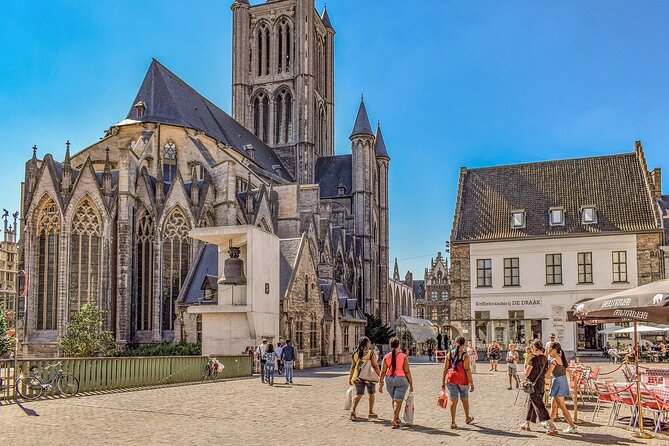
The last stop is Esglesia de Sant Nicolau, or St Nicholas Church, looking over Korenmarkt. Dating from the early 12th century, it is dedicated to St Nicholas, the protector of merchants and sailors.
The façade provides the final legend of the walk. It is a fitting ending because the route began with trade and the medieval port, then returns to a church linked with merchants and sailors.
The closing stop is not just a spare final landmark. It ties together the commercial, religious, and civic threads introduced earlier. After about two hours, you finish with a clearer sense of why Ghent’s center has the shape and character it does.
Price, group size, and the pay-at-the-end format
The advertised price is $3.62 per person, but the experience is presented as pay what you want at the end. That can offer excellent value if you want a broad introduction without committing to an expensive private tour.
The important practical point is to understand how payment works before the walk begins. One serious account describes a family being asked for a large extra payment despite having booking proof, with confusion over different booking platforms. That is not consistent with the otherwise very strong response, but it is enough reason to keep your confirmation available and ask the guide to explain the arrangement clearly.
Groups can reach 35 people. Many walks may be smaller, but you should be prepared for a crowd at popular stops. Some guides use a microphone, which helps, and the best guides keep people together with strong voices, humor, and a clear pace.
Comfort, weather, and who should book
You remain on your feet for roughly two hours. The walk is generally manageable, but cobblestones can bother some people, and hot weather may make the pace feel harder. Wear practical shoes and check the forecast. The experience can be canceled in poor weather, with a new date or refund offered.
This tour suits you best if you want a first look at central Ghent, enjoy local stories, and plan to explore key buildings in more detail afterward. It is also a good choice for a short stay because it covers a large part of the center in one continuous walk.
You may want something else if you prefer long museum visits, a private guide, or a very slow architectural study. The route gives you many short introductions, not extended time inside each attraction. One guide also leaned heavily on commercial recommendations, especially chocolate, so tell your guide if you prefer history over shopping suggestions.
Should you book the Legends of Gent tour?
I would book this tour near the start of a Ghent visit. It covers the main sights, adds unusual stories, and gives you practical food and drink suggestions from a local guide. The strongest part is the combination of clear history and personality, especially with guides such as Tatiana, Kasia, Kenny, Sophia, Robin, Florian, and Camilla.
The drawbacks are manageable: expect two hours standing, an outdoor route, possible crowding, and separate admission for several interiors. Keep your payment confirmation handy and clarify the pay-at-the-end process. If you want orientation, local character, and good value, this is a sensible way to meet Ghent before exploring it on your own.
FAQ
How long does the Legends of Gent walking tour last?
The tour lasts approximately two hours and includes 13 stops in central Ghent.
Where does the tour start?
The meeting point is Hostel Uppelink, Sint-Michielsplein 21, 9000 Gent, Belgium, near St Michael’s Bridge.
Where does the tour end?
The tour ends at the Belfry of Ghent on Sint-Baafsplein, 9000 Gent, Belgium.
Is the tour offered in English?
Yes. The experience is offered in English and uses a mobile ticket.
Are admission fees to the landmarks included?
The tour includes all listed fees and taxes, but admission is not included at stops such as Design Museum Gent, Gravensteen, Town Hall, and the Belfry. The route mainly explains these places from outside.
What is the cancellation policy?
You can cancel at least 24 hours before the start time for a full refund. Cancellations or changes made within 24 hours are not refunded or accepted. If poor weather or an insufficient number of participants causes cancellation, you are offered another date or a full refund.
More of the past around Ghent
- Ghent: 40-Minute Historical Boat Tour of City Center
★ 4.3 · 430 reviews - Private Historical Tour: The Best of Ghent
★ 5.0 · 115 reviews - Bicycle tour in historic Ghent
★ 5.0 · 87 reviews - Private Tour: The Dark Side of Gent
★ 5.0 · 73 reviews
More guided walks around Ghent
- Ghent: Famous Belgian Chocolate Walking Tour with Tastings
★ 5.0 · 131 reviews - Ghent: Guided Walking Tour and Canal Boat Trip
★ 3.8 · 128 reviews - Ghent: Guided Walking Tour
★ 4.3 · 115 reviews - Ghent Beer Guided Walking Tour
★ 5.0 · 87 reviews
Just added in Ghent
- Historic Highlights, by a local guide★ 5.0 · 9 reviews
- Discover Ghent while playing! Escape game – The Walter case★ 4.5 · 4 reviews
- Walking Food Tour in Ghent★ 5.0 · 13 reviews
- Discover Ghent while playing! Escape game – The alchemist★ 4.0 · 4 reviews
- Ghent Walking Tour with Audioguide on Your Smartphone★ 4.5 · 13 reviews
- e-Scavenger hunt Ostend: Explore the city at your own pace★ 4.5 · 10 reviews
- Discover Mons while playing! Escape game – The alchemist★ 4.0 · 5 reviews
- e-Scavenger hunt Mons: Explore the city at your own pace★ 5.0 · 4 reviews
Historical Tours, compared.


Historical Walking Tour with Chocolate & Waffle Tasting
Read our review →

THE Storytelling Tour of Bruges | First Day Must | History & Tips
Read our review →

Browse the lists this tour appears in