

Reviewed · HISTORICAL TOURS
Evening Tour: The Dark Side of Brussels
Brussels reveals a different personality after sunset. This walking tour links grand squares, Gothic churches, old neighborhoods, and the Palais de Justice with stories about punishment, murder, suicide, political power, and the less polished corners of the city. It is not a ghost tour or a walk through Brussels nightlife. Think of it as an evening history lesson with a darker edge.
I like the unusual subject matter, especially when the guide connects famous buildings with the events and social forces behind them. I also like the route, which moves from central Brussels toward the Marolles and ends near Kapellekerk instead of circling back to the start. The main drawback is the title: much of the walk is a general history tour with a few disturbing stories, not a nonstop tour of the city’s underworld.
Key points to know before booking
- The dark side means difficult history: Expect stories about torture, punishment, murder, suicide, politics, and old injustices rather than modern crime or ghost stories.
- The route runs downhill and across several districts: You see Sablon, the Palais de Justice, the Marolles, and Kapellekerk over about two hours.
- The price is unusually low: Booking is listed at $3.62 per group of up to six, but tipping your guide is an important part of the experience.
- Guide quality shapes the evening: Sebastian, Rahim, David, Ann Marie, Regime, Ian, and others have been praised for clear storytelling, humor, and enthusiasm.
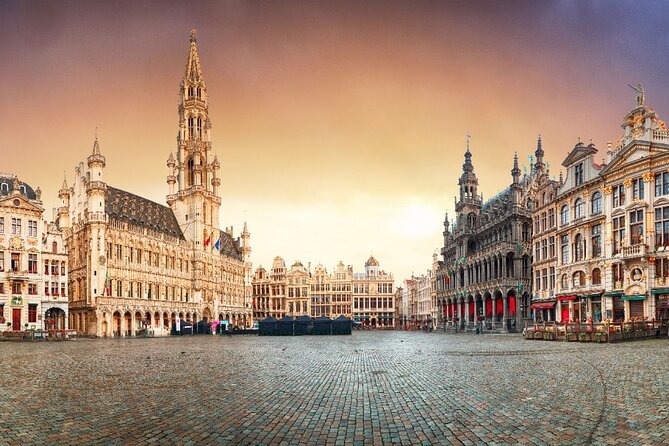
- The meeting point needs care: The tour begins at the Grand Place, with the guide reported to be in front of City Hall.
- It suits walkers in reasonable shape: The route can feel more strenuous than the short stop times suggest, and some parts are uphill or over uneven streets.
What the title gets right, and what it gets wrong
The Dark Side of Brussels is best understood as a night walk through the city’s uncomfortable footnotes. You will hear about punishment, torture, crime, social divisions, and political forces, but you will also get ordinary architectural and civic history.
That mix is part of the appeal. A guide can point out a church, square, or courthouse and then explain the less pleasant story attached to it. You get context rather than a string of spooky tales. The walk can be especially useful if you have already seen Brussels by day and want a different angle on familiar streets.
Still, set your expectations correctly. Several stops are standard landmarks, and some of the commentary is about art, architecture, local neighborhoods, or Belgian history. If you want grisly detail at every corner, you may find the tour too mild. If you enjoy unusual facts mixed with a broad city walk, the balance works well.
More Historical Tours in Brussels
- Brussels: Historical Walking Tour with Chocolate & Waffle Tasting
★ 5.0 · 1,165 reviews - Brussels: Historical Tour with Chocolate & Waffle Tasting
★ 4.8 · 642 reviews - Brussels 3-Hour Guided Art Nouveau Tour
★ 4.0 · 282 reviews
Beginning at the Grand Place and Grand Sablon
The official meeting point is the Grand Place, Grote Markt, in central Brussels. The guide has been described as waiting in front of City Hall, so arrive early and look for the group there rather than assuming the guide will be obvious in the middle of the square.
This is a busy meeting point, especially in the evening. One person missed the guide after arriving early and searching for 25 minutes, while the guide reported being near City Hall. That makes a little preparation worthwhile. Give yourself extra time to reach the square, especially if you are coming by metro, and keep the meeting instructions available on your phone.
The route then takes you toward Place du Grand Sablon. The area is known for elegant buildings, cafés, galleries, and food stalls, though the exact market activity depends on the time and day. Here, the dark-history theme works through the contrast between polished surroundings and older stories about the people and institutions connected with the district.
The first stop is listed as about 10 minutes, with no admission fee. Do not expect to enter a museum or church at every stop. The value comes from listening to the guide while looking at the setting in front of you.
Place Saint-Jean and the Anneessens district
Place Saint-Jean offers a quieter pause among older buildings and cafés. The church gives the guide a useful starting point for discussing Brussels before the modern city took shape. This is one of the stops where the walk may feel more like a traditional city tour than a dark-stories tour.
That is not a bad thing. The unusual stories make more sense when you understand the city’s religious, civic, and social structure. I find these connective explanations more useful than isolated tales with no sense of place.
The route continues through Tour Anneessens, an area associated with mixed architecture and a more everyday side of Brussels. The stop is brief, about 10 minutes, but it helps shift the tour away from postcard Brussels. You see a district shaped by different communities and periods rather than only the grand central sights.
Some criticism of the tour centers on stops that seem less impressive than the main landmarks. That is a fair point. This walk is trying to show you a less polished Brussels, so not every pause will look spectacular. The reward depends on how much you value local context over a checklist of famous buildings.
Rue de Rollebeek and Notre-Dame du Sablon
Rue de Rollebeek is a pleasant historic street with cobblestones, small cafés, and shops. In daylight, it is easy to treat a street like this as background scenery. At night, the guide can make it feel more connected to the city’s older social life and changing neighborhoods.
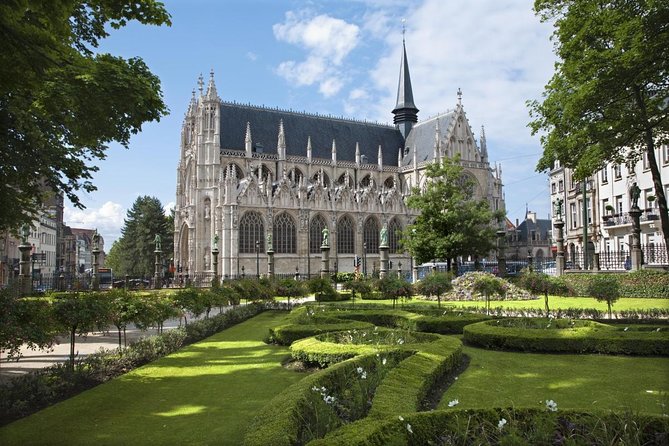
The route reaches Notre-Dame du Sablon, one of Brussels’ most striking Gothic churches. Its stained glass and detailed exterior give the guide plenty to discuss, while the interior offers a calmer break from the city streets if it is open and accessible during the tour. The listed stop lasts around 10 minutes and does not include a separate admission charge.
This is one of the strongest parts of the walk for people who want architecture alongside darker stories. You get a beautiful church, but the point is not simply to admire it. The guide places the building within the broader story of Brussels, including religion, power, and the public rituals of earlier centuries.
Guides vary in delivery. Some, including Sebastian, David, and Rahim, have been praised for mixing humor with historical detail. Another guide was described as friendly but quiet, which made it harder to hear in a larger group. With a maximum of 35 people, position yourself near the guide if hearing every detail matters to you.
Other ways into the past around Brussels:
- Historical Walking Tour: The Story of Brussels – by Legends
★ 5.0 · 164 reviews - Brussels: Art Nouveau Pass – Entry to Three Locations
★ 4.0 · 108 reviews - Brussels: Museum Art & History Entry Ticket
★ 4.5 · 58 reviews - Brussels: The comic book walls walking tour
★ 4.7 · 38 reviews
The Palais de Justice and the biggest views
The Palais de Justice is the route’s most imposing landmark. Set high above the surrounding streets, it is enormous, theatrical, and difficult to ignore. The building is tied naturally to the tour’s themes of law, punishment, authority, and public justice.
You also get broad views across Brussels from this part of the city. The outlook adds variety to the evening and gives you a chance to understand how the central districts fit together. It is a welcome change after several close-packed streets and squares.
The stop lasts about 10 minutes, but allow for the walk to and from it. The route is not simply a flat sequence of nearby squares. One person found the walk more strenuous than expected, though still manageable in reasonable shape. Comfortable shoes are a smart choice, and you should be prepared for hills, cobblestones, and a steady pace.
The Palais de Justice is also a good example of the tour’s strengths and limits. The site has enough scale and political weight to support a serious discussion, but the experience depends heavily on the guide’s storytelling. The best guides use the building to explain how law and power affected ordinary people. A weaker presentation could leave you admiring a large building without much lasting insight.
Petit Sablon and the city’s symbols
Square du Petit Sablon is a pretty garden surrounded by 48 small bronze statues representing medieval guilds. The setting is formal and peaceful, which creates another useful contrast with the tour’s harder material.
Look closely at the statues and the layout of the square. The details help explain how trade groups, civic identity, and public display shaped Brussels. This is also a pleasant stop for photos, although evening light may make the sculptures harder to study.
The stop is listed at about 10 minutes. As with the other outdoor sites, access is free. You do not need to budget for entrance tickets, but you do need to pay attention to the guide. The stories are the product you are really buying, even when the booking price is close to zero.
Place du Jeu de Balle and the Marolles
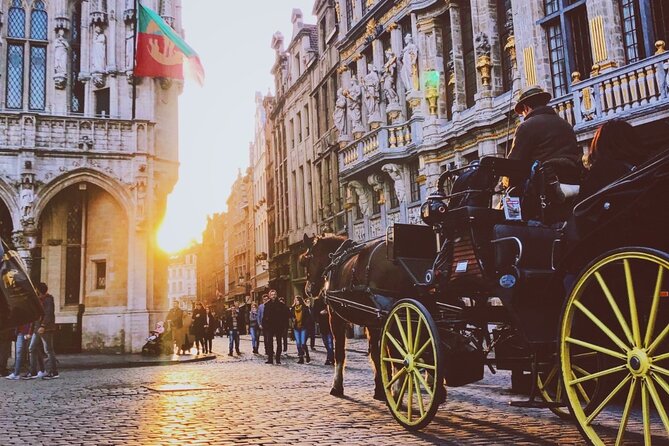
The route then heads to Place du Jeu de Balle, the heart of the Marolles district. A flea market operates here every day, with old photographs, second-hand clothes, vintage furniture, trinkets, and other objects. Depending on the hour, the market may be quiet or winding down, but the square still gives you a sense of the area’s less formal character.
This is one of the most authentic-feeling parts of the walk. The Marolles is not presented as a polished monument zone. It is a neighborhood with its own identity, and the guide uses it to show a side of Brussels that you could easily miss on a standard highlights route.
The setting also suits the tour’s darker subject. Old objects and ordinary streets can carry stories about poverty, crime, class, and survival, but the guide may also simply discuss local life and city history. Again, the title promises more darkness than the full route delivers.
If you are hoping for a short, compact walk around the Grand Place, this is not it. The route covers a considerable part of central Brussels and ends in a different neighborhood. That is a benefit if you want to see more of the city, but it means you should plan your evening around the walk rather than squeeze it between tight dinner or train plans.
Ending at Kapellekerk
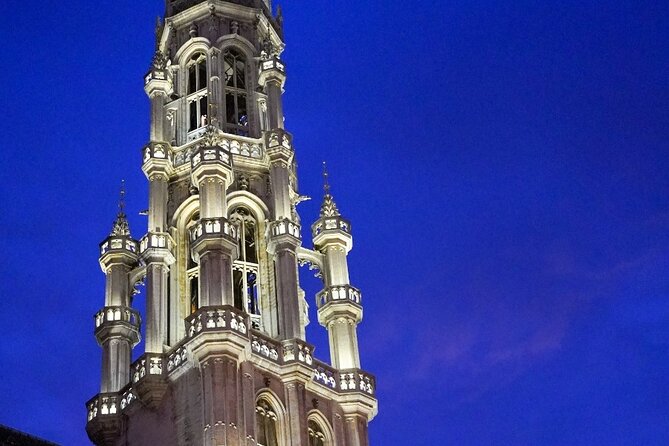
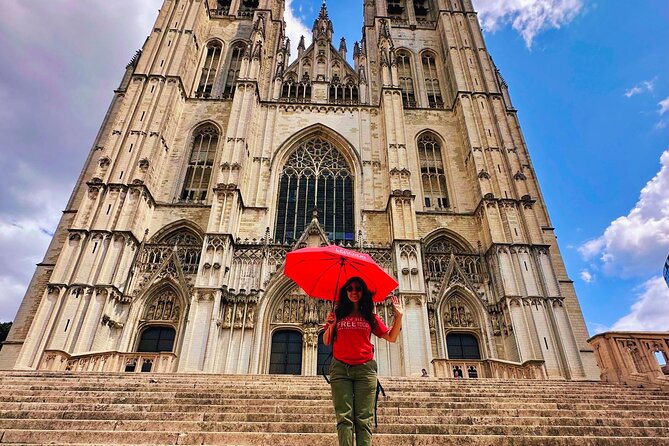
The final stop is Église Notre-Dame de la Chapelle, also called Kapellekerk. The church dates back to a chapel founded here in 1134, and its Gothic form fits the tour’s interest in older Brussels.
The tour ends near Rue des Ursulines, in the Marolles. This is practical if you want to continue exploring that neighborhood, find a drink, or walk onward through central Brussels. It is less convenient if you assume you will finish at the Grand Place, so check your route before booking a timed activity afterward.
The final stop is short, about five minutes. Most of the storytelling happens along the route, not in a formal closing presentation. If the guide has done a good job, you finish with a clearer sense of how Brussels developed and why its grand buildings often have complicated stories behind them.
Guides, group size, and the tipping question
The guides are the central reason to book this experience. Rahim has been praised for warmth, humor, and a strong desire to teach. Sebastian has been described as entertaining and well informed, while David received praise for projecting his voice and handling a fairly large group. Ann Marie was singled out for storytelling and for welcoming questions.
Other guides, including Ian, Regime, and Gunny, have also been praised for making the history accessible. The names may change from one departure to another, so you should not book solely because you hope for a particular person.
The listed price is $3.62 per group of up to six, which makes this one of the least expensive ways to see Brussels with a guide. In practice, the low booking price functions like a free walking tour model. You should bring euros and plan a fair tip if the guide gives you a useful evening.
This matters because the guide may spend well over two hours with the group, even though the official duration is about two hours. A very low booking cost does not mean the work has little value. Budget for the tip when comparing this walk with paid city tours.
Who will enjoy this Brussels night walk?
I would recommend it to you if you:
- Want a broad introduction to Brussels with unusual historical stories
- Enjoy walking through neighborhoods rather than visiting only major attractions
- Prefer politics, law, punishment, and social history to simple sightseeing
- Have already seen the Grand Place and want a different evening route
- Are comfortable walking for up to two hours over hills and cobbled streets
- Like tours where the guide’s personality is part of the experience
You may want another tour if you want a strictly dark or frightening experience. The walk is not consistently grim, and several stops focus on churches, architecture, neighborhoods, and civic history. It is also not ideal if you need a perfectly fixed itinerary. The route has sometimes been adapted to the group, and one person felt the advertised sequence was not followed.
The tour requires a minimum number of participants. If that minimum is not met, the provider offers another date or experience, or a full refund. You can cancel for a full refund up to 24 hours before the start time, but changes or cancellations inside that window are not accepted.
Should you book The Dark Side of Brussels?
Book it if you want an inexpensive, thoughtful introduction to Brussels after dark and you are happy with a broad history walk rather than a pure crime tour. The best guides turn ordinary streets and famous buildings into stories about law, politics, religion, punishment, and social life.
Skip it if you need a short route, guaranteed guide assignment, or a steady stream of shocking tales. The tour’s strongest feature is its range, not its strict darkness. Arrive early at City Hall, wear good walking shoes, stay close enough to hear the guide, and bring money for a tip. With those expectations, this is a strong-value way to see Brussels from a less polished and more curious angle.
FAQ
Where does the tour begin?
The tour begins at Grand Place, also called Grote Markt, at 1000 Brussels. The guide has been reported to wait in front of City Hall.
Where does the tour end?
It ends at Kapellekerk, or Église Notre-Dame de la Chapelle, on Rue des Ursulines in Brussels.
How long does the tour last?
The stated duration is approximately two hours. Some guides may continue longer, according to the experience described by participants.
What language is the tour offered in?
The tour is offered in English.
What is included in the price?
A professional guide is included. The booking price is listed as $3.62 per group of up to six people.
Is the tour really about Brussels’ dark side?
It covers darker subjects such as torture, murder, suicide, punishment, and political history. It also includes architecture, churches, neighborhoods, and general city history, so it is not dark at every stop.
How many people can join?
The activity has a maximum group size of 35 people.
Is the route physically demanding?
The walk can be more strenuous than the short stop times suggest. You should be comfortable walking for about two hours, including hills and cobbled streets.
Are admission tickets included?
The listed stops have no admission charge. The experience is an outdoor walking tour with a professional guide.
Can I cancel the booking?
You can cancel up to 24 hours before the start time for a full refund. Cancellations or changes made less than 24 hours before the start time are not accepted.
Just added in Brussels
- Standard vehicle from Brussels airport to city of Antwerp★ 5.0 · 4 reviews
- Luxury vehicle from Brussels airport to the city of Brussels★ 4.0 · 5 reviews
- Transfer Brussels Airport (BRU) –> City Center 7 PAX (ONE WAY)★ 5.0 · 7 reviews
- PRIVATE MPV TRANSFER FROM/TO BRUSSELS AIRPORT (Max 6 pax) ONE-WAY★ 5.0 · 4 reviews
- Luxury Minivan from Brussels airport to the city of Brussels★ 4.0 · 7 reviews
- Transfer Brussels Airport –> Brussels MB V Class 7 PAX (ONE WAY)★ 5.0 · 4 reviews
- Transfer Brussels Airport –> City MB E Class 1-3 PAX (ONE WAY)★ 5.0 · 6 reviews
- Brussels: City Walk with Audioguide in 7 Languages on your Phone★ 3.5 · 4 reviews
Historical Tours, compared.
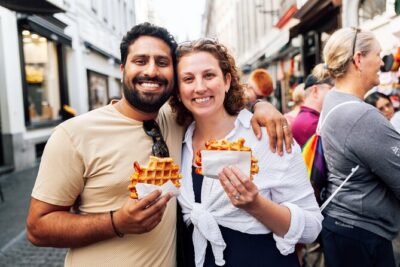
Historical Walking Tour with Chocolate & Waffle Tasting
Read our review →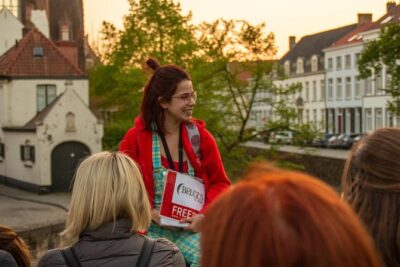
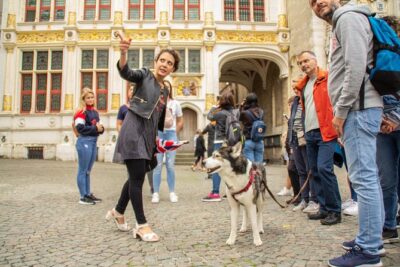
THE Storytelling Tour of Bruges | First Day Must | History & Tips
Read our review →
Browse the lists this tour appears in