
Reviewed · HISTORICAL TOURS
Architecture Tour of Brussels
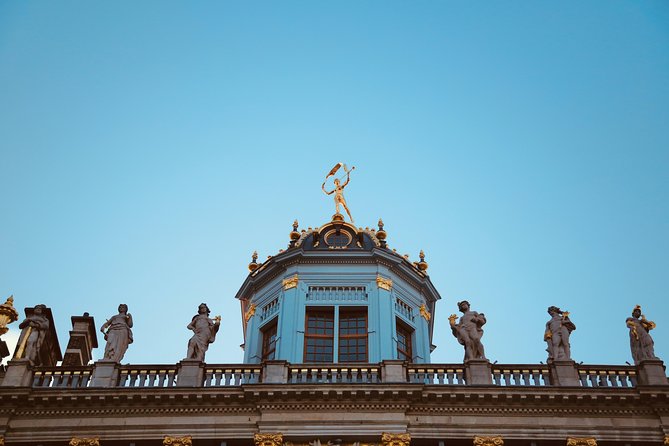
Brussels reveals its character through buildings, and this evening walk gives you a useful way to read the city. You move from the Gothic and Baroque facades of Grand Place to theaters, shopping arcades, churches, civic buildings, and a final panorama from Mont des Arts. The focus is not just on seeing sights, but on understanding why they look the way they do.
I like the architect-led approach, especially at Grand Place, where a market surrounded by wooden houses became one of Europe’s great squares. I also like the small maximum of 18 people, which leaves room for questions and can make the walk feel personal. The main consideration is pace: ten stops in roughly two hours means some places receive only a short explanation.
Key points to know before you book
- Grand Place sets the tone: You begin at Brussels’ UNESCO-listed showpiece and examine its Gothic and Baroque facades.
- The route covers a lot: Expect Grand Place, the Galeries Royales, La Monnaie, Manneken Pis, Sablon, BOZAR, and Mont des Arts.
- The evening timing is useful: The 8:00 pm start gives the old center a different mood and avoids the heat of a daytime walk.
- The guide shapes the experience: Gamaal and Jimmy are named in the feedback, with particular praise for clear explanations, humor, and adapting the tour.
- The final view is a highlight: Mont des Arts gives you a classic look toward the city hall tower and Royal Palace.
- It is good value for a walking introduction: At $30.10 per person, the tour is less about entering attractions and more about seeing many key places with context.
Starting at Grand Place after dark
Meet at the Godiva shop at Grand Place 21/22 for the 8:00 pm departure. The square is an easy place to find, but give yourself time to arrive because it can be busy and visually distracting. You do not want to spend the first minutes searching for the meeting point beneath those ornate facades.
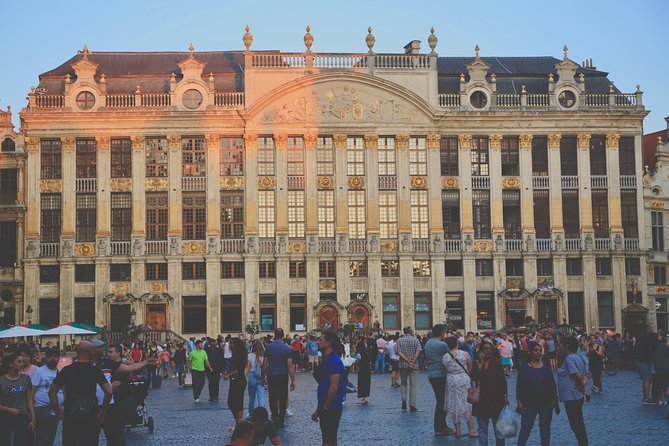
Grand Place is the right opening. It is not simply a pretty plaza for photographs. The guide explains how it began as a market ringed by wooden houses, then changed through the centuries into the Gothic and Baroque setting you see today.
You will spend about 20 minutes studying the facades and hearing about people connected with the square. That architectural focus is useful because Grand Place can otherwise become a quick photo stop. Look up at the decorative details, compare the buildings, and listen for the political and social stories tied to them.
The square is also a good test of what you want from this tour. If you like buildings explained in plain language, the opening should work well. If you prefer long interior visits, museum time, or a slower photography walk, the format may feel brisk.
More Historical Tours in Brussels
- Brussels: Historical Walking Tour with Chocolate & Waffle Tasting
★ 5.0 · 1,165 reviews - Brussels: Historical Tour with Chocolate & Waffle Tasting
★ 4.8 · 642 reviews - Evening Tour: The Dark Side of Brussels
★ 4.5 · 435 reviews
Galeries Royales Saint-Hubert and the city’s cafe culture
The next stop is the Galeries Royales Saint-Hubert, described as the first shopping mall in the world. It opened in the same period as modern Belgium, giving the guide a chance to connect architecture with the country’s early national identity.
The story here centers on the architect’s ambition and the work needed to turn that idea into a real building. You will hear about the network of contacts and hard effort behind the project, rather than only admiring the glass roof and elegant shopping passages.
The galleries also bring Brussels’ literary and cafe culture into the walk. The route passes cafes associated with famous authors who used them as places to meet, write, and shape their work. You should not expect a cafe visit or a literary lecture, but this short stop adds a human scale to the architecture.
At about 20 minutes, this is one of the fuller sections. It gives you enough time to look closely, though the group will keep moving.
La Monnaie, Place De Brouckere, and the old water route
La Monnaie takes about ten minutes. This royal theater has a long story tied to performance, public life, and the area’s shopping streets. The stop also touches on the revolution connected with the theater, giving you a glimpse of how a cultural building can become part of political change.
Next comes Place De Brouckereplein, another short stop. Here the discussion turns to the De Brouckere palace and the old river route that once ran through the city. You learn how water helped form part of Brussels’ defenses and how that route became a backbone of the town.
This is one of the tour’s most useful ideas: Brussels is not only a collection of grand facades. Its streets and squares also follow older patterns of trade, water, defense, and movement. The guide’s architectural training can help you connect those pieces.
The drawback is simple. Ten minutes is enough for an introduction, not a full examination of either place. You will need to accept that some stops are scene setters rather than detailed visits.
La Bourse and the changing center of Brussels
At La Bourse de Bruxelles, the guide traces the development of the stock exchange from Bruges to Grand Place and then to its present square. That movement reflects the way commercial power shifted as the city grew.
The building itself has taken on a new cultural role as a Brussels art destination. This gives the stop a modern angle. You are not only hearing how an old civic building was created, but also how historic structures can be used again.
The time here is about ten minutes. It is enough to understand the building’s place in the city, but you should not expect to go inside or spend time exploring exhibitions. The tour’s value comes from the connections between place, commerce, architecture, and changing public use.
Other ways into the past around Brussels:
- Brussels 3-Hour Guided Art Nouveau Tour
★ 4.0 · 282 reviews - Historical Walking Tour: The Story of Brussels – by Legends
★ 5.0 · 164 reviews - Brussels: Art Nouveau Pass – Entry to Three Locations
★ 4.0 · 108 reviews - Brussels: Museum Art & History Entry Ticket
★ 4.5 · 58 reviews
Manneken Pis, the wardrobe, and a little Brussels humor
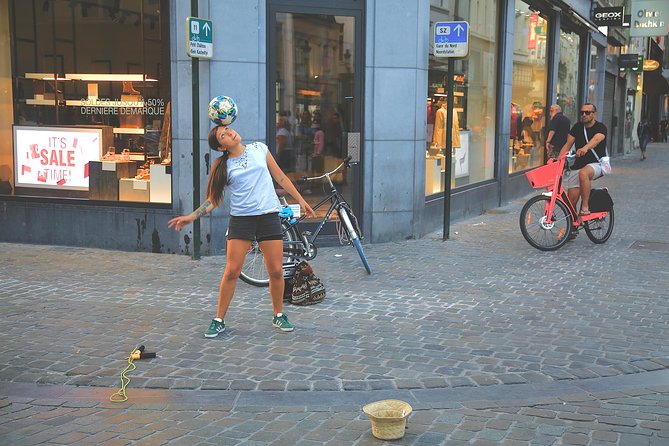
Manneken Pis receives about 15 minutes, including the climb toward the wardrobe museum. The guide calls this one of Brussels’ great disappointments, and that joke captures the sight perfectly. The statue is much smaller than many first-time visitors expect.
The guide covers four famous stories about the boy and explains the wardrobe of more than 1,200 uniforms. That collection gives the tiny statue a much larger role in Brussels’ public image. The stop works best if you approach it with a sense of humor rather than expecting a grand monument.
The short uphill walk matters. Wear shoes in which you can comfortably walk through central Brussels and manage a climb. The route is not presented as difficult, but the tour does move from one area to another, and the Manneken Pis section includes an ascent.
This is also a place where a good guide makes a difference. Gamaal is praised for funny stories and for asking what people want to learn. That sort of flexibility helps at a sight whose appeal is more cultural and comic than architectural.
Jacques Brel and the move toward Sablon
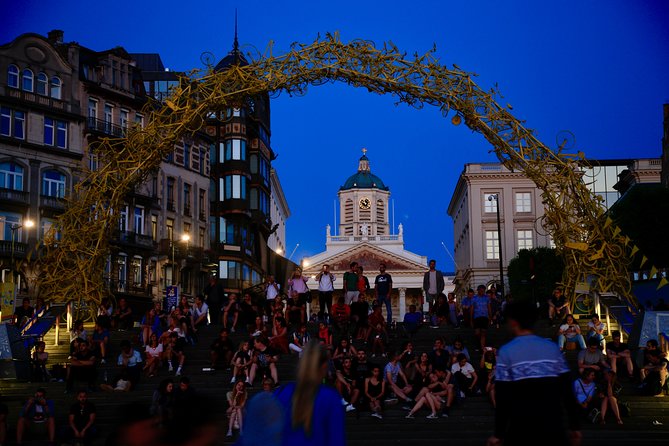
The Jacques Brel statue is a brief five-minute stop. The guide asks why a sculpture of the famous Belgian singer belongs there, using the question to connect the street scene with national culture.
Do not expect a long biography. The point is to add another layer to the route as the walk heads toward Sablon. The tour moves between architecture, politics, music, literature, and local habits, which gives the city a broader identity than a list of monuments would provide.
The transition also changes the feel of the walk. You are leaving the most concentrated cluster around Grand Place and moving toward one of Brussels’ historic church and chocolate districts.
Notre Dame du Sablon and Brussels chocolate
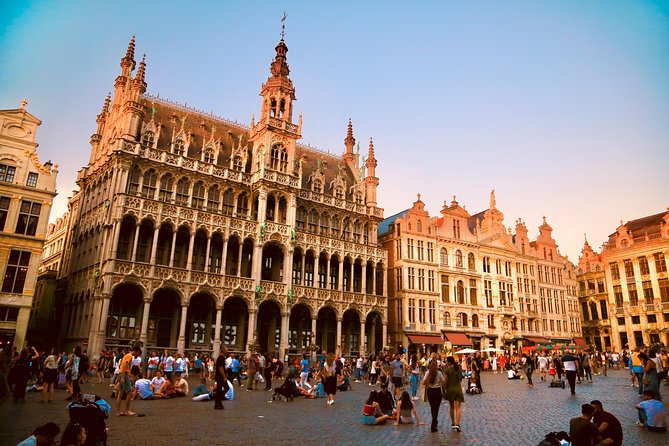
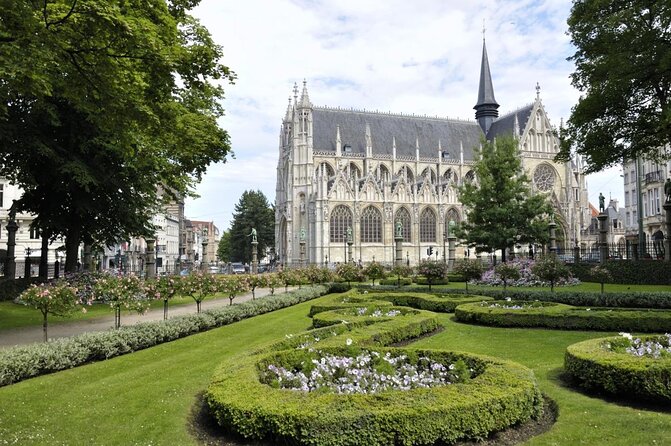
Notre Dame des Victoires au Sablon receives about 15 minutes. The focus here is the church and chocolate, a pairing that makes good sense in Brussels. You can study the church’s exterior and hear why it matters, then place the nearby chocolate tradition within the character of the neighborhood.
The church is one of the route’s strongest architecture stops because it gives you a chance to compare religious design with the civic and commercial buildings seen earlier. The tour does not promise entry or a tasting, so think of this as an introduction rather than a church visit or food tour.
If you want chocolate recommendations, ask your guide. One of the strongest points from the named guides is their willingness to offer practical suggestions, including restaurant advice. Just remember that recommendations are an extra benefit, not a formal tasting included in the $30.10 price.
BOZAR and the short look at modern culture
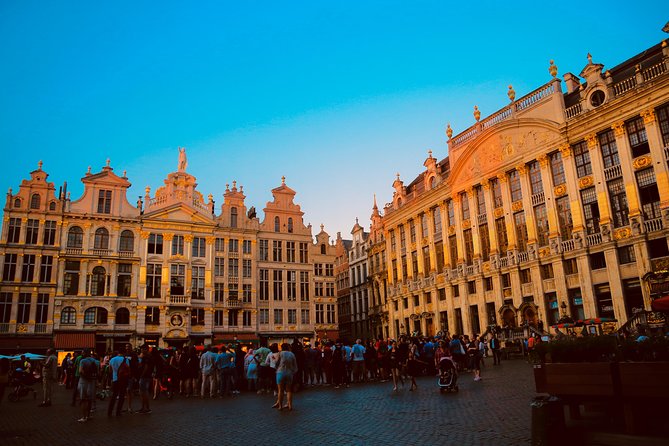
BOZAR Centre for Fine Arts gets about five minutes. The invitation is to discover what lies behind its large walls, but the schedule makes this a quick orientation stop.
That brevity is both useful and limiting. You learn where the arts center fits into Brussels, but you will not have time for a full exhibition visit. If BOZAR interests you, use the tour to note its location and return on your own later. The walking route can help you decide which places deserve more of your time after the tour ends.
This is a recurring pattern throughout the evening: the guide gives you a map in your head. You see many important places, then choose which ones merit a longer visit.
Mont des Arts and the closing city view
The final stop lasts about 20 minutes at Mont des Arts. This is where the walk pays off visually. From the viewpoint, you look across the old city, with the city hall tower as the main focus of your photograph and the Royal Palace at the other end.
The 8:00 pm start should give this closing view an evening atmosphere, though exact light and conditions will vary. Bring a phone or camera, but also take a moment to look without a screen. The route has shown you many buildings at street level, and Mont des Arts lets you see how the old center fits together from above.
The guide also points out the old city walls and the wider shape of Brussels. That final perspective helps tie together the earlier discussion of markets, defenses, rivers, churches, theaters, and civic squares.
What the $30.10 price gives you
At $30.10 per person, you are paying for a guided walking introduction, not admission to paid attractions or transport. Every listed stop has free admission, and transport is not included, so the price mainly covers the local guide’s time, route planning, explanations, and the chance to ask questions.
I consider that fair value if Brussels is new to you and you want a structured first look. In two hours, you cover many central sights that could take longer to connect on your own. The architect guide adds value by explaining how buildings developed and how the city changed around them.
The value is weaker for someone who wants long visits inside churches, museums, or cultural centers. You will see BOZAR, La Monnaie, and the church at Sablon, but this is an exterior-focused walk with short stops.
The group maximum is 18 people. That is small enough for a guide to adjust the conversation, though it is not a private tour by definition. On some departures, the group may be much smaller. One experience with Gamaal was effectively private, and his approach included asking what the group wanted to explore.
Guide style and the practical feel of the walk
The strongest guide qualities reported are clear explanations, humor, flexibility, and practical local suggestions. Gamaal is specifically praised for adapting the route or discussion to the group’s interests. Jimmy is also praised for strong site selection, funny stories, and keeping the experience going in very windy conditions.
The provider is Bruges City Tours, and some written comments refer to Bruges even though this experience follows a Brussels route. Use the Brussels meeting point and stop list as your guide when booking. The named guide feedback suggests that the experience can vary somewhat with the person leading it, but the core plan remains a central Brussels architecture walk.
The tour is offered in English. Most people can participate, and the route stays near public transportation, but transport itself is not part of the booking. Plan to walk between all the stops, and give yourself extra time to reach Grand Place before 8:00 pm.
You receive confirmation within 48 hours, subject to availability. Free cancellation is available until 24 hours before the start time. If the minimum group size is not met and the tour is canceled, you are offered another date or experience, or a full refund.
Who should book this Brussels walk?
I would choose this tour for a first evening in Brussels, especially if you want the main sights explained instead of simply photographed. It suits people interested in architecture, city planning, local stories, and the way buildings reflect commerce and politics.
It also works well for couples, solo visitors, and small groups who like asking questions. The limited group size and the guide’s ability to adjust the discussion can make the walk feel more personal than a large city tour.
You may want something else if you need step-free access, long indoor visits, or a food-focused experience. The supplied details say most people can participate, but they do not provide a full accessibility description. The route includes walking between stops and a climb toward the Manneken Pis wardrobe museum, so ask the provider if you have specific mobility needs.
Should you book it?
Book it if you want a well-priced introduction to central Brussels with architecture at the center and local stories around it. The best parts are the opening study of Grand Place, the Galeries Royales, the amusing Manneken Pis section, and the final view from Mont des Arts.
Skip it if you would rather spend two hours inside museums or take a slow food tour. For everyone else, $30.10 buys a useful first orientation, a good range of landmarks, and the chance to see Brussels through the eyes of a local architect guide.
FAQ
How long does the Architecture Tour of Brussels last?
The tour lasts approximately two hours. The listed stops add up to about two hours, with time spent walking between them.
What time does the tour begin?
The tour starts at 8:00 pm.
Where is the meeting point?
Meet at the Godiva shop at Grand Place 21/22, 1000 Bruxelles, Belgium.
Where does the tour finish?
The activity ends back at the meeting point.
Is transportation included?
No. Transport is not included. The tour is a walking experience near public transportation.
How many people can join the tour?
The group has a maximum of 18 people.
Just added in Brussels
- Standard vehicle from Brussels airport to city of Antwerp★ 5.0 · 4 reviews
- Transfer Brussels Airport (BRU) –> City Center 7 PAX (ONE WAY)★ 5.0 · 7 reviews
- Luxury vehicle from Brussels airport to the city of Brussels★ 4.0 · 5 reviews
- PRIVATE MPV TRANSFER FROM/TO BRUSSELS AIRPORT (Max 6 pax) ONE-WAY★ 5.0 · 4 reviews
- Luxury Minivan from Brussels airport to the city of Brussels★ 4.0 · 7 reviews
- Transfer Brussels Airport –> Brussels MB V Class 7 PAX (ONE WAY)★ 5.0 · 4 reviews
- Transfer Brussels Airport –> City MB E Class 1-3 PAX (ONE WAY)★ 5.0 · 6 reviews
- Brussels: City Walk with Audioguide in 7 Languages on your Phone★ 3.5 · 4 reviews
Historical Tours, compared.
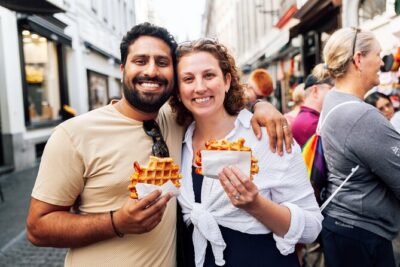
Historical Walking Tour with Chocolate & Waffle Tasting
Read our review →
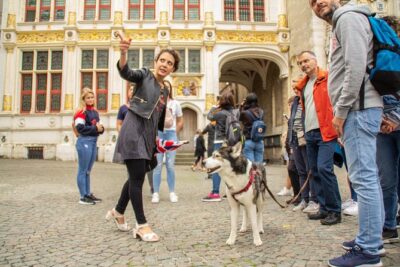
THE Storytelling Tour of Bruges | First Day Must | History & Tips
Read our review →
Browse the lists this tour appears in