
Reviewed · WWI BATTLEFIELD TOURS
Flanders Fields Remembrance Tour from Brussels
The most moving part of this day is the way it connects quiet places with terrible events. At Vladslo, Käthe Kollwitz’s Grieving Parents face the graves of German soldiers. Later, the Last Post at Menin Gate brings the story back to the living city of Ypres. I like that the tour shows both German and Allied memorials, and that guides such as Diederik and Stefan bring clear, personal energy to the history.
I also like the range of stops: Tyne Cot, Essex Farm, Passchendaele, Hill 60, and the Flanders Fields Museum each add a different piece to the story. The catch is simple: this is a very long day, often lasting 12 to 13 hours, with plenty of coach time and several quick visits.
Key points at a glance
- Käthe Kollwitz’s Grieving Parents: A quiet, powerful opening at Vladslo German Military Cemetery.
- A full tour of the Ypres Salient: See Passchendaele, Tyne Cot, Essex Farm, Hill 60, and Ypres in one day.
- Strong guiding: Diederik, Dietrich, and Stefan have been praised for clear explanations and memorable storytelling.
- The Last Post at Menin Gate: End the day with the daily ceremony honoring missing Commonwealth service members.
- Comfortable but demanding: Air-conditioning helps, but expect walking, repeated boarding, and a late return to Brussels.
- Good value at $113.72: Transportation and a professional guide are included, while lunch and hotel transfers are not.
What this Flanders Fields day is really like
This is not a light sightseeing trip with a few war memorials added on. It is a pilgrimage through one of the First World War’s most heavily fought areas, built around the Ypres Salient and its surrounding cemeteries.
You meet at Bd de Berlaimont 18 in central Brussels at 9:15 am. From there, an air-conditioned coach carries you west toward the fields of Flanders. The return is to Brussels-Central, at Carr de l’Europe, after the Last Post Ceremony in Ypres.
The day is carefully packed. You will see a great deal, but the price is time. Some visits last only 15 or 30 minutes, and the overall outing can stretch to 13 hours. I would choose it for the amount of ground covered, not for a relaxed pace.
The guide makes a major difference. Diederik, also referred to in some feedback as Dietrich, has been praised for explaining the battles in a way that makes the people involved feel real. Stefan has also received strong praise for his clear teaching style and ability to set expectations for the day. Guides may vary, but the experience clearly depends on having someone who can connect dates, places, and human stories.
Other Western Front sites within reach of Brussels:
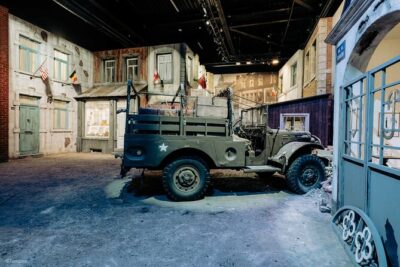
- Remembrance Tour: The Battle of the Bulge in the Ardennes
★ 5.0 · 51 reviews - From Brussels: The Battle of the Bulge Remembrance Tour
★ 4.8 · 37 reviews - Historic Battle of the Bulge Sites Tour from Brussels
★ 5.0 · 31 reviews
Vladslo and the grief of war
The first stop is Vladslo German Military Cemetery, a peaceful place with dark, orderly rows of graves. Its most famous feature is Käthe Kollwitz’s sculpture Grieving Parents.
The figures are not grand military heroes. They are parents bent by sorrow, facing the graves of young men. Kollwitz lost her son Peter in the war, and that personal grief gives the sculpture a force that goes beyond a standard memorial. You do not need a long lecture to understand what the work is saying.
This is an especially good first stop because it sets a serious tone without trying to make the morning dramatic. The cemetery is free to enter, and your guide provides the context while you have time to look closely.
Wear shoes you can walk in and bring rain protection. The tour runs in normal weather and only stops for extreme conditions, so an umbrella, poncho, or raincoat is sensible.
Diksmuide and the Brooding Soldier
The coach then continues to Diksmuide, where you see the monument known as the Brooding Soldier. It honors the sacrifice of 2,000 Canadian soldiers during the first German gas attack.
This stop is important for putting Canada’s role into the wider story of the Western Front. The monument’s mood is reflective rather than triumphant. It helps you remember that the fighting in Belgium involved troops from across the Commonwealth and beyond.
The visit is short and admission is free. That is typical of this day: you get the essential setting and explanation, then move on before the schedule slips. If you want long periods alone at each memorial, a private tour or self-drive visit would suit you better.
The Flanders Fields Museum in Ypres
After a lunch break, the tour heads to the Flanders Fields Museum in Ypres. This is one of the most useful stops for building a basic understanding of the war.
The museum explains how the conflict began, how the fighting developed, and what life was like for soldiers living in wet, cramped, dangerous conditions. It gives structure to everything you see later at cemeteries and battlefield sites.
Your guide helps set the scene, but the museum visit itself may feel short because the day has so many stops. One piece of practical advice: stay focused and use your time well. If museums are your main interest, you may wish for longer here. One less memorial stop could make the museum visit feel less rushed.
The museum also helps prevent the day from becoming a string of solemn cemeteries without a clear narrative. You learn why this particular area mattered and how the ground around Ypres became a central battlefield.
Other days out of Brussels:
- From Brussels: Guided Day Trip to Bruges and Ghent
★ 4.6 · 8,353 reviews - From Brussels: Bruges & Ghent Day Tour – 2 Fairytale Cities
★ 4.7 · 8,242 reviews - Bruges and Ghent – Belgium’s Fairytale Cities – from Brussels
★ 4.0 · 4,809 reviews - Luxembourg and Dinant Day Trip from Brussels
★ 4.0 · 1,474 reviews
Passchendaele and the cost of ground gained
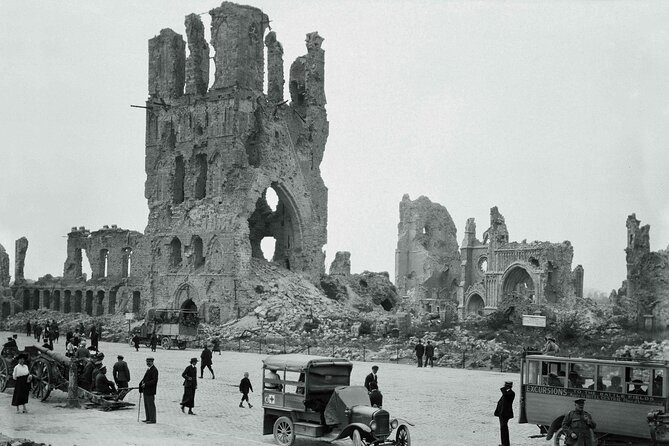
At Passchendaele, you visit the area associated with one of the war’s most notorious campaigns. Today, the town is quiet and ordinary. That contrast is part of the point.
The battlefield itself does not look like a battlefield in the way films suggest. There are no obvious trenches stretching across the countryside. The power comes from understanding what happened here and then seeing how completely time has altered the place.
The stop lasts about 30 minutes. Listen closely to the guide’s explanation of the fighting, the mud, and the brutal effort required to gain small amounts of ground. The stop is brief, but it helps you grasp why Passchendaele remains a byword for waste and suffering.
Tyne Cot Cemetery and the scale of loss
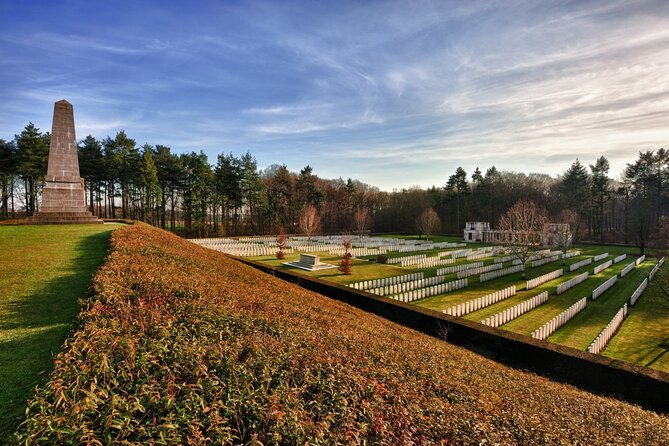
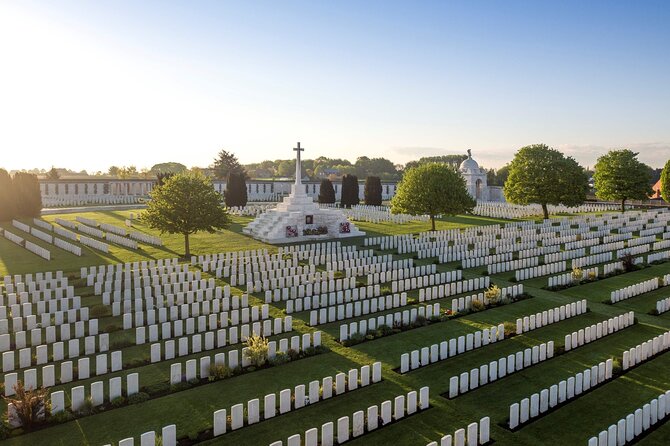
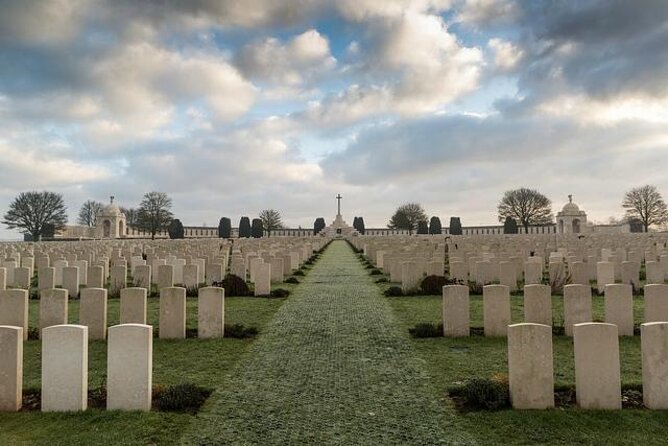
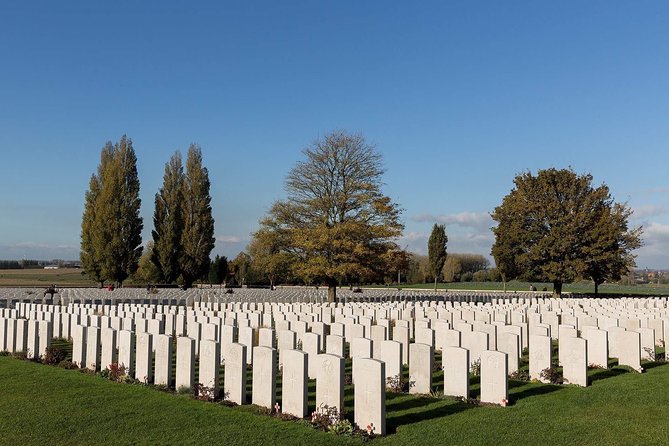
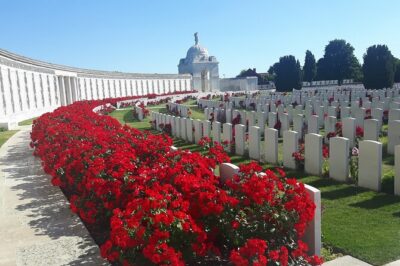
Tyne Cot Commonwealth War Graves Cemetery is one of the day’s central visits. It is the largest Commonwealth cemetery in the world, with graves of British, Australian, and Canadian soldiers.
The size of the cemetery changes your sense of scale. At earlier memorials, you may focus on one sculpture or one group of soldiers. At Tyne Cot, the sheer number of graves makes the losses impossible to reduce to a single story.
The site is carefully maintained and quietly dignified. The white headstones and broad rows create order, but the order does not soften the numbers. Your guide explains the cemetery and the fighting around it, then you have time to reflect.
This is one of the places where the tour’s pace can feel tight. You will see much more than you could on a short Ypres visit, but you will not have unlimited time at every cemetery. Plan to listen during the coach rides, so you can use the stops for the places themselves.
Essex Farm and John McCrae’s poem
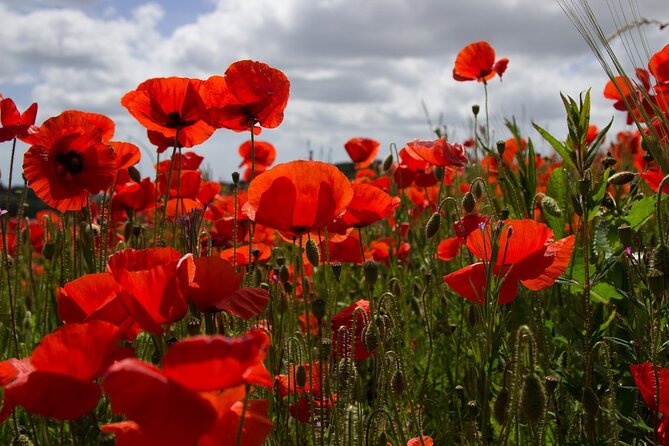
At Essex Farm Cemetery, you see the dressing station connected with Canadian doctor John McCrae. It was here that McCrae wrote In Flanders Fields, one of the best-known poems of the First World War.
The site includes wartime bunkers and graves. It is a smaller, more intimate stop after Tyne Cot. The connection between the medical station, the cemetery, and the poem gives the place a strong emotional focus.
The visit lasts about 15 minutes, so you will need to move with purpose. Still, this is a valuable stop because it connects a famous piece of writing to a real location. The poem is not just an abstract remembrance text here. It came from a medical post beside the dead.
Hill 60 and the underground war
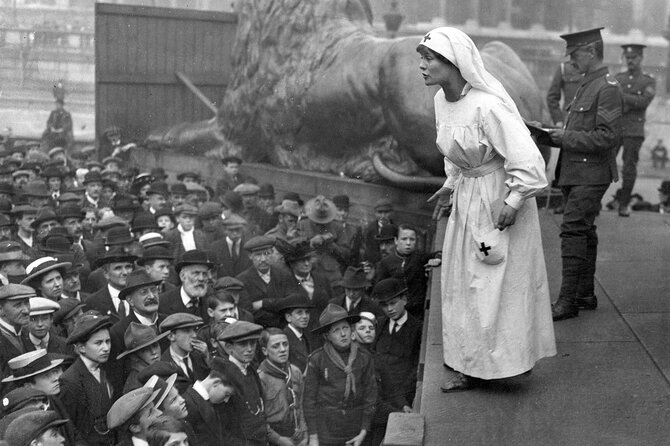
Hill 60 introduces another side of the conflict: the battle beneath the ground. The area is linked with strategic tunnels and mining operations, as armies tried to undermine enemy positions.
This stop adds variety to the day. You are no longer looking only at cemeteries or memorial sculptures. You are learning how soldiers fought for height and position, both above and below ground.
The tour information does not promise a long underground visit, so think of Hill 60 as a battlefield stop with tunnel history rather than a full cave tour. The guide’s explanation matters here, since the physical remains alone may not tell you much.
Free time and the Last Post at Menin Gate
The coach takes you into Ypres for independent time before the evening ceremony. You can have dinner at your own expense and walk through the town before meeting the group again at the agreed time.
This break matters. After a day of memorials and military history, Ypres gives you a chance to sit down, eat, and reset. Keep track of the meeting instructions, though. The ceremony is the final fixed point of the tour, and the group cannot simply leave whenever each person is ready.
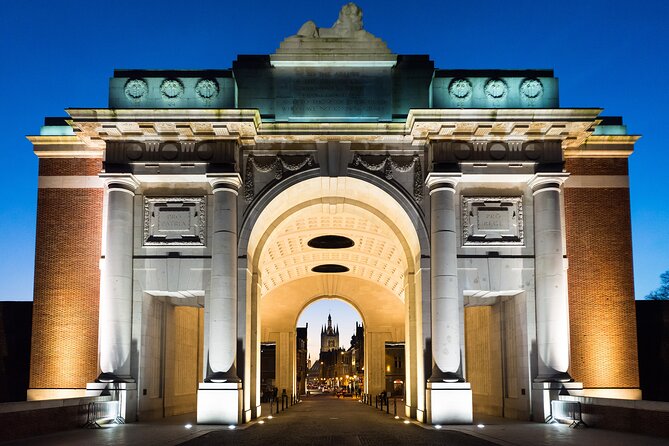
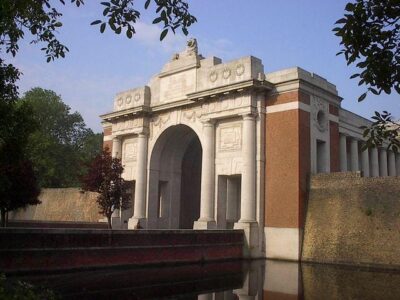
At 8 pm, you attend the Last Post Ceremony at Menin Gate. The service is a daily tribute to Commonwealth soldiers and officers who went missing after the battles. It is short, simple, and solemn.
The ceremony can be the emotional high point of the day. Some evenings may include extra music, such as a choir, but that is not guaranteed. The ceremony itself may last only several minutes, so do not judge it by length. Its importance comes from the fact that it continues as a daily act of remembrance.
Afterward, you return to the coach for Brussels. This is why you should not plan an important late-night appointment after the tour.
Price, transport, and what you receive
At $113.72 per person, the tour offers solid value if you want to cover the Ypres area without renting a car or working out a complex route. Transportation, an air-conditioned coach, and a professional multilingual guide are included.
You pay separately for lunch and dinner. Hotel pickup and drop-off are not included, so you need to reach the Brussels meeting point yourself. The central location is near public transport, which makes the start practical for people staying in Brussels.
The coach is a real advantage. The sites are spread out, and driving between them would be tiring if you are unfamiliar with the area. The tradeoff is that the group can be large, with up to 100 people, and some departures may add detours to collect or return people in Bruges. That extra routing has made an already long day even longer.
Bring cash, since it is advised for the outing, and carry an ID. Pets are not allowed on the coach. Luggage can be taken aboard the large tourism coaches.
Who should book this tour?
I would choose this tour if you have one day for First World War history and want a broad introduction to the Ypres Salient. It suits history fans, family groups with older children, and people making a personal visit connected to relatives who served in the war.
It also works well if you prefer an expert explanation to independent research. A strong guide can turn a cemetery, bunker, or quiet field into a meaningful part of the story. Diederik and Stefan have both been praised for doing exactly that.
I would hesitate if you dislike coach rides, repeated boarding, or late finishes. The day includes many sites, and a few stops may feel rushed. Younger children may also find the schedule and subject matter demanding, although families with children aged 10 and 14 have completed it successfully.
The tour is not recommended for people who have difficulty walking or need wheelchair access. You should have moderate physical fitness and wear comfortable shoes.
Should you book it?
Book this Flanders Fields tour if you want to see the major memorials in one packed day and attend the Last Post at Menin Gate. Its strongest points are the guides, the thoughtful range of German and Commonwealth sites, and the emotional arc from Vladslo to Ypres.
Do not book it expecting a slow, private pilgrimage. You will spend many hours on the road, and the schedule leaves limited time at some stops. At $113.72, though, the combination of transport, guiding, cemeteries, museum time, and the evening ceremony makes it a practical choice for a first visit from Brussels.
Free cancellation is available up to 24 hours before departure, subject to the stated conditions. If the minimum number is not reached and the tour is canceled, you are offered another date or experience, or a full refund.
FAQ
Where does the tour start?
It starts at Bd de Berlaimont 18, 1000 Brussels, Belgium, at 9:15 am.
Where does the tour finish?
The tour finishes at Brussels-Central, Carr de l’Europe, 1000 Brussels, Belgium.
How long does the excursion last?
The listed duration is approximately 13 hours. The exact return time can vary, and detours to collect or drop off people may add road time.
What is included in the price?
The price includes transportation in an air-conditioned vehicle and a professional multilingual guide. Radios and earphones are also included when necessary.
Is food included?
Lunch and dinner are not included. You have free time in Ypres to arrange dinner at your own expense.
Is hotel pickup available?
No. You need to make your own way to the central Brussels meeting point shown on your voucher.
What should I bring?
Bring comfortable walking shoes and clothing suited to the weather. A raincoat, poncho, or umbrella is advised. It is also recommended that you carry cash and an ID.
Is the tour offered in English?
Yes. The experience is offered in English. The provider also states that tours can be conducted in French or Spanish.
Can I cancel or change the booking?
You can cancel at least 24 hours before the start time for a full refund. Date changes are possible depending on availability, while changes made less than 24 hours before departure are not accepted.
Just added in Brussels
- Standard vehicle from Brussels airport to city of Antwerp★ 5.0 · 4 reviews
- Luxury vehicle from Brussels airport to the city of Brussels★ 4.0 · 5 reviews
- Transfer Brussels Airport (BRU) –> City Center 7 PAX (ONE WAY)★ 5.0 · 7 reviews
- PRIVATE MPV TRANSFER FROM/TO BRUSSELS AIRPORT (Max 6 pax) ONE-WAY★ 5.0 · 4 reviews
- Luxury Minivan from Brussels airport to the city of Brussels★ 4.0 · 7 reviews
- Transfer Brussels Airport –> Brussels MB V Class 7 PAX (ONE WAY)★ 5.0 · 4 reviews
- Transfer Brussels Airport –> City MB E Class 1-3 PAX (ONE WAY)★ 5.0 · 6 reviews
- Brussels: City Walk with Audioguide in 7 Languages on your Phone★ 3.5 · 4 reviews
WWI Battlefield Tours, compared.
Great War Flanders Fields Minibus Tour w/ Lunch
Read our review →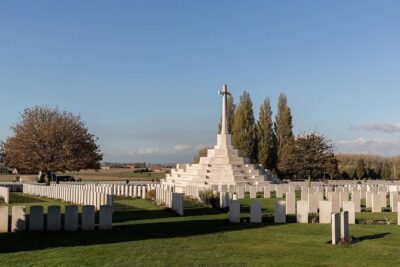

In Flanders Fields and Passchendaele Half Day Morning Tour
Read our review →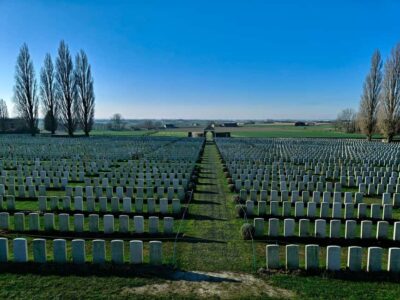
An exploration of the deadly salient battlefields
Read our review →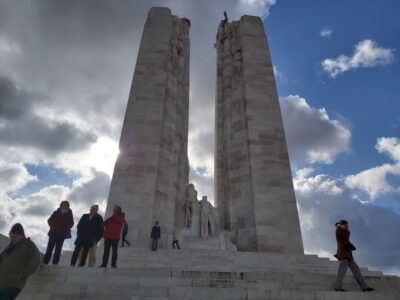
Remembrance Tour: The Battle of the Bulge in the Ardennes
Read our review →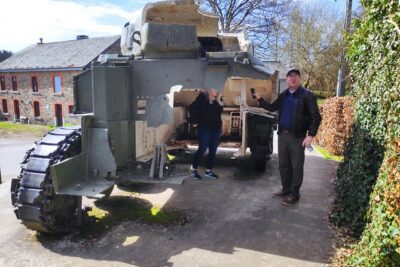
Historic Battle of the Bulge Sites Tour from Brussels
Read our review →Browse the lists this tour appears in