
Reviewed · DAY TRIPS FROM BRUSSELS
From Brussels: Guided Day Trip to Bruges and Ghent
Bruges and Ghent give you two very different pictures of Belgium in one long day. Bruges brings canals, stepped-gable streets, and the calm Minnewater, while Ghent feels larger, more lived-in, and full of grand churches and civic buildings. At $55, the two-city format is the main draw.
I like the mix of guided walking and independent time. I also like the easy meeting point at Brussels Central Station and the comfortable coach, especially after several hours on foot. The catch is simple: this is a packed 10.5-hour day, and neither city gets enough time for a slow, thorough visit.
Key points at a glance
- Two medieval cities in one day: Bruges receives a two-hour guided walk plus 1.5 hours on your own, followed by a guided hour and 1.5 hours of free time in Ghent.
- Bruges at its most photogenic: See Minnewater, the Begijnhof, Rozenhoedkaai, Market Square, and the Belfry.
- Ghent’s great Gothic core: Visit Saint Bavo Cathedral, St. Nicholas’ Church, the Belfort, Graslei, and the Castle of the Counts.
- Guides make the difference: Antonio, Peter, Angie, Oscar, Sabrina, and other guides have been praised for clear stories, humor, patience, and useful food advice.
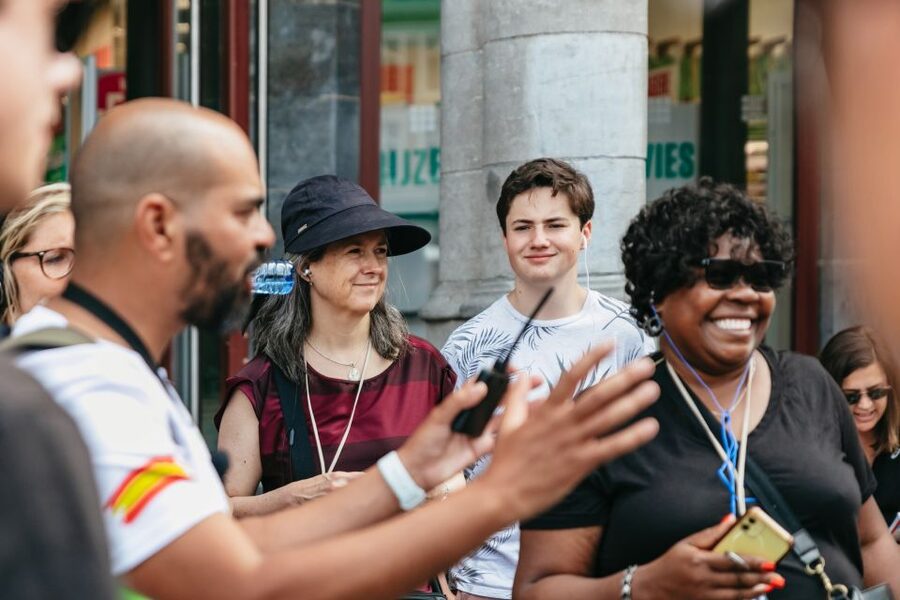
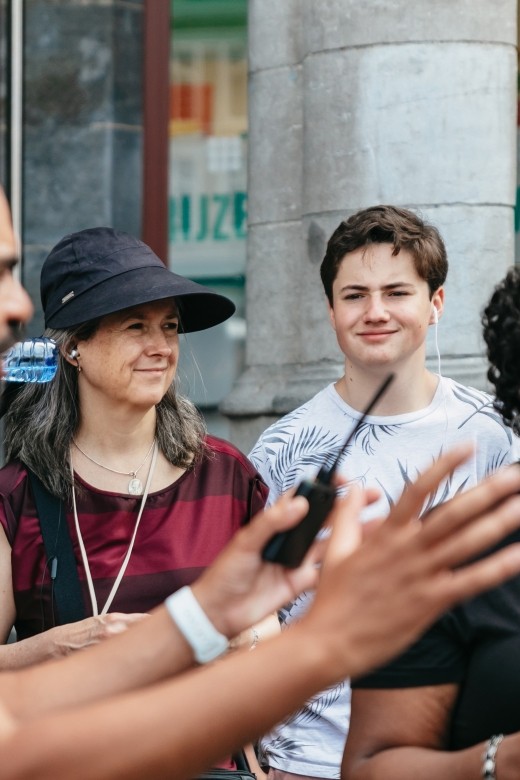
- Bring your own earphones: Groups over 24 use a radio system, and the provider may charge €1 for earphones if you do not have your own.
- Good value, limited depth: Transportation and both walking tours are included, but lunch, attraction tickets, and any extras cost more.
Why this Bruges and Ghent day works
The smart idea here is not simply seeing two famous Belgian cities. It is getting a useful first look at both without arranging trains, finding the historic centers, or working out a route yourself.
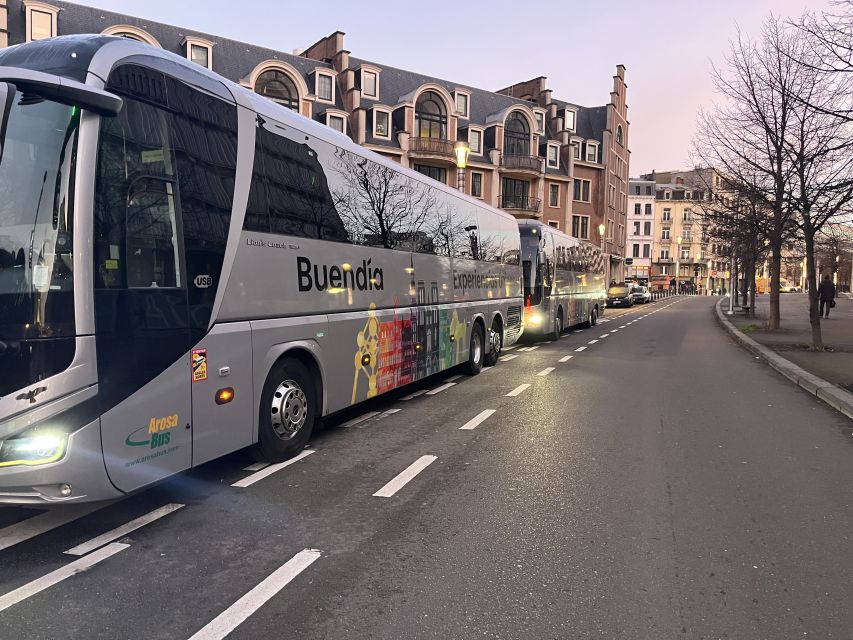
The coach leaves from Carrefour de l’Europe, under the columns at the main entrance of Brussel-Centraal, opposite the Hilton Grand Place Hotel. A Buendía guide waits with identification. This is a central, recognizable meeting point, but give yourself time to find the exact spot around the station.
From Brussels, the ride to Bruges takes about two hours. That is a fair amount of road time, yet it lets you start the day without changing trains or navigating unfamiliar stations. The buses are described as comfortable and eco-friendly, and the coach is also your place to rest between walking sections.
The full day lasts 630 minutes, or 10.5 hours. That includes about 4.5 hours of bus travel, 3 hours of guided walks, and 3 hours of free time. I consider the schedule efficient rather than leisurely. You will see a lot, but you should not expect to visit every museum, climb every tower, or linger over a long Belgian lunch.
Other days out of Brussels:
- From Brussels: Bruges & Ghent Day Tour – 2 Fairytale Cities
★ 4.7 · 8,242 reviews - Bruges and Ghent – Belgium’s Fairytale Cities – from Brussels
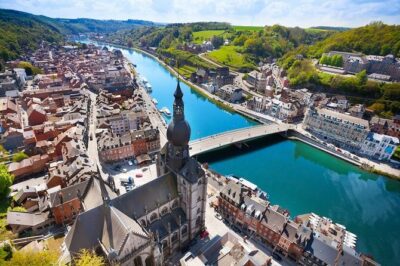
★ 4.0 · 4,809 reviews - Luxembourg and Dinant Day Trip from Brussels
★ 4.0 · 1,474 reviews
Bruges begins with canals and the Begijnhof
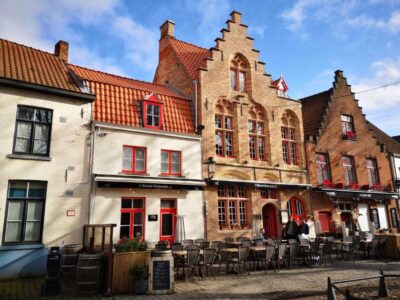
Bruges is often called the Venice of the North, but its appeal is more than water and pretty photographs. The historic center is a UNESCO World Heritage Site, and much of the pleasure comes from moving between quiet corners, old hospitals, canals, squares, and market streets on foot.
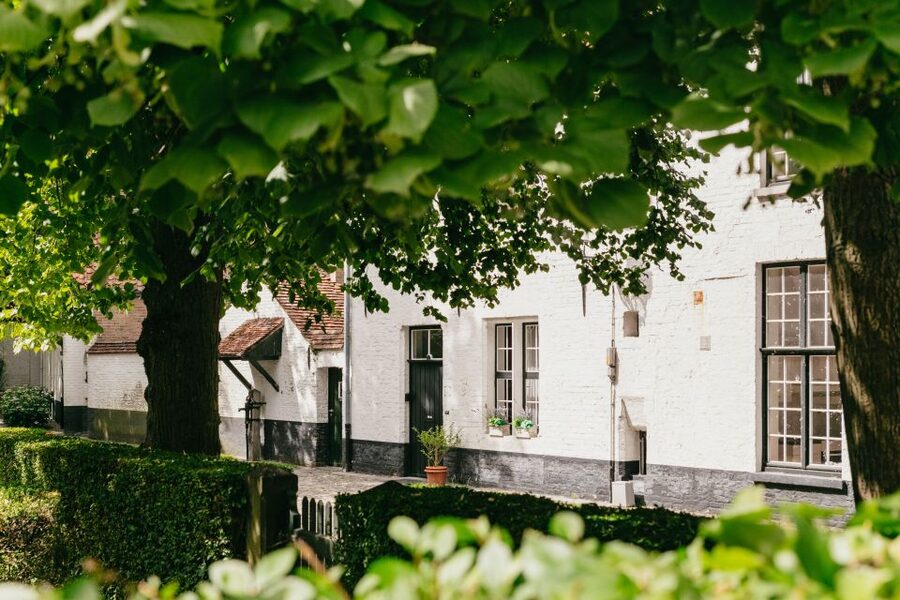
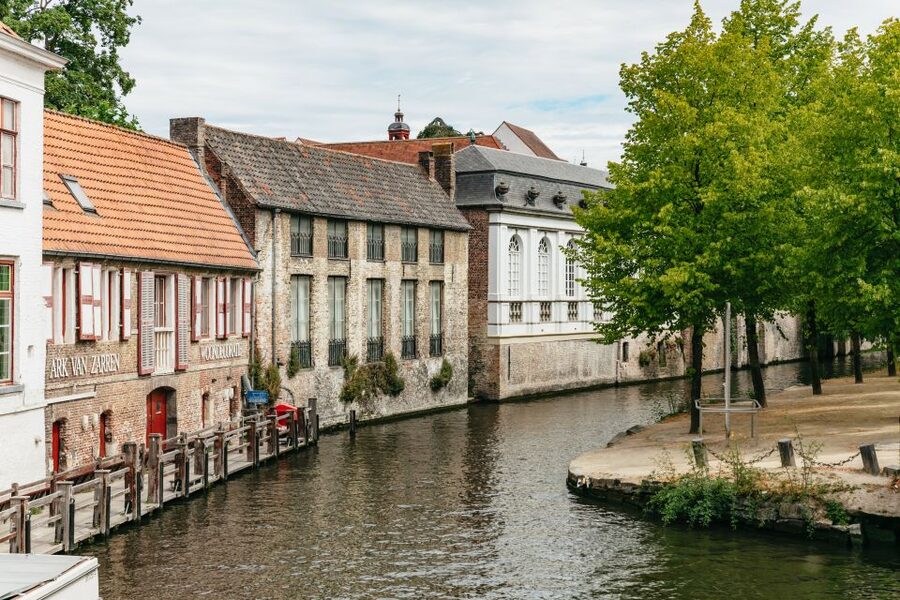
The guided walk begins with Minnewater Lake, often translated as the Lake of Love. It is a peaceful opening, with water, bridges, and greenery setting a gentler mood than the busy center. Nearby is the Begijnhof, founded in 1245 as a home for lay religious women. Its whitewashed buildings and enclosed setting give you a sense of how religious and charitable communities once fit into city life.
Walplein Square brings a more social side of Bruges. Its trees and cafés make it a natural place to pause, although the tour’s schedule means you may only pass through before continuing. Stoofstraat follows, on the site of the city’s former red-light district. That detail helps you see Bruges as a working medieval town, not only as a polished picture-postcard setting.
You also pass the Old St. John’s Hospital, an 11th-century complex. The stop is valuable even if you do not enter, since the building shows how care for the sick was organized long before modern hospitals.
Bruges landmarks reward a good guide
The Church of Our Lady is one of the visual high points. Its brick tower is described as the world’s second tallest brickwork tower, and it rises above the surrounding roofs in a way that helps you understand Bruges’ old skyline.
The route also includes Gruuthuse Palace and the Dijver Canal. These sights work well together: one shows the power of a wealthy medieval family, while the other shows how waterways shaped movement, trade, and city views.
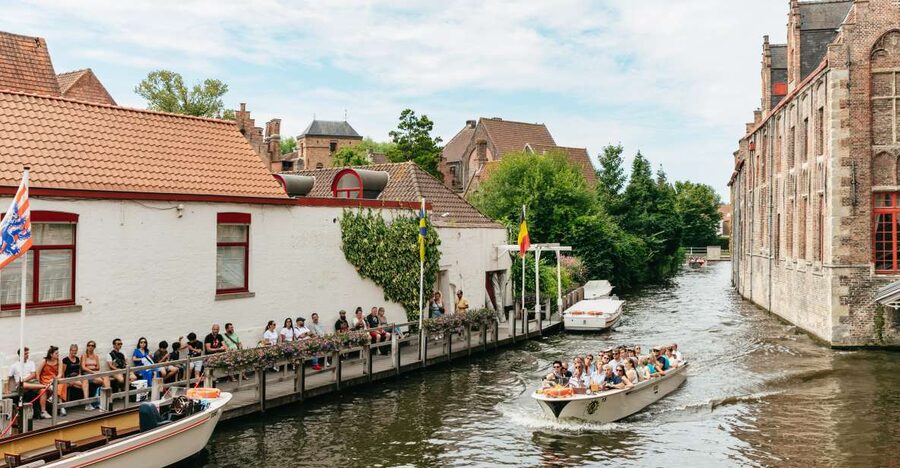
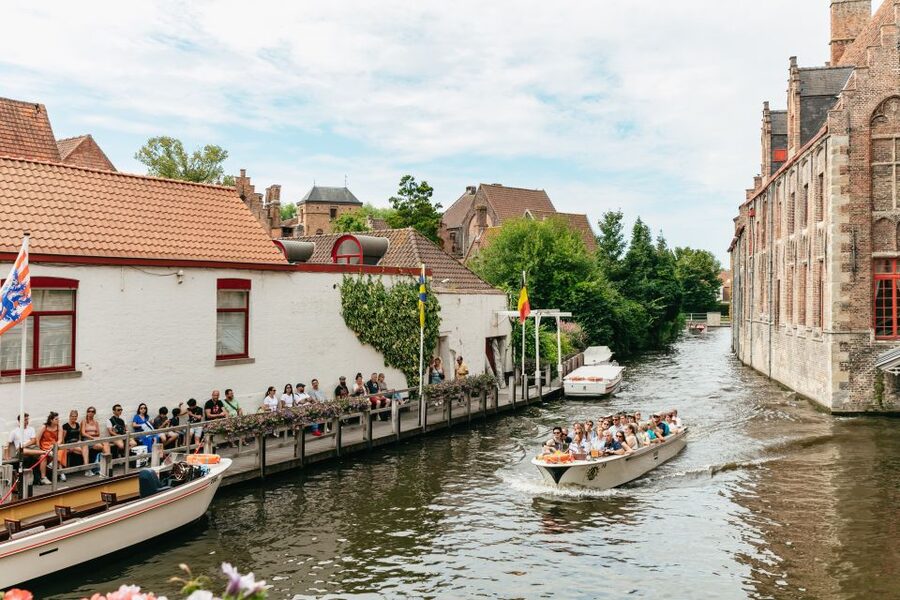
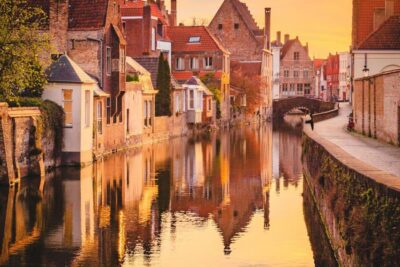
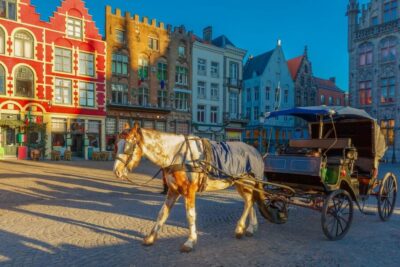
Rozenhoedkaai is the classic Bruges photograph stop. You can admire the canal, old façades, and the Belfry from one of the city’s most photographed viewpoints. The scene is popular for good reason, but do not let the camera stop you from looking upward and noticing the different rooflines and towers.
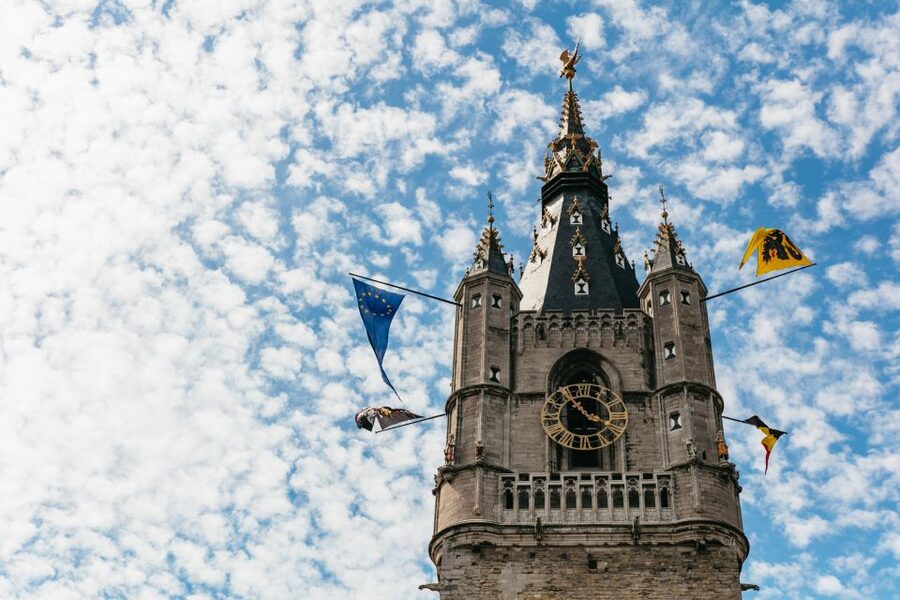
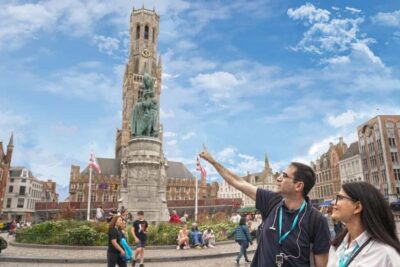
Castle Square and Market Square, or Grote Markt, bring the tour to the grand public center. Here you see the Belfry, also called the Belfort, and the broad square that has served as Bruges’ civic stage for centuries. The guide’s storytelling matters most in places like this. Without context, you see handsome buildings. With context, you begin to understand how trade, religion, and city government shaped the view.
Free time in Bruges means choosing your priorities
After about two hours with the guide, you get roughly 1.5 hours alone. There is no way to do everything in that time, so decide before you separate from the group.
You might use the break for lunch, Belgian chocolate, café time, or a second look at the canals. Lunch is not included, and the schedule is better suited to a practical meal than a long restaurant sitting. If chocolate is on your list, this is an easy place to sample it, but keep an eye on the meeting time.
A useful detail is that some guides give restaurant and food suggestions without forcing the group into a particular place. Peter is often singled out for practical recommendations, while Antonio is praised for combining facts with humor. The exact guide varies, so treat those names as examples rather than a guarantee.
The free time also lets you step away from the group. That matters because a guided walk can introduce Bruges efficiently, but independent wandering is what gives the city its quieter moments. Just remember that the group cannot wait for late arrivals.
Other one-day trips from Brussels:
- From Brussels: Bruges Day Trip with Boat Tour Option (ENG)
★ 4.6 · 1,352 reviews - From Brussels: Bruges Day Trip with Boat Tour Option (ES)
★ 4.7 · 1,171 reviews - Bruges and Ghent Day Trip from Brussels
★ 4.5 · 784 reviews - Bruges Day Trip from Brussels
★ 4.5 · 619 reviews
Ghent trades fairy-tale calm for urban scale
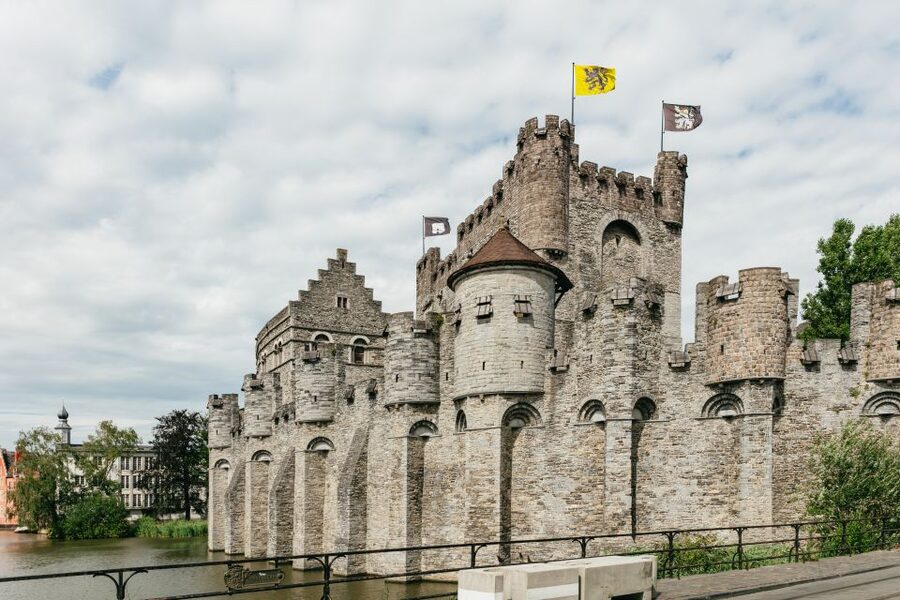
The drive from Bruges to Ghent takes about an hour. Ghent feels different almost at once. Bruges is compact and carefully preserved; Ghent has a bigger-city presence, broad views, major churches, student energy, and more room between its landmarks.
The tour begins with the Castle of Gerald the Devil, one of the city’s historic buildings. From there, the route moves toward Saint Bavo Cathedral, one of Ghent’s essential stops.
Saint Bavo’s importance is not only architectural. The cathedral is associated with The Adoration of the Mystic Lamb, the famous altarpiece by the Van Eyck brothers. The guide explains the painting and its place in European art, giving you more than a quick look at a church interior. Entrance tickets are not included, so check what you want to see inside and budget separately.
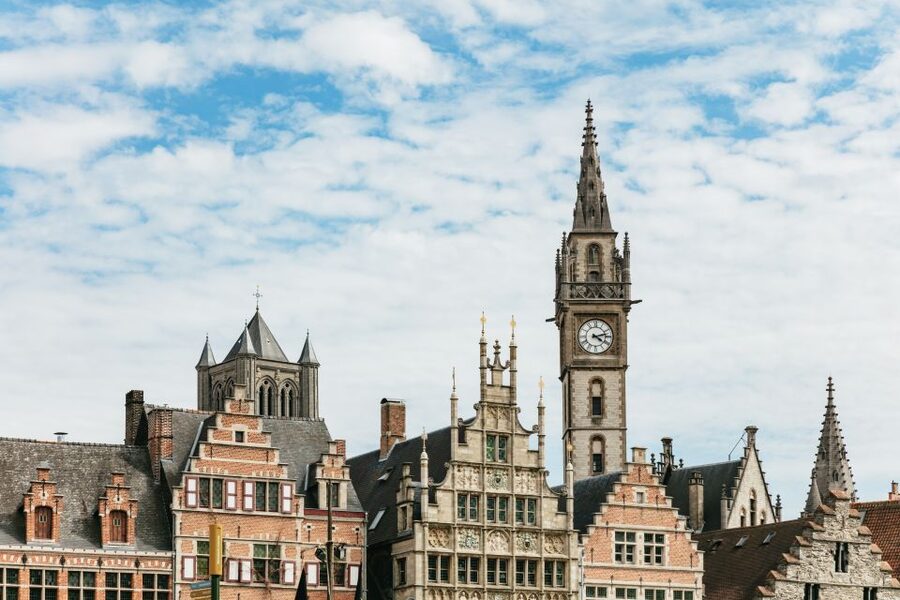
The Ghent walk also covers the Belfort, or Bell Tower, and the unusual Gothic and Renaissance Town Hall. These buildings sit close enough together to make the city center feel like an open-air lesson in changing architectural styles.
St. Nicholas’ Church and Graslei show Ghent’s character
St. Nicholas’ Church faces the Masons’ Guild House, whose unusual façade is one of the route’s more playful details. The church itself is among Ghent’s oldest monuments, and its position opposite the guild house makes this a good pause for comparing religious and commercial architecture.
Then comes Graslei, the embankment along the medieval port. This is one of the most appealing stretches in Ghent. The water, old façades, and public walkway make it a natural place to slow down, take photographs, and watch the city move around you.
The route continues toward the Castle of the Counts of Flanders, the Great Butchers’ Hall, the Old Fish Market, and Friday Market Square. These sights broaden the picture beyond churches and towers. You see how food, trade, defense, and public life all occupied the same medieval city.
The guided portion lasts about one hour, shorter than the Bruges walk. That makes the guide’s organization important. A good guide keeps the route moving while giving you enough background to recognize what you are seeing. Guides such as Angie, Oscar, Sabrina, Peter, and Antonio have been praised for humor, clear explanations, and keeping the group together without making the walk feel stiff.
Ghent free time is short but useful
You get about 1.5 hours in Ghent after the guided walk. That is enough for a drink, a quick meal, more photographs along Graslei, or a closer look at a favorite square.
I would use the time to return to the area that caught your attention during the walk. Ghent rewards a second look because the main route introduces many sights quickly. If you want to enter a church, climb a tower, or spend serious time inside a museum, this day trip may not give you enough room.
Several people praise the tour’s balance between instruction and independence. That balance works best if you accept that the free time is for sampling Ghent, not fully covering it. The return coach leaves after the break, followed by about 1.5 hours back to Brussels.
The guides are the strongest part of the experience
The guide assigned to your departure can shape the entire day. Names praised in recent feedback include Antonio, Peter, Angie, Oscar, Sabrina, Julian, Patricia, Haris, and Blanca. The recurring strengths are clear explanations, good organization, humor, patience, and restaurant advice.
Antonio is repeatedly described as warm, funny, and attentive. Peter is praised for historical detail and a light touch. Oscar is noted for his stories and energy, while Angie receives credit for useful suggestions and polished explanations. These individual qualities matter because a 10.5-hour group day can become tiring when instructions are unclear.
The tour operates in English and Spanish. Depending on the departure, more than one language group may share transportation. One practical issue is that radio sound can include static, so bring your own compatible earphones if possible. Disposable headphones are discouraged by local rules in Bruges, and the provider may sell replacements for €1. Carry a euro coin or small note, since cash may be needed.
What the $55 price really covers
At $55 per person, the value comes from transport and structure. You get a coach from central Brussels to both cities, a guide, a walking tour in Bruges, a walking tour in Ghent, and transportation back to Brussels.
That price is attractive if you want to see both places without paying separately for trains or managing the connections yourself. It is also useful for a first Belgian visit when Brussels is your base and your time is limited.
You still need money for lunch and entrance tickets. Chocolate, drinks, and any optional purchases are extra as well. The low price does not mean the day is all-inclusive. Think of it as a transport-and-orientation package that gives you a guided foundation in two cities.
The 4.6 rating from 8,353 reviews supports the idea that the format works for many people, but the schedule will not suit everyone. Some find the day perfectly balanced. Others want more time in Bruges or feel that both cities deserve a separate day. Both reactions make sense.
Who should book this day trip
I would recommend it if you:
- Have only a few days in Brussels and want to add Belgium’s two major medieval city centers.
- Prefer a guide to handle transport, routing, meeting points, and historical context.
- Like walking tours but also want time to choose your own lunch and photographs.
- Want a reasonably priced introduction before deciding where to return for a longer stay.
- Are comfortable spending much of the day on foot and on a coach.
I would hesitate if you use a wheelchair or have a mobility impairment. The experience is not suitable for wheelchair users or people with mobility impairments, and the amount of walking is substantial.
It is also a poor fit if you want slow museum visits, long meals, or an unplanned afternoon. The route is carefully timed, and delays can happen when a large group is boarding or regrouping. Wear comfortable shoes, follow the return times, and keep your belongings simple.
Children under three must use a car seat on the bus, and you need to bring the appropriate seat. Smoking and food are not allowed in the vehicle.
My verdict on Bruges and Ghent in one day
Book this tour if your priority is seeing both cities in a practical, affordable way. You will get the essential sights, useful history, free time in each place, and a coach ride that removes much of the day’s transport hassle.
Do not book it expecting a complete visit to Bruges or Ghent. The real tradeoff is clear: breadth instead of depth. For a first look, that is a fair deal at $55, especially with a strong guide such as Antonio or Peter. If one city already matters deeply to you, spend a full day there instead.
Cancellation is free up to 24 hours before departure, and you can reserve now and pay later. That gives you some flexibility while you decide how firmly this long but rewarding day fits your Brussels plans.
FAQ
Where does the tour meet in Brussels?
Meet at Carrefour de l’Europe, under the columns at the main entrance of Brussel-Centraal, opposite the Hilton Grand Place Hotel. The guide waits there with Buendía Tours identification.
How long does the full experience last?
The experience lasts 630 minutes, or 10.5 hours. The day includes bus travel, guided walks, and free time in both Bruges and Ghent.
How much free time do I get in Bruges?
You get about 1.5 hours of free time in Bruges after the guided walk. Lunch and personal purchases are not included.
How much free time do I get in Ghent?
You get about 1.5 hours of free time in Ghent after the guided tour.
What languages are available?
The live guide service is available in English and Spanish.
Are entrance tickets included?
No. Entrance tickets are not included in the tour price. Lunch is also not included.
Do I need to bring earphones?
Bring your own earphones if possible. Groups over 24 use a radio system, and the provider may sell earphones for €1 if you do not have them. The provider advises using personal earphones because of local rules about disposable headphones in Bruges.
Is the tour suitable for wheelchair users?
No. The experience is not suitable for wheelchair users or people with mobility impairments.
Can I cancel or pay later?
You can cancel up to 24 hours in advance for a full refund. You can also reserve your place and pay later.
Just added in Brussels
- Standard vehicle from Brussels airport to city of Antwerp★ 5.0 · 4 reviews
- Luxury vehicle from Brussels airport to the city of Brussels★ 4.0 · 5 reviews
- Transfer Brussels Airport (BRU) –> City Center 7 PAX (ONE WAY)★ 5.0 · 7 reviews
- PRIVATE MPV TRANSFER FROM/TO BRUSSELS AIRPORT (Max 6 pax) ONE-WAY★ 5.0 · 4 reviews
- Luxury Minivan from Brussels airport to the city of Brussels★ 4.0 · 7 reviews
- Transfer Brussels Airport –> Brussels MB V Class 7 PAX (ONE WAY)★ 5.0 · 4 reviews
- Transfer Brussels Airport –> City MB E Class 1-3 PAX (ONE WAY)★ 5.0 · 6 reviews
- Brussels: City Walk with Audioguide in 7 Languages on your Phone★ 3.5 · 4 reviews
Day Trips from Brussels, compared.
Bruges and Ghent – Belgium’s Fairytale Cities – from Brussels
Read our review →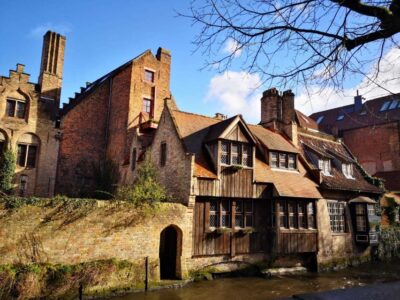
From Paris: Day Trip to Bruges with Optional Seasonal Cruise
Read our review →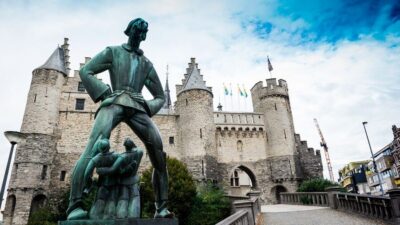
Browse the lists this tour appears in