
Reviewed · CHOCOLATE TOURS
Choco-Story: The Chocolate Museum in Bruges
Choco-Story Bruges turns chocolate into a small museum lesson, moving from the Mayans’ spicy cocoa drink to the pralines sold all over Belgium. I like the setting, a 15th-century building spread over four floors, and the collection of more than 1,000 chocolate-making objects. The final demonstration gives the visit a real payoff, especially when you taste a freshly made praline.
I also like the freedom to move at your own pace with an English audio device, plus the child-friendly version for younger visitors. The catch is that this is self-guided rather than led by a person, and busy periods can make the rooms and demonstration hard to enjoy.
Key points to know before you go
- Four floors in a historic Bruges building: The museum occupies an old 15th-century structure, so the setting is part of the experience.
- A long story, not just a tasting: Displays trace cocoa from ancient Mayan use through its arrival in Europe and the rise of Belgian chocolate.
- English audio guide included: You listen at your own pace rather than follow a scheduled human guide.
- One fresh praline plus dispenser chocolate: The demonstration includes a freshly made praline, while chocolate from the dispensers is available for tasting.
- About 90 minutes, but pace varies: Some people may finish quickly, while others spend several hours with the displays and audio stops.
- Best for chocolate fans and families with patient children: Young children have lower displays and a child-focused audio option, but the museum still contains plenty of listening.
Four floors of chocolate inside a 15th-century building
The first pleasure here is not chocolate. It is the building.
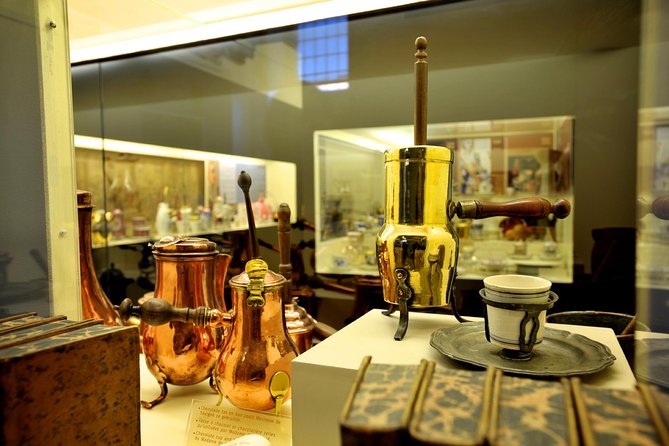
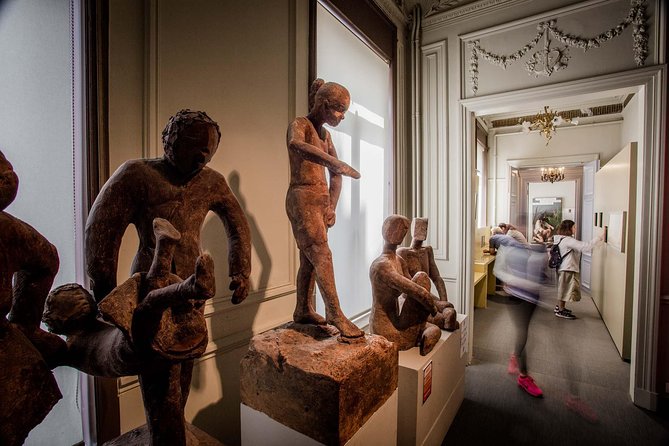
Choco-Story occupies an ancient Bruges building dating from the 15th century. The museum is arranged over four floors, giving the visit a slightly old-fashioned, room-by-room feel rather than the polished look of a modern science center. For me, that helps connect the subject to Bruges itself, a city where historic streets and working chocolate shops sit side by side.
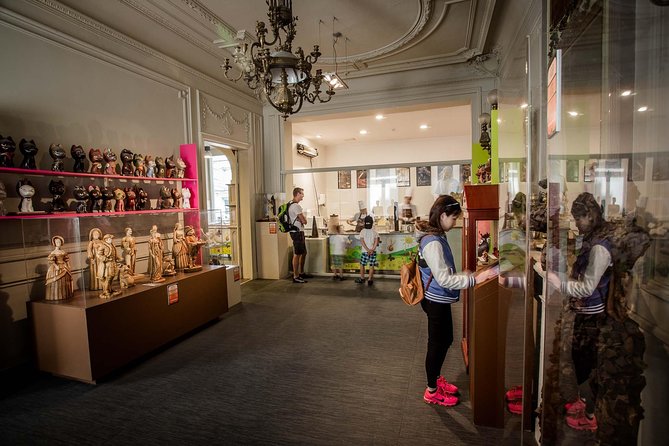
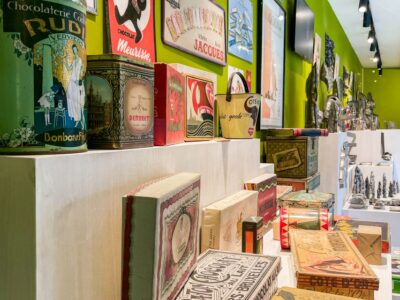
You will move through displays, information boards, objects, and audio stations rather than follow a fixed route with a guide. The museum has more than 1,000 historic chocolate-making objects and about 80 information boards. That is a substantial collection for a visit that usually takes around an hour and a half.
The building also affects the pace. You are not simply walking into one large room, watching a film, and leaving with a sample. You climb through a sequence of sections, each adding another part of the story. Some rooms may feel crowded during school holidays, rainy days, and weekends, so the four-floor layout can be useful. If one level is packed, another may offer more breathing room.
More Chocolate Tours in Bruges
- Bruges: Choco-Story Chocolate Museum Guided Tour w/Tastings
★ 4.2 · 1,379 reviews - Bruges: Belgian Waffle-Making Workshop with Beer Tasting
★ 4.9 · 960 reviews - Belgian Chocolate Workshop in Bruges
★ 5.0 · 660 reviews
From Mayan cocoa drinks to Belgian pralines
The museum’s central idea is simple: chocolate did not begin as the sweet bar you know today.
The story starts with the Mayans, who used cocoa in a spicy drink. From there, the displays follow the movement of cocoa toward Europe, including its arrival first in Spain and later in France. You then see how chocolate changed from a bitter or spiced drink into the sweet products associated with Belgium today.
I like this broad time line because it gives the tasting some context. A Belgian praline is not an isolated local treat. It is the result of centuries of changing ingredients, techniques, machines, and tastes.
The museum also explains how Belgium became known for chocolate. You learn about cocoa processing and the production of different kinds of chocolate, then see how modern equipment changed the trade. Historic tools and machinery help show the difference between hand production and more industrial methods.
The information is delivered mainly through recorded presentations. The audio device is described as simple to use: you tap an icon or numbered station and listen. That setup lets you skip sections or linger over topics that interest you. It also means you can set your own pace, which is useful if one person in your group wants every detail and another prefers a quicker walk-through.
There is a limit. If you prefer a museum guide who tells stories, answers questions, and reacts to the group, this may feel flat. The audio content is thorough in places, but the visit depends on your willingness to stop and listen.
What the audio guide is really like
The experience is not a guided tour in the usual sense. There is no named guide leading a group from room to room. Instead, you receive an individual audio device with recorded information in English.
That distinction matters when you compare this museum with a chocolate workshop or a walking tour of Bruges. You will not hear a local chocolatier discuss a particular recipe while you watch. You will not have a scheduled question-and-answer session. You control the order and length of your visit.
I see two advantages. First, you can skip familiar material. If you already know the basic story of cocoa, you can move on to the production displays. Second, people in the same group do not need to move at exactly the same speed.
The downside is that listening can become tiring. There are not always seats available, and one comment specifically noted the wish for more places to sit during the visit. The museum is most rewarding if you treat it as a compact educational stop, not as a lively performance.
Check that the audio device works before you get too far into the visit. Some equipment has reportedly caused frustration, and a quick check at the start gives staff a chance to help. The child version is lower and simpler, but a four-year-old may enjoy tapping through the stations more than listening to every explanation.
The child-friendly route and family appeal
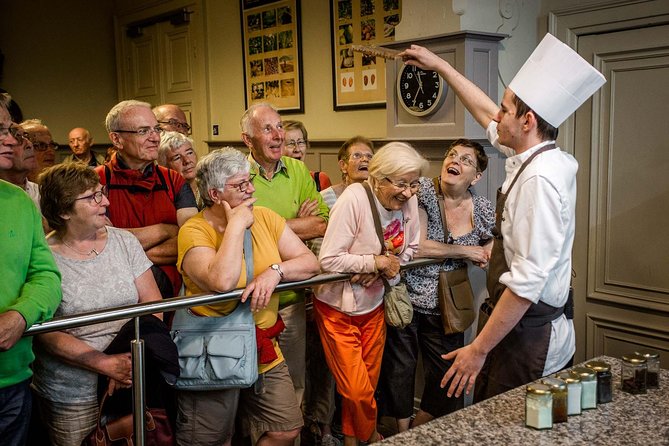
Choco-Story makes a real effort to include children. Information boards and showcases are placed lower for younger visitors, and a child-focused audio option is available. Interactive displays and the promise of chocolate at the end give families a clear reason to stop here on a rainy afternoon in Bruges.
Still, I would be realistic about the age range. A child who enjoys machines, food production, or pressing buttons may have a good time. A child who needs constant movement may lose interest after the first couple of rooms.
The museum contains many historical explanations, and most of the visit is self-guided listening. That can work well for older children who like facts. For younger children, you may want to shorten the listening and focus on the objects, displays, and demonstration.
Families should also plan around crowd levels. When the museum is full, children may have trouble seeing a demonstration or moving comfortably around the displays. Early morning is the practical choice on rainy days, weekends, and school holidays.
Other chocolate shops and tastings in Bruges:
- Bruges: Belgian Praline and Mendiants Chocolate Workshop
★ 4.7 · 620 reviews - The Waffles ‘n Beer Workshop in Bruges Centre
★ 5.0 · 429 reviews - Bruges: Chocolate Making Workshop and Chocolate Museum Entry
★ 4.6 · 395 reviews - 2-Hour Historical Walking Tour in Bruges with Praline Included
★ 5.0 · 291 reviews
The chocolate-making demonstration at the end
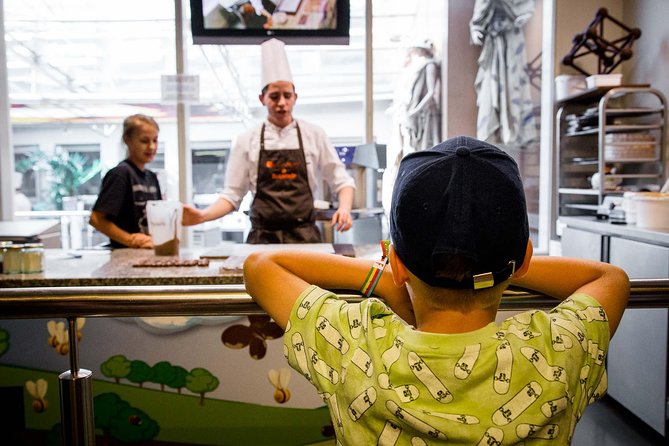
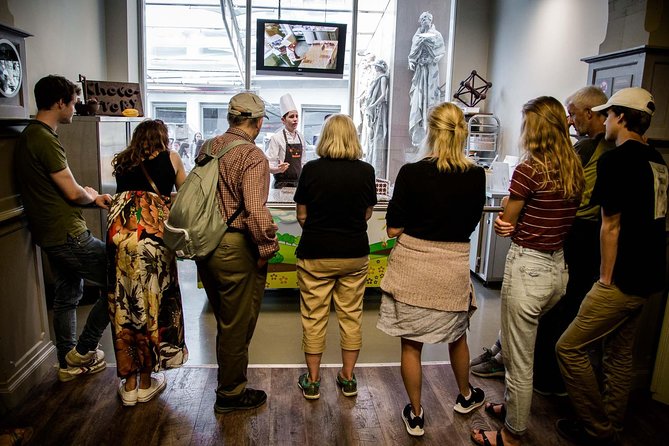
The visit finishes with the part most people are waiting for: a chocolatier demonstrates how Belgian filled chocolates, or pralines, are made.
This is more than a display case. You see the process explained and receive one freshly made praline to taste. The demonstration takes place at set intervals, reportedly every 15 minutes, so you should check the clock or ask when the next session begins. If you arrive between demonstrations and leave quickly, you could miss the part that gives the museum its strongest sense of occasion.
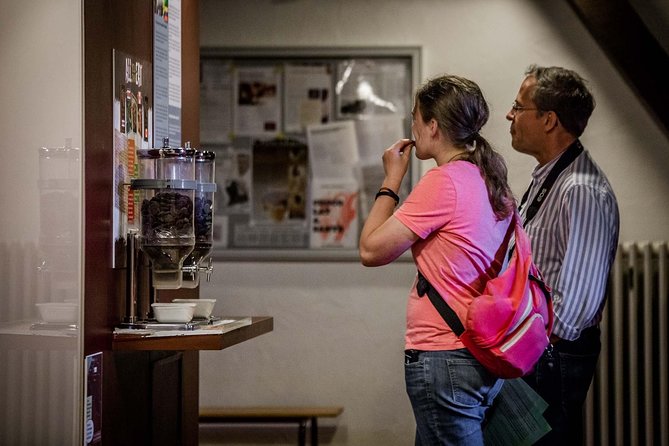
The tasting policy needs a little explanation. The fresh praline is one per person because it is made on site and prepared for a large number of people. In addition, chocolate is available from four dispensers at the end. You place your hand beneath the dispenser, turn the handle, and collect the pieces yourself.
Some people may find this less elegant than a seated tasting with several carefully presented chocolates. The dispenser setup can also look untidy during a crowded period. The museum describes the chocolate as Belgian couverture chocolate, the type used by chocolatiers to make pralines. Your experience will depend partly on how clean and orderly the tasting area is when you arrive.
So do not expect a box of assorted luxury chocolates. Expect one fresh praline from the demonstration and additional dispenser chocolate. That is a fair distinction to keep in mind before you book.
Why the tasting matters, and why it may disappoint
The food tasting is included, but it is not the main substance of the visit. Most of your time goes toward the exhibits, the audio explanations, and the chocolate-making story.
I think the tasting works best as a conclusion. After hearing how cocoa is processed and how filled chocolates are made, you get a small chance to connect the explanation with the finished product. The fresh praline is the clearest part of that connection.
If you are booking mainly for free chocolate, the value may feel weaker. The sample is limited, and the dispenser chocolate is self-service rather than a formal tasting. Some people also expect the quality to match the best specialist chocolate shops in Bruges. This museum is not a replacement for visiting a chocolatier and buying a carefully chosen box.
For the best experience, arrive with the right expectation: this is a chocolate museum with samples, not an unlimited tasting tour with a large selection of premium pralines.
Is the $19.22 price fair?
At about $19.22 per person, the ticket sits in the range of a paid museum attraction rather than a quick chocolate-shop stop. I would judge the value by how much time you spend inside and how interested you are in the subject.
For a person who enjoys museum displays, the price can be reasonable. You get four floors, more than 1,000 objects, around 80 information boards, an English audio guide, a live demonstration, and tastings. If you stay for the full 90 minutes and listen to much of the material, you are paying for a complete attraction, not just a sample.
The value is weaker if you want a hands-on class or a guided conversation with a chocolatier. You will not make your own pralines, and transportation to the museum is not included. The ticket covers admission and the tasting, so you need to make your own way there.
I would also avoid judging the price solely by the chocolate samples. The museum’s main product is its explanation of cocoa and chocolate over time. The tasting is a bonus at the end.
Timing, crowds, and how to plan the visit
The stated duration is about one hour and 30 minutes, but the museum allows a wide range of visit lengths. You might move through quickly, or you might spend several hours listening carefully and examining the objects.
Because the route is self-guided, you have some control. That is useful when fitting the museum around other Bruges sights. Allow enough time to hear the sections you care about, then stay for the next praline demonstration rather than rushing out between sessions.
Crowds are the main practical concern. The museum can become crowded during summer holidays, weekends, and rainy days. A full room makes it harder to see objects, hear the audio, or find a good view of the demonstration.
I would aim for early morning when possible. If your schedule forces a busy period, ask about the next demonstration as soon as you enter and keep the four-floor layout in mind. You may be able to visit the quieter levels first, then return for the demonstration.
The museum is near public transportation, but transportation to and from attractions is not included. Children must be accompanied by an adult. Most people can participate, and the activity is listed as being offered in English.
One unusual booking detail is that the activity information lists a maximum of one traveler. That may matter if you are trying to book for a group, so check the booking screen carefully before paying rather than assuming a single reservation covers everyone.
What the museum leaves out
The museum is strongest when it explains production, history, and the changing role of cocoa. It is less satisfying if you want a fuller treatment of the difficult side of chocolate.
The displays do not appear to give enough attention to the colonial sugar and cocoa trades, including the use of enslaved labor. That omission may matter to you if you want a modern museum treatment that covers both the pleasures and the costs of chocolate production.
This does not make the visit useless, but it affects how you should read it. I would treat the museum as an introduction to cocoa and Belgian chocolate, not as the final word on the subject. If you already know the basic European chocolate story, the historical sections may feel familiar, and you may wish for more social and economic context.
Who should book Choco-Story Bruges?
I would recommend it to:
- Chocolate fans who want more background than a shop visit provides.
- Families looking for an indoor Bruges activity.
- Visitors interested in historical objects, food production, and museum displays.
- People who like choosing their own pace rather than following a group.
- Anyone who wants a short attraction that fits into a day of sightseeing.
I would be more cautious if you:
- Need a human guide and live conversation.
- Want a hands-on chocolate workshop.
- Expect a large or luxurious tasting.
- Have very young children who dislike audio explanations.
- Have already visited several chocolate museums and want fresh, critical material.
- Dislike crowded rooms or standing for much of a museum visit.
The most praised parts are consistent: the clear audio system, the historical displays, the live praline demonstration, and the child-friendly option. The most common problems are also clear: crowds, limited seating, occasional audio issues, and confusion about the tasting or demonstration schedule.
Should you book this chocolate museum?
Book Choco-Story if you want a structured introduction to cocoa and Belgian chocolate, with a historic setting and a small tasting at the end. I especially like it as a rainy-day stop or a family activity for children old enough to follow short audio explanations.
Do not book it expecting a private guide, a chocolate-making class, or a box of premium samples. Arrive early when possible, confirm the next praline demonstration, and think of the tasting as a pleasant finish rather than the whole reason to go.
At $19.22, the ticket makes the most sense when you use the museum as a 90-minute cultural stop. If you enjoy learning how everyday foods are made, the objects and production story justify the price. If you only want to eat chocolate, spend that money at one of Bruges’ specialist shops instead.
FAQ
How long does the Choco-Story Bruges visit take?
The visit lasts approximately one hour and 30 minutes, although you can spend less or more time because the route is self-guided.
Is Choco-Story Bruges a guided tour?
No. The visit uses an individual audio guide rather than a human guide leading a group. You listen at your own pace and can choose which information to hear.
Is the experience offered in English?
Yes. The experience is offered in English.
Is chocolate tasting included?
Yes. Food tasting is included. The visit ends with a demonstration of Belgian chocolate making, including one freshly made praline per person, and chocolate is also available from dispensers.
Can children visit Choco-Story Bruges?
Yes. Children must be accompanied by an adult. The museum provides lower information boards, lower showcases, and a child-focused audio option.
Can I cancel for a full refund?
Yes. You can cancel at least 24 hours before the experience start time for a full refund. Cancellations or changes made less than 24 hours before the start time are not refunded.
More collections worth an hour in Bruges
- Bruges: Musea Brugge Card with Entry to 11 Museums
★ 4.6 · 328 reviews - Bruges: The Beer Experience Museum Entry with Audio Guide
★ 4.4 · 201 reviews - Salvador Dalí Exhibition in Bruges Admission Ticket
★ 3.5 · 118 reviews - Bruges: Ticket Museum Sint-Janshospitaal
★ 4.4 · 38 reviews
Just added in Bruges
- 2-Hour Private Walking Tour of Bruges★ 5.0 · 13 reviews
- Ticket Expo Body Worlds in Bruges, Belgium★ 4.5 · 11 reviews
- 6 Hour Bruges Shore Excursion from Zeebrugge Cruise Port★ 4.5 · 23 reviews
- Explore the Instaworthy Spots of Bruges with a Local★ 5.0 · 3 reviews
- The Waffles ‘n Coffee Breakfast in Bruges Centre★ 4.5 · 9 reviews
- Australian Battlefields Private Tour in Flanders from Bruges★ 5.0 · 15 reviews
- Discover the secrets of Bruges by playing!★ 4.5 · 7 reviews
- Bruges Walking Tour with Audioguide on Your Smartphone★ 4.5 · 14 reviews
Chocolate Tours, compared.
Choco-Story Brussels: Chocolate Museum Entrance with Tasting
Read our review →
Hungry Mary’s Famous Beer and Chocolate Tour in Brussels
Read our review →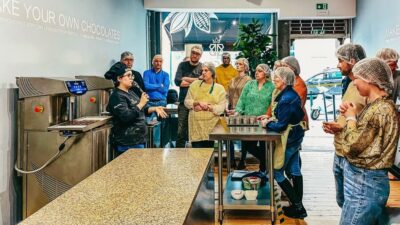
Belgian Chocolate Making Workshop with Tastings
Read our review →
Choco-Story Chocolate Museum Guided Tour w/Tastings
Read our review →
2.5-Hour Chocolate Museum Visit with Workshop
Read our review →
Historical Walking Tour with Chocolate & Waffle Tasting
Read our review →
Belgian Waffle-Making Workshop with Beer Tasting
Read our review →
Browse the lists this tour appears in