
Reviewed · MUSEUMS
Bruges: Musea Brugge Card with Entry to 11 Museums
Bruges makes museum-going wonderfully easy: many of its best sights sit within a compact old center, and one 72-hour Musea Brugge Card covers 11 of them. You can climb the Belfry’s 366 steps, admire Michelangelo’s Madonna and Child, and move from Flemish painting to medieval civic rooms without buying a new ticket each time.
I like the card’s freedom to wander and its strong mix of art, buildings, folklore, and local history. I also like the digital QR code, which can be scanned at the door. The main catch is simple: you need to visit at least three or four included sites to make the $38 price work well, and some museums close on the same day or keep shorter winter hours.
Key points to know
- The Belfry is the headline stop: Reserve a free time slot online, then climb 366 steps for Bruges views.
- Michelangelo’s Madonna and Child is included: The Church of Our Lady Museum gives the card real artistic weight.
- Five or more visits make the price attractive: Individual entries can cost about €15 at major sights.
- The museums form an easy walking circuit: Public transport is not included, but most card sites are close together.
- The digital pass is simple to use: Scan the voucher at your first attraction, then show the same pass at each entry.
- Plan around closures: The Sint-Janshuis Mill is closed in winter, and several sites may share closing days.
What the 72-hour Bruges card actually gives you
The Musea Brugge Card is a self-guided pass for 11 museums and monuments. You receive one-time entry to each included site during the card’s 72-hour period. There is no tour guide or fixed group schedule, so you can shape the experience around your energy, the weather, and your interest in art or local life.
The pass covers the Belfry, City Hall, Brugse Vrije, Groeninge Museum, Gruuthuse Museum, Museum of the Church of Our Lady, St John’s Hospital, the Church of Our Lady of the Pottery, the House Gezelle, the Museum of Folk Life, and the Sint-Janshuis Mill.
That is a useful spread. You are not paying only for art galleries. The card takes you into civic halls, churches, a medieval hospital, a windmill, and old homes that show how people in Bruges lived. The result feels like a portrait of the city rather than a list of disconnected museums.
You can activate the card at any included attraction by scanning your voucher. The card may be activated up to one year after purchase, which helps if your plans change. Once active, use it across three days, with one entry per site.
Other collections worth an hour in Bruges:
- Bruges: Choco-Story Chocolate Museum Guided Tour w/Tastings
★ 4.2 · 1,379 reviews - Choco-Story: The Chocolate Museum in Bruges
★ 4.0 · 544 reviews - Bruges: Chocolate Making Workshop and Chocolate Museum Entry
★ 4.6 · 395 reviews
Start at the Belfry, but reserve your time
The Belfry is the most obvious first choice, and for good reason. This tall medieval tower anchors Bruges’ Market Square and gives you the chance to look across the city from above.
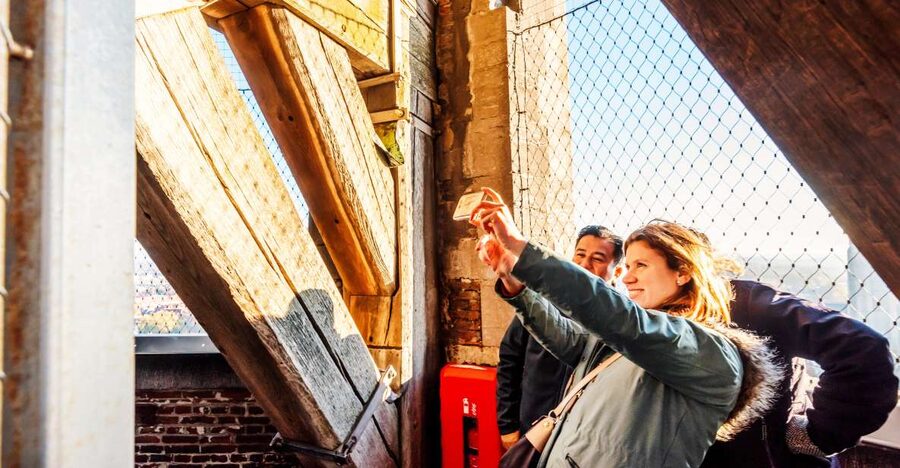
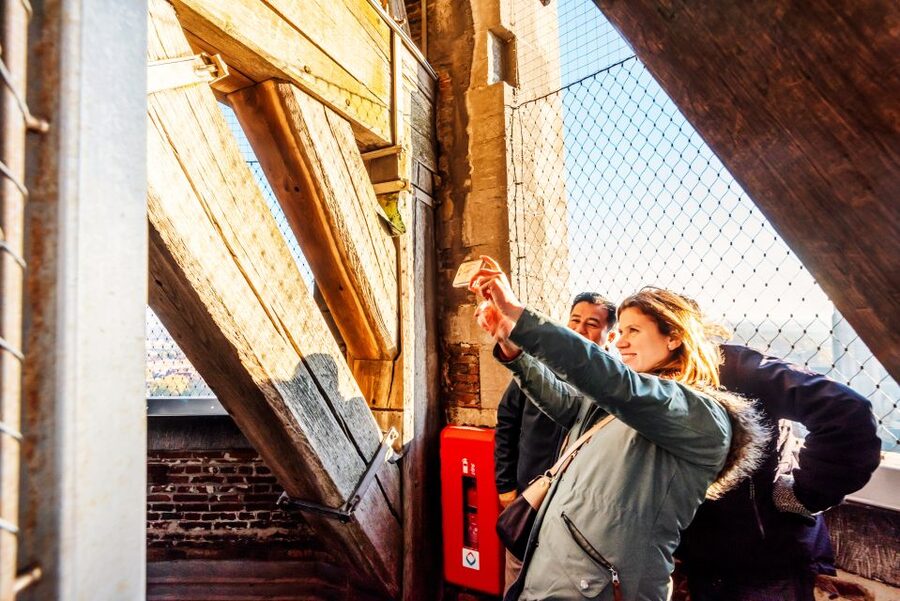
The climb involves 366 steps. It is a tight, physical ascent, not a lift-and-viewpoint visit, so allow time and be realistic about your comfort with stairs. The reward is a broad view over Bruges’ old rooftops and medieval streets.
The important practical tip is to reserve a free time slot through the Musea Brugge website before arriving. The card covers entry, but the tower still works with timed access. This reservation can save you from standing around and helps you fit the Belfry into a three-day plan.
I would place the Belfry early in your visit, especially if you have only one day. If the weather is poor, you may prefer to use your first hours in the indoor museums and take the tower when the sky clears. The card gives you that flexibility, provided time slots are available.
See Flemish painting at the Groeninge Museum
The Groeninge Museum is the card’s key stop for fine art. Its collection includes Flemish Primitives, so this is where you get the clearest look at the painting tradition most closely tied to Bruges.
The museum also helps balance the more architectural stops. After visiting churches and civic rooms, you can spend time with paintings rather than simply moving through historic interiors. The collection includes classic fine arts as well as other periods, giving you more than one narrow style of art to consider.
You do not need to be an art specialist to enjoy the visit. Take time with the details in the paintings, then use the museum’s free audio material if you want more context. The Musea Brugge website provides free audio tours for each location, a useful extra if you prefer to explore independently.
If your schedule is tight, I would put Groeninge near the top of your list along with the Belfry, City Hall, and the Church of Our Lady. These are the places most likely to justify the card on their own.
Michelangelo’s Madonna gives the Church of Our Lady a special focus
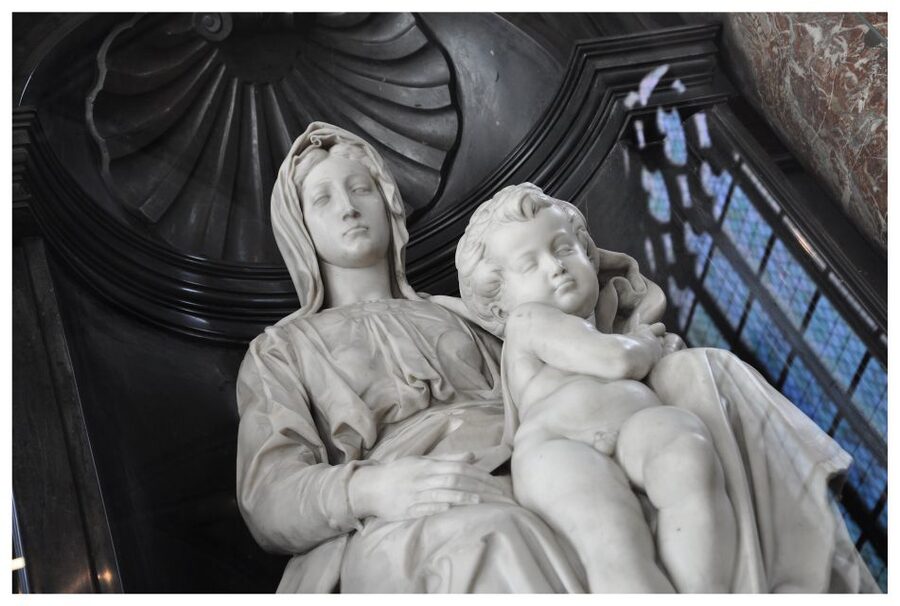
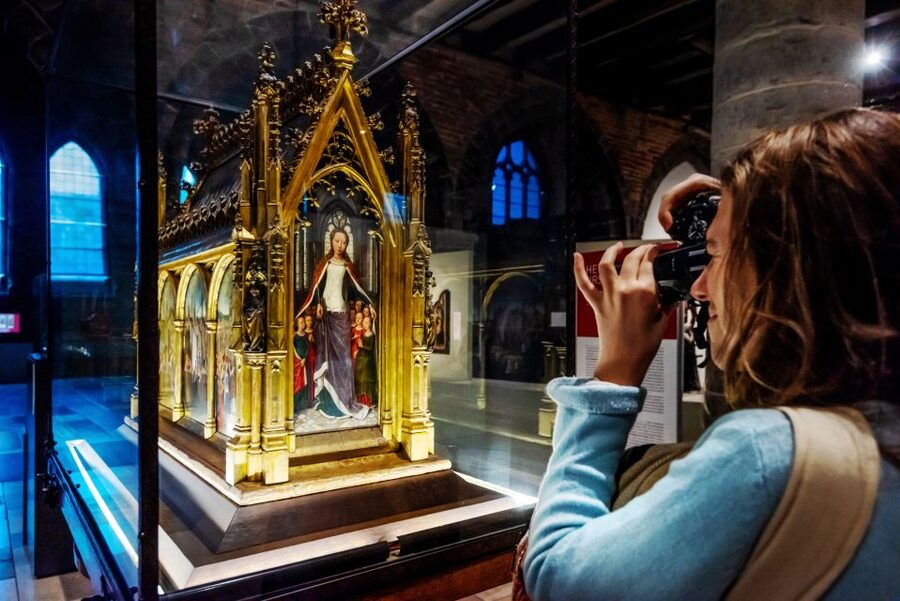
The Museum of the Church of Our Lady is another essential stop. Its best-known work is Michelangelo’s Madonna and Child, a rare piece of Italian sculpture outside Italy and an unusually powerful reason to enter the church.
The setting matters here. You are not looking at the sculpture in an ordinary gallery. The church itself adds a sense of place, and the visit connects art with religious life and Bruges’ long civic story.
This stop is also useful because it does not take the same kind of effort as the Belfry. You can slow down, look carefully, and continue through the center without needing a large block of time. The church and nearby museums fit naturally into a walking route.
Some included buildings, including the Gruuthuse Museum, are not wheelchair accessible. If access is important to you, check the current details before planning your route.
Same city, a different sort of day:
- Bruges: Small Group Boat Cruise and Guided Walking Tour
★ 4.8 · 4,102 reviews - Bruges: Walking Tour, Canal Boat Trip w/Beer Tasting Option
★ 4.4 · 2,759 reviews - Historical Walking Tour: Legends of Bruges
★ 5.0 · 2,541 reviews - From Bruges: Great War Flanders Fields Minibus Tour w/ Lunch
★ 4.9 · 1,257 reviews
St John’s Hospital turns a museum into a place
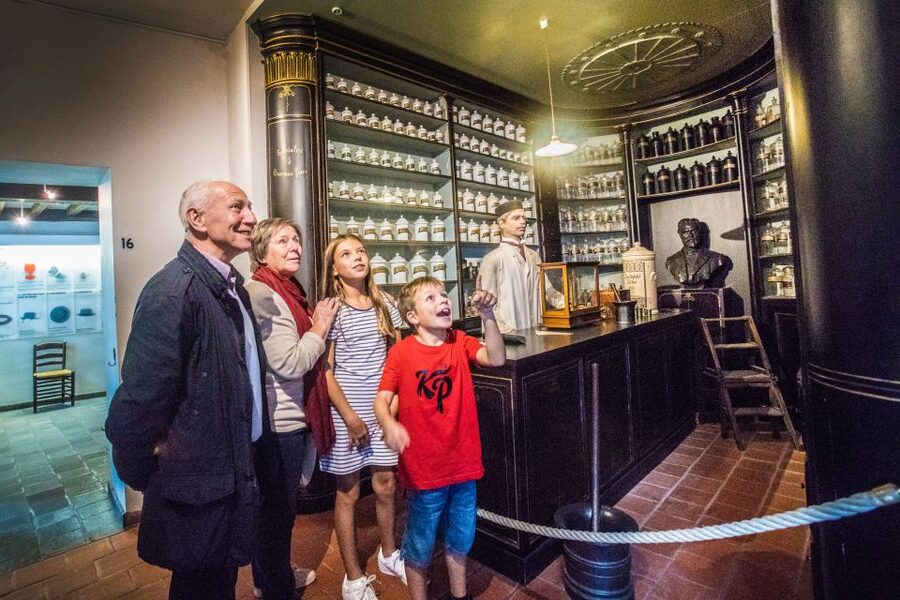
St John’s Hospital is one of the most rewarding entries on the pass because the building itself is part of the experience. This is not simply a modern gallery filled with objects. You visit a historic hospital setting and see how care, religion, art, and daily life once met under one roof.
The collection includes art and heritage displays, and the hospital setting gives those objects useful context. It is a strong choice if you want something different from a conventional painting museum.
I would allow enough time to look beyond the headline pieces. Historic rooms can be easy to rush through, but the atmosphere here is part of what you are paying to see. It is also a practical indoor stop on a wet or cold day.
The hospital may close on some days, including Monday according to the operating information available for the experience. Check opening times before building your schedule around it.
City Hall and Brugse Vrije explain how Bruges was run
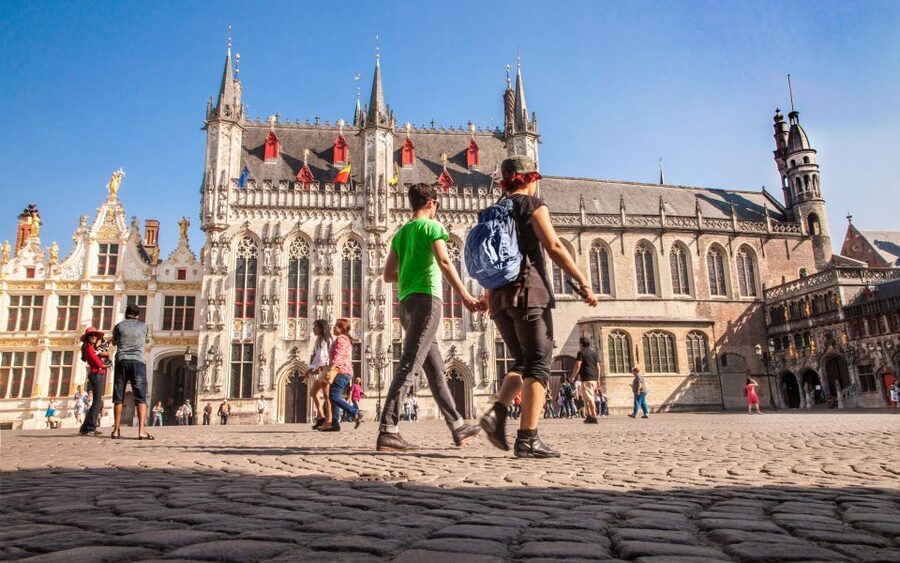
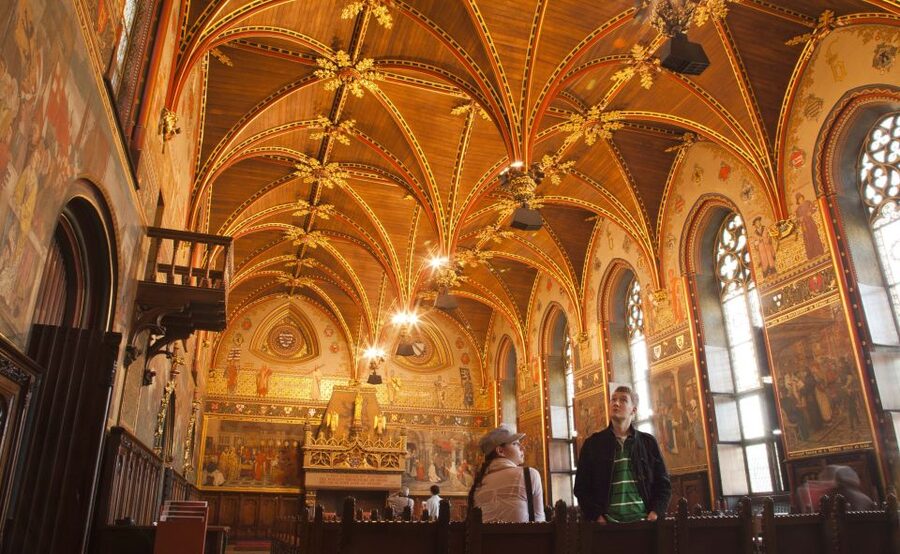
Bruges City Hall, or Stadhuis, is one of the pass’s best surprises. The building’s hall is a major attraction in its own right, and an audiovisual display explains how Bruges developed over time.
This stop works well for visitors who want more than paintings. You see the rooms where civic power was displayed, then get help understanding the city’s growth and changing role. It is a compact visit, but it gives structure to everything else you see in the old center.
Brugse Vrije, also called the Liberty of Bruges, adds another look at local government and civic life. Together, City Hall and Brugse Vrije show the administrative side of medieval and later Bruges.
I would not skip these simply because their names sound less familiar than Groeninge or the Belfry. City Hall in particular can turn a pleasant walk through the center into a clearer understanding of why the streets and squares look the way they do.
Gruuthuse and the smaller museums add local texture
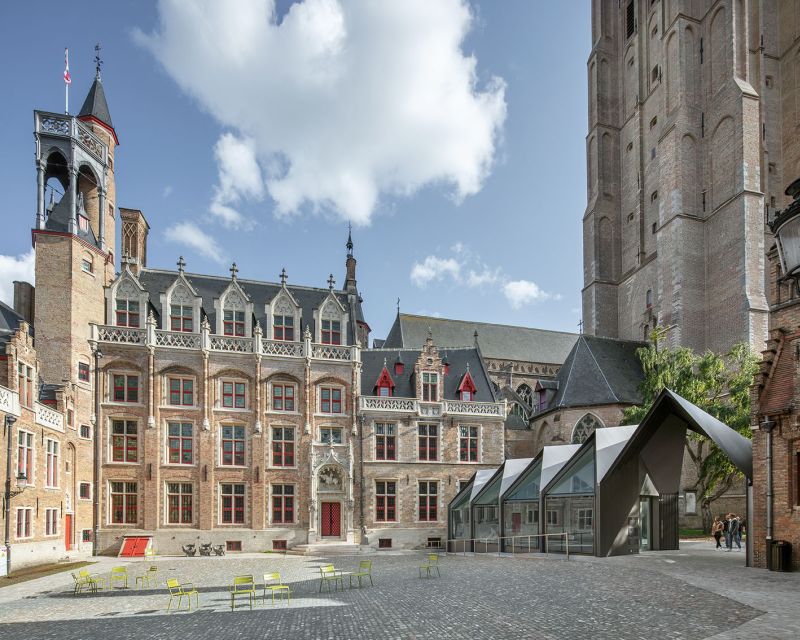
The Gruuthuse Museum focuses on the world of a wealthy Bruges family and the objects connected with domestic and civic life. It gives you furniture, decorative objects, and everyday material rather than only paintings.
That variety is one of the card’s strengths. You can move from sculpture to household objects, from civic architecture to religious art, without paying another entry fee every time your interest changes.
The House Gezelle, or Gezellehuis, offers a more personal and literary side of Bruges. The Museum of Folk Life, or Volkskundemuseum, turns attention toward customs and ordinary life. It is the sort of place you might not plan first, but it can help you understand the people behind the grand churches and wealthy merchant buildings.
The Folk Life Museum is also a good choice if you are visiting with someone who is less interested in formal art. Its subject matter is more familiar and grounded in daily routines, traditions, and local culture.
The two churches show a quieter side of Bruges
The Church of Our Lady of the Pottery, or O.L.V.-ter-Potterie, is separate from the better-known Church of Our Lady in the city center. It adds another religious and architectural stop to the pass and helps spread your visit beyond the busiest central sights.
This is a good example of how the card encourages you to see more than the standard Bruges postcard route. You may not spend as long here as at the Belfry or Groeninge, but the quieter setting gives the day a different pace.
The Museum of the Church of Our Lady remains the stronger choice if you must select only a few sites, thanks to Michelangelo’s sculpture. Still, if you have three days, the Pottery church helps you use the pass fully and see a broader range of Bruges’ religious heritage.
The Sint-Janshuis Mill is worth the extra walk
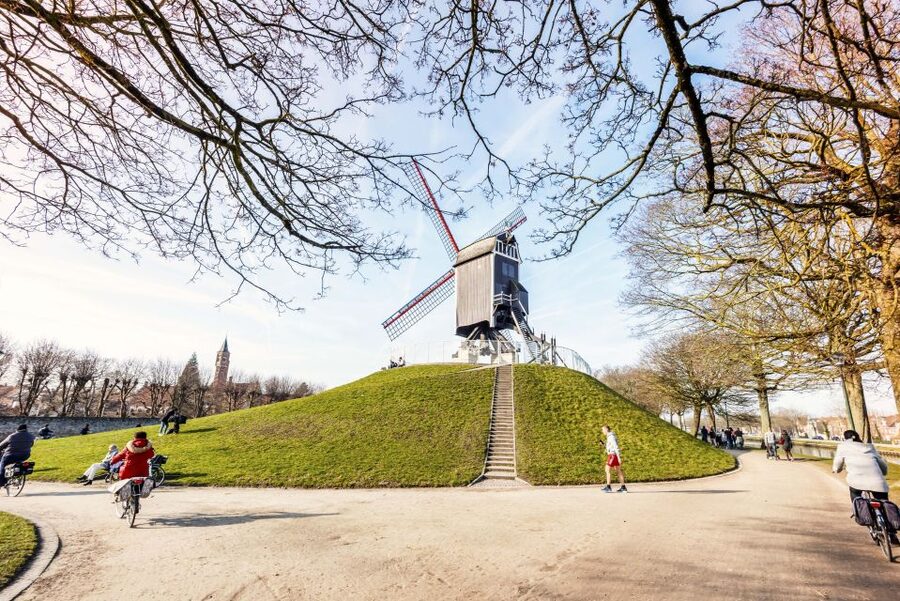
The Sint-Janshuis Mill gives the card a welcome change of scenery. Instead of another interior museum, you visit a historic windmill. Reaching the mill and climbing its steps can feel like a small outing beyond the main museum cluster.
The steps are steep enough to feel vertiginous, so take your time. The mill is not open in winter and reopens on April 1. That seasonal closure matters: do not count it as one of your 11 stops unless your dates fit the operating period.
The Museum of Folk Life pairs well with the mill. A visit to the mill followed by the folklore collection creates a nice contrast between machinery, local work, and domestic traditions.
The mill is also a good illustration of the pass’s broader value. You are not merely collecting famous sights. You are seeing different parts of Bruges, including places you might otherwise overlook.
How to get your money’s worth from $38
The card costs $38 per person. Individual admission at major attractions has been around €15, so the pass can begin to make financial sense after three substantial visits and become a clear bargain after four or five.
The exact value depends on your pace. If you only want the Belfry and one museum, buying individual tickets may be better. If you plan to visit the Belfry, Groeninge, the Church of Our Lady, St John’s Hospital, and City Hall, the card should offer strong value.
The savings are not only about admission prices. You also avoid stopping at a ticket desk each time. Scan the digital pass and continue. That matters in a city where a short visit can be quickly eaten up by queues and indecision.
The card also nudges you into places you might skip. Since the next entry is already covered, you can step into the Folk Life Museum or City Hall for a shorter visit without wondering if the extra ticket is worth it.
There is no public transportation included. In practice, that is less of a problem because the main museums are within a small walking area, though the mill requires more effort and sits apart from the central cluster.
A practical three-day plan
If you have three full days, spread the visits out instead of trying to conquer all 11. Use the first day for the Belfry, City Hall, and the Church of Our Lady. Reserve the Belfry slot in advance and place it at a time that suits your walking plan.
On the second day, visit Groeninge, Gruuthuse, and St John’s Hospital. These three give you a strong mix of painting, domestic life, and a historic care setting.
Use the third day for the Museum of Folk Life, the House Gezelle, the Church of Our Lady of the Pottery, Brugse Vrije, and the mill if it is open. You do not need to linger equally at every stop. The point is to give each site enough attention to understand why it is included.
With only one day, be selective. The Belfry, Groeninge, Church of Our Lady, St John’s Hospital, and City Hall form the strongest short list. One visitor managed seven sites in a single day, but that is a brisk pace. I would rather see five well than race through eleven.
Watch the calendar. Some museums close on Monday, and several sites share similar closing hours. Winter opening times are shorter, while the mill is closed until April 1. Check the current schedule before you activate the card.
Using the digital pass at the door
There is no need to collect a physical card. The voucher can be scanned at the first attraction, and you can continue using the digital version at other entrances. It can also be added to a phone wallet, though it is sensible to keep the original voucher accessible in case the stored version becomes difficult to find.
The pass offers skip-the-ticket-line access, but the Belfry still deserves special planning because of its time slots. Large bags and luggage are not allowed, pets are not allowed except assistance dogs, and flash photography is prohibited.
If you want extra background, use the free audio tours on the Musea Brugge website. This keeps the visit self-paced and avoids the cost or schedule of a separate guided tour.
Is the Musea Brugge Card worth booking?
Book it if you plan to visit at least four included sites, especially the Belfry, Groeninge Museum, Church of Our Lady, St John’s Hospital, or City Hall. The card is also a smart choice if you like to make spontaneous stops and prefer not to think about another ticket every time you enter a museum.
Skip it if your Bruges visit is built around only one or two attractions, or if your dates fall when several included sites are closed. Also check access details if you use a wheelchair, since some buildings are not fully accessible.
For most visitors spending two or three days in Bruges, the card offers a practical mix of savings, convenience, and cultural range. It turns the city into more than a pretty walk through medieval streets. You get the art, the churches, the civic rooms, the local customs, and the stories of ordinary life.
FAQ
How long is the Musea Brugge Card valid?
The card is valid for 72 hours, or three days, once activated.
How do I activate the card?
Go directly to any included attraction and scan your voucher at the entrance. You can begin at the Museum Pavilion, the main ticketing center, or at another included site.
Can I use a digital version of the card?
Yes. You can scan the digital voucher at each attraction, and the pass can be added to a phone wallet.
Does the card include the Belfry?
Yes. The card includes entry to the Belfry and Carillon, but reserving a free time slot online is recommended.
Does the card include public transportation?
No. Public transportation is not included.
Is the Sint-Janshuis Mill open all year?
No. The mill is closed during winter and opens on April 1.
Can I take luggage into the museums?
No. Luggage and large bags are not allowed.
Can I cancel my booking?
Yes. You can cancel up to 24 hours in advance for a full refund. You can also reserve now and pay later, subject to the booking terms.
Just added in Bruges
- 2-Hour Private Walking Tour of Bruges★ 5.0 · 13 reviews
- Ticket Expo Body Worlds in Bruges, Belgium★ 4.5 · 11 reviews
- 6 Hour Bruges Shore Excursion from Zeebrugge Cruise Port★ 4.5 · 23 reviews
- Explore the Instaworthy Spots of Bruges with a Local★ 5.0 · 3 reviews
- The Waffles ‘n Coffee Breakfast in Bruges Centre★ 4.5 · 9 reviews
- Australian Battlefields Private Tour in Flanders from Bruges★ 5.0 · 15 reviews
- Discover the secrets of Bruges by playing!★ 4.5 · 7 reviews
- Bruges Walking Tour with Audioguide on Your Smartphone★ 4.5 · 14 reviews
Museums, compared.
Atomium Entry Ticket with Design Museum Ticket
Read our review →
Choco-Story Brussels: Chocolate Museum Entrance with Tasting
Read our review →
Choco-Story Chocolate Museum Guided Tour w/Tastings
Read our review →
2.5-Hour Chocolate Museum Visit with Workshop
Read our review →
The World of Banksy Museum Permanent Exhibition
Read our review →
Chocolate Making Workshop and Chocolate Museum Entry
Read our review →Browse the lists this tour appears in