Reviewed · CHOCOLATE TOURS
2-Hour Historical Walking Tour in Bruges with Praline Included
Bruges gives you a lot to take in, and this two-hour walking tour packs the medieval center into a clear, easy route. You move from Burg Square to the Markt, canals, churches, old trade quarters, and back to the Burg, with stories that connect grand buildings to beer, chocolate, war, medicine, and even the darker side of swan keeping.
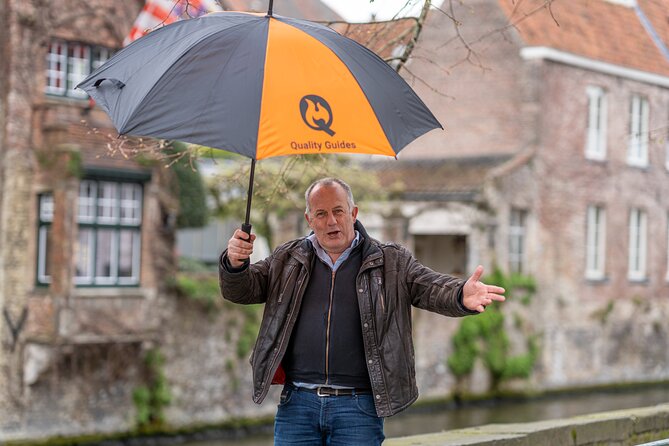
I like the small-group format, listed for a maximum of six people, and I like the way the tour mixes famous sights with odd local details. Guides Peter and Joost are repeatedly praised for humor, clear English, useful food advice, and a real connection to Bruges. The main consideration is the low advertised price: this functions as a tip-based tour, so you should plan to reward the guide at the end if the experience suits you.
Key points to know before booking
- A fast orientation of central Bruges: The route covers the main squares, canals, churches, museums, bridges, and photo spots in about two hours.
- Local guides Peter and Joost: Expect history told with jokes, stories, and practical recommendations for eating and drinking.
- A praline with a medical backstory: The chocolate stop at Saint John’s Hospital links medieval medicine to one of Belgium’s best-known treats.
- Many famous views without entrance fees: You see the Belfry, Gruuthuse, Rosary Quay, and Boniface Bridge from outside.
- Tip-based value: The listed price is unusually low, but a guide’s income depends heavily on gratuities.
- A gentle but active walk: The pace suits many ages, though you will cover plenty of ground on foot.
Starting where Bruges began, Burg Square
The tour starts at Markt 4, in the heart of Bruges, then quickly brings you to Burg Square. This is the right place to begin because the city’s story starts here, both in the tour and in the physical center of old Bruges.
You will hear about the square’s important buildings and how power was organized in the city. The tour ends here too, which makes the route easy to follow and useful for planning the rest of your day.
I like this opening because it gives you a frame for everything that follows. Bruges can feel like a collection of handsome streets at first. Burg Square helps turn those streets into a story about trade, civic power, religion, and daily life.
More Chocolate Tours in Bruges
- Bruges: Choco-Story Chocolate Museum Guided Tour w/Tastings
★ 4.2 · 1,379 reviews - Bruges: Belgian Waffle-Making Workshop with Beer Tasting
★ 4.9 · 960 reviews - Belgian Chocolate Workshop in Bruges
★ 5.0 · 660 reviews
The Markt, the Belfry, and the wealth of cloth
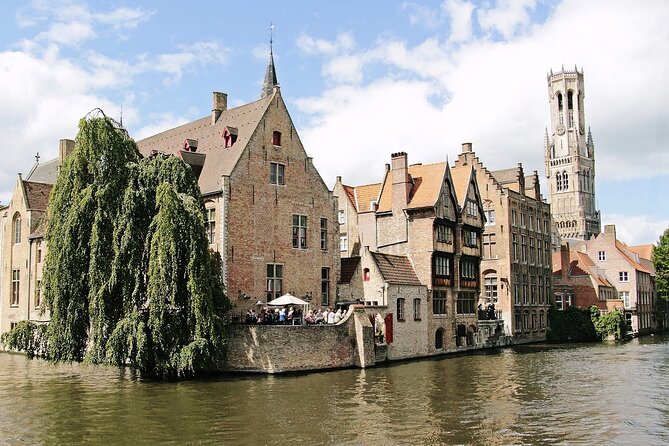
From Burg Square, the walk heads to the Markt, Bruges’ great market square. The Belfry, the old cloth halls, water halls, and medieval buildings create the classic Bruges scene, but the guide’s job is to explain why these buildings mattered.
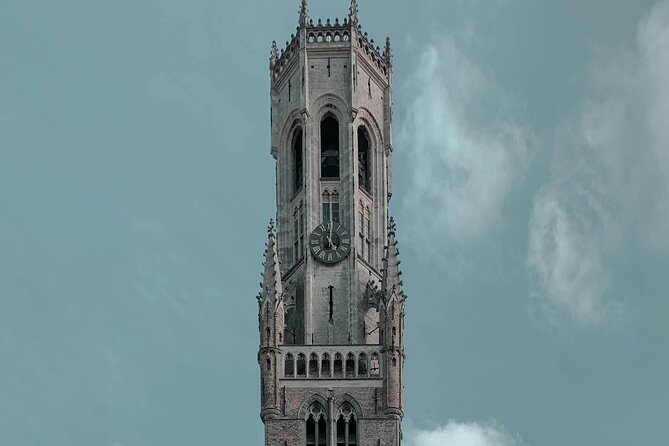
At the Belfry, you hear about its beginnings, its present problems, and the wealth tied to the cloth trade. The short stop does not include entry to the tower, so do not book this walk expecting to climb the Belfry. Instead, you get the outside story and a useful introduction before deciding if you want to return for a longer visit.
The talk about cloth halls helps explain Bruges as a commercial center. This was not simply a pretty town waiting for painters and photographers. Its buildings grew from money, trade, guilds, and the need to manage goods.
Belgium, war, and the stories behind the monuments
The route pauses at the Pro Patria memorial arch for a look at Bruges during the First and Second World Wars, along with the independence of Belgium. This gives the tour a needed break from medieval architecture.
I appreciate this part because it keeps the city from becoming a museum set. Bruges has a medieval appearance, but its modern story includes national change, occupation, war, and remembrance. The guide connects those events to a place you can actually see, rather than dropping dates without context.
The stop is brief, so you will get a concise explanation rather than a full military history. That is appropriate for a two-hour overview, but anyone wanting detailed wartime history should plan a separate visit or read further.
Gruuthuse, Gothic architecture, and the beer story
At the Gruuthuse gate and courtyard, you hear about the Gothic residence and the family who became wealthy through gruut. Gruut was a medieval herb mixture used to flavor and preserve beer. The story then moves to the switch from gruut to hops, giving you a taste of how brewing, taxation, trade, and local power could overlap.
The courtyard of the Gruuthuse Museum is an attractive setting for this story. You are not paying for museum admission as part of the walk, but the guide helps you decide if the museum deserves a return visit.
This is one of the tour’s more useful habits: it gives you enough background to make better choices later. If the exterior interests you, you can come back with a clearer idea of what you want to see inside.
More Historical Tours in Bruges
- Historical Walking Tour: Legends of Bruges
★ 5.0 · 2,541 reviews - Evening Tour: The Dark Side of Bruges
★ 5.0 · 956 reviews - THE Storytelling Tour of Bruges | First Day Must | History & Tips
★ 5.0 · 925 reviews - Historical Walking Tour: The Story of Bruges – by Legends
★ 4.7 · 483 reviews
Church art and the chocolate connection at Saint John’s Hospital
The Church of Our Lady brings the route to one of Bruges’ important religious and artistic sites. The guide points out the Pietà and other valuable works, while also explaining the church’s place in the city.
Next comes Saint John’s Hospital, where medicine in the Middle Ages becomes the bridge to the tour’s praline. You hear how medical practice helped lead to the creation of pralines, then receive a chocolate made by the Guild of Bruges Chocolatiers when the relevant shop is open.
That condition matters. The praline is a welcome extra, but it is not guaranteed if the shop is closed. Think of it as a pleasant part of the tour rather than the reason to book it.
I like the way this section links art, religion, medicine, and food. It also gives you a break from looking upward at facades. You get a human story about illness, treatment, and the way old practices shaped something now associated with Belgian pleasure.
Canals, De Halve Maan, and the darker side of Bruges
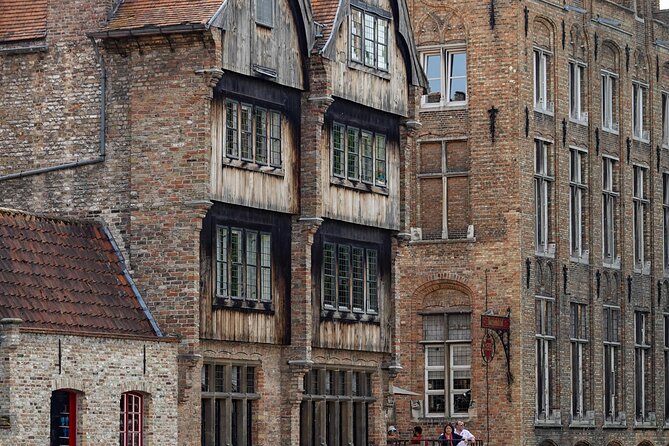
At Sint-Janskaai, you stop beside the water for a photo with a medieval backdrop. Bruges is at its best along these canal edges, where the water helps explain how goods and people moved through the city.
The route continues to Walplein and Huisbrouwerij De Halve Maan, the famous brewery with a pipeline running under Bruges. You hear about the brewery and see one of the city’s most picturesque squares. This is an exterior stop, so beer fans may want to return for a brewery visit later.
Stoofstraat changes the mood. Here the guide discusses the medieval red-light district, the city’s smallest street, and customs that grew around it. The story also reveals the darker side of Bruges’ swans. This is a good example of the tour’s tone: the guide does not polish every part of the past into a pleasant postcard.
At Katelijnestraat, the focus turns to chocolate, waffles, and fries, but also to plague and the harder days of Bruges. You will pass plenty of places selling Belgian treats, yet the guide adds context so you can see the food streets as part of a city shaped by disease, trade, and survival.
The Boniface Bridge and the Flemish Primitives
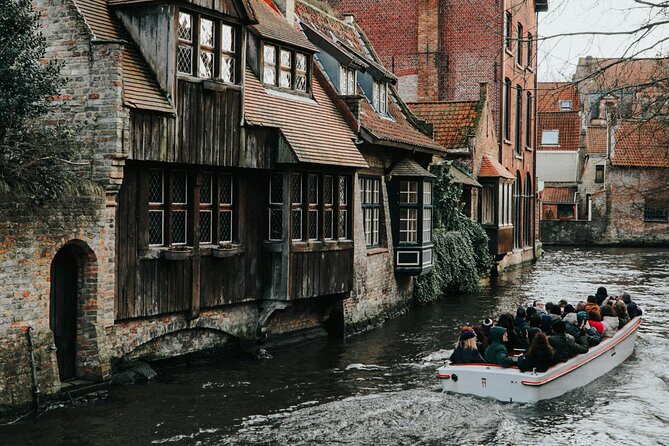
The Boniface Bridge is one of the most photographed places in Bruges. Its low stone span, water, and medieval buildings create the romantic image many people expect from the city. The guide also points out the bridge’s less innocent stories, which keeps the stop from becoming a simple photo break.
You then reach the Groeningemuseum, associated with Jan van Eyck, Hans Memling, Hugo van der Goes, Gerard David, and other Flemish Primitives. The walk does not include museum entry, but it gives you a useful reason to consider going inside.
If you have limited time, this is exactly the sort of advance guidance you need. The tour helps you decide if painting deserves your next hour, or if you would rather stay outdoors and explore the canals, squares, and shops.
The route also includes the Dijver, described as Bruges’ oldest port. Its connection to Viking trade adds another layer to the city’s story, and the area offers a good view of a well-known terrace. You can see how the same waterways supported early trade, later tourism, and present-day dining.
Rosary Quay and the film connection
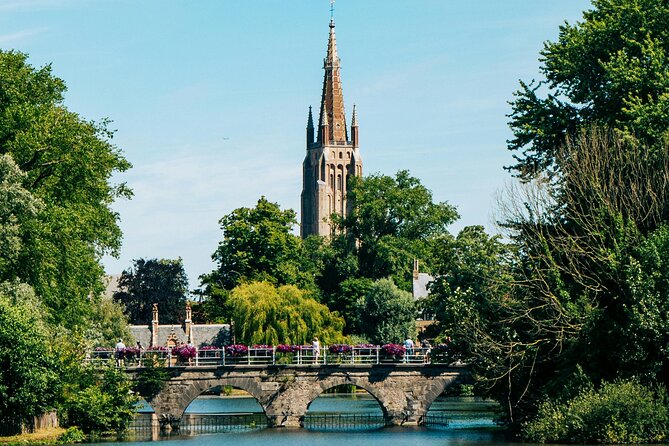
Rosary Quay is the classic photo stop. From here, you can frame the Belfry and the Church of Our Lady together, along with the hotel linked to the film In Bruges, where Colin Farrell’s character jumped from a window.
The view is famous for good reason, but the guide helps you use the stop well. You get the picture, learn why the view matters, and continue without spending the whole tour waiting for an empty frame.
This is also a good point to note the pace. Several stops are only three to five minutes, while the larger story points receive ten minutes. The tour is not a slow architectural seminar. It is a moving overview with frequent pauses, so you should wear shoes suited to a couple of hours on city streets.
Tanners, fish sellers, and three styles of civic Bruges
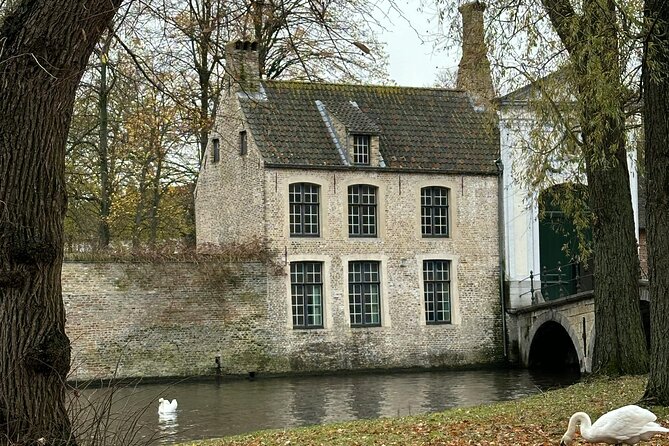
At Huidenvettersplein, the guide explains the work of medieval tanners. It was dirty, foul-smelling, and essential to the city’s economy. The square that once held one of Bruges’ least pleasant trades now offers places to eat and drink, which makes the contrast easy to see.
The Vismarkt adds another practical story. Bruges once had two fish markets, divided according to the sort of people expected to shop there. From here, the walk enters the central city through a mix of Gothic, Renaissance, and Classicist architecture.
I like these stops because they show how class and work shaped the city. A pretty square can hide a hard past. A polished facade can reflect changing tastes and changing wealth. The guide’s humor helps keep these facts memorable without making light of the difficult parts.
Ending with the Burg’s churches and civic buildings
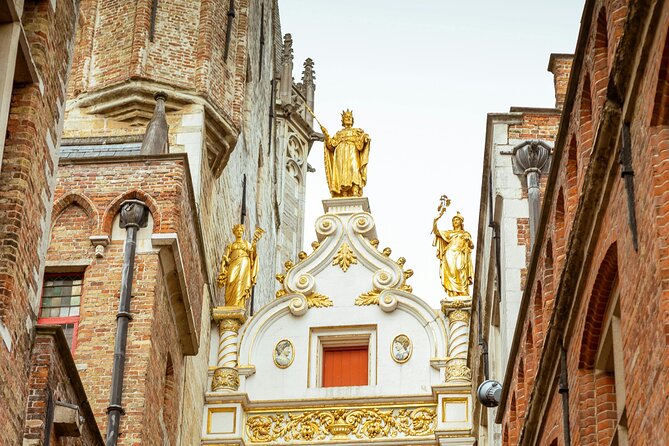
The tour returns to Burg Square for a final look at the town hall, the Basilica of the Holy Blood, and the courthouse. Here, several architectural styles sit close together, making the square a compact lesson in how Bruges changed over time.
The conclusion gathers the main themes: religion, law, trade, civic power, war, and local custom. Because the walk returns to its starting point, you finish in a useful location for continuing your day.
You can use the guide’s suggestions to choose a meal, a beer, a museum, or a second look at one of the sites that caught your attention. This is where the tour earns much of its practical value. It does not try to replace every museum and church. It helps you choose among them.
What the price really means
At $3.63 per person, the advertised price is remarkably low for a two-hour guided walk in central Bruges. It is best understood as an entry price for a tip-based experience, not the full cost of the guide’s work.
Several people who enjoyed the tour specifically noted that Peter’s income depends on tips and that the walk remains good value even after adding a fair gratuity. One person booked it for a work group and did not realize the tip arrangement, so I would make that point clear before booking for a larger party.
The listed maximum is six people, though one account describes a larger group that Peter still managed well. Either way, the stated small-group limit is appealing. You should be able to hear the guide more easily and ask questions without competing with a crowd.
The tour is offered in English and includes a mobile ticket. It is near public transportation, and service animals are allowed. A moderate level of fitness is expected. Rest stops, drinking water stops, and public toilets are provided along the way.
Who should choose this Bruges walk
I would choose this tour if you have only a short stay, arrive from a cruise, or want to understand the city before deciding how to spend the rest of the day. It covers the main old-center sights without asking you to commit to museum admissions.
It also suits solo visitors. Peter is described as answering questions and offering a card with suggestions for places to visit. That kind of practical help can save time when you are choosing between a brewery, museum, chocolate shop, or restaurant.
Families can manage it too. One account describes a 16-month-old needing movement during some stops, with the guide handling the interruption kindly. Still, this is a walking tour with many stops, not a children’s activity built around games.
The route has worked well for older visitors at a comfortable pace, but Bruges weather deserves respect. Rain can arrive even when the forecast looks friendly. Bring a compact umbrella or rain jacket, and wear shoes that stay comfortable on a long city walk.
When this tour may not be enough
Do not choose this as your only Bruges experience if you want extended time inside the Belfry, Church of Our Lady, Gruuthuse Museum, or Groeningemuseum. The tour explains these places from the outside or in brief, then moves on.
It may also feel quick if you prefer long photography sessions. The guide keeps the group moving so you can see a lot in two hours. You can always return to Rosary Quay, Boniface Bridge, or the canals after the tour.
Finally, the advertised price can create the wrong expectation. If you dislike tipping or want a fixed all-inclusive fee, this setup may frustrate you. If you accept the tip-based model, the cost can still be excellent for the amount of orientation and local storytelling you receive.
Should you book it?
I would book this walk early in a Bruges stay, especially if you have one day or less. The mix of famous views, strange customs, beer history, wartime context, art, food, and practical advice gives you a strong first look at the city.
Book it for local storytelling and orientation, not for lengthy interior visits. Remember that the praline depends on the shop being open, and set aside a fair tip for Peter, Joost, or the guide leading your departure. With those expectations, this is an inexpensive and useful way to get your bearings before exploring Bruges on your own.
FAQ
How long is the Bruges walking tour?
The tour lasts approximately two hours. Stops range from about three to ten minutes, with the route covering the main historic center.
Where does the tour start and finish?
It starts at Markt 4, 8000 Brugge, Belgium, and ends back at the meeting point in Burg Square.
Is the tour offered in English?
Yes. The experience is offered in English.
Is a praline included?
A praline made by the Guild of Bruges Chocolatiers is included when the relevant shop is open. If the shop is closed, the praline may not be available.
Does the tour include entry to the museums or Belfry?
No entrance tickets are listed. The tour visits or discusses places such as the Belfry, Gruuthuse Museum, Church of Our Lady, Saint John’s Hospital, and Groeningemuseum mainly from the route and exterior viewpoints.
Can I cancel the booking?
You can cancel up to 24 hours before the experience start time for a full refund. Cancellations or changes made less than 24 hours before the start are not accepted for a refund.
More chocolate shops and tastings in Bruges
- Bruges: Belgian Praline and Mendiants Chocolate Workshop
★ 4.7 · 620 reviews - Choco-Story: The Chocolate Museum in Bruges
★ 4.0 · 544 reviews - The Waffles ‘n Beer Workshop in Bruges Centre
★ 5.0 · 429 reviews - Bruges: Chocolate Making Workshop and Chocolate Museum Entry
★ 4.6 · 395 reviews
More Walking Tours in Bruges
- Bruges: Small Group Boat Cruise and Guided Walking Tour
★ 4.8 · 4,102 reviews - Bruges: Walking Tour, Canal Boat Trip w/Beer Tasting Option
★ 4.4 · 2,759 reviews - Bruges: Guided Walking Tour
★ 4.5 · 682 reviews - 💛 Tell Me About Bruges 🏰 1000 Years of Stories by Locals ⭐
★ 4.9 · 528 reviews
Just added in Bruges
- 2-Hour Private Walking Tour of Bruges★ 5.0 · 13 reviews
- Ticket Expo Body Worlds in Bruges, Belgium★ 4.5 · 11 reviews
- The Waffles ‘n Coffee Breakfast in Bruges Centre★ 4.5 · 9 reviews
- 6 Hour Bruges Shore Excursion from Zeebrugge Cruise Port★ 4.5 · 23 reviews
- Explore the Instaworthy Spots of Bruges with a Local★ 5.0 · 3 reviews
- Australian Battlefields Private Tour in Flanders from Bruges★ 5.0 · 15 reviews
- Discover the secrets of Bruges by playing!★ 4.5 · 7 reviews
- Bruges Walking Tour with Audioguide on Your Smartphone★ 4.5 · 14 reviews
Chocolate Tours, compared.
Choco-Story Brussels: Chocolate Museum Entrance with Tasting
Read our review →
Hungry Mary’s Famous Beer and Chocolate Tour in Brussels
Read our review →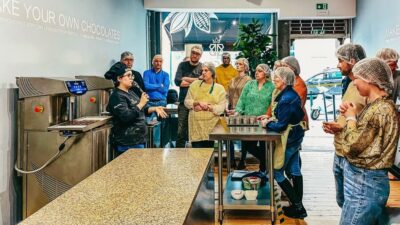
Belgian Chocolate Making Workshop with Tastings
Read our review →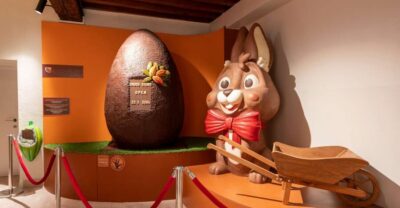
Choco-Story Chocolate Museum Guided Tour w/Tastings
Read our review →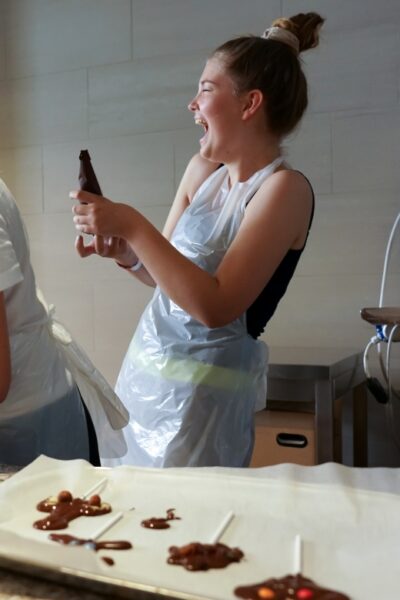
2.5-Hour Chocolate Museum Visit with Workshop
Read our review →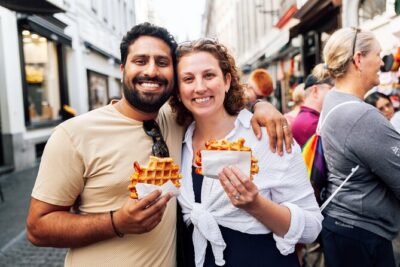
Historical Walking Tour with Chocolate & Waffle Tasting
Read our review →
Belgian Waffle-Making Workshop with Beer Tasting
Read our review →