

Reviewed · HISTORICAL TOURS
Historic Highlights, by a local guide
Ghent’s story becomes much clearer when you walk it with someone who knows the tale behind each street and building. Jürgen, a local history professor born and raised in the city, leads this two-hour route from the old waterways to the Castle of the Counts, mixing major sights with less obvious corners and stories about daily life.
I like the local perspective and the way the walk links Ghent’s Celtic origins, medieval power, 18th-century elegance, and industrial age. I also like the personal scale: the advertised maximum is 20 people, but the route can feel much more intimate, especially when the group is small.
The main consideration is that several major sights are viewed from outside unless you pay separate admission. If you want a full visit inside St. Bavo’s Cathedral or Gravensteen, allow extra time and money beyond the $40.33 tour price.
Key points at a glance
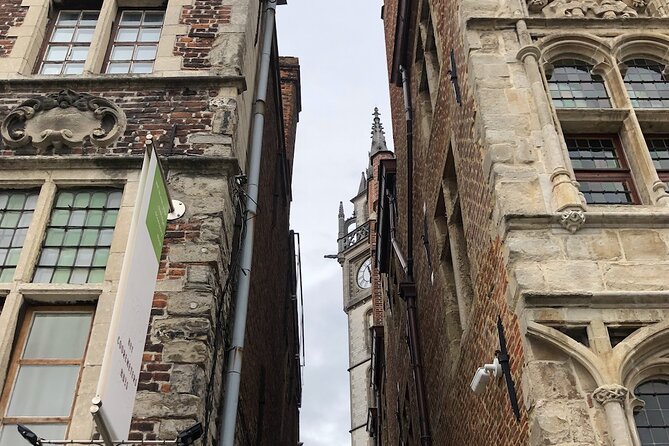
- A historian leads the walk: Jürgen brings local knowledge, answers questions, and adjusts his explanations to the group.
- The route covers several eras: You move from Ghent’s waterways and abbey past to medieval castles, 19th-century society, and the Socialist movement.
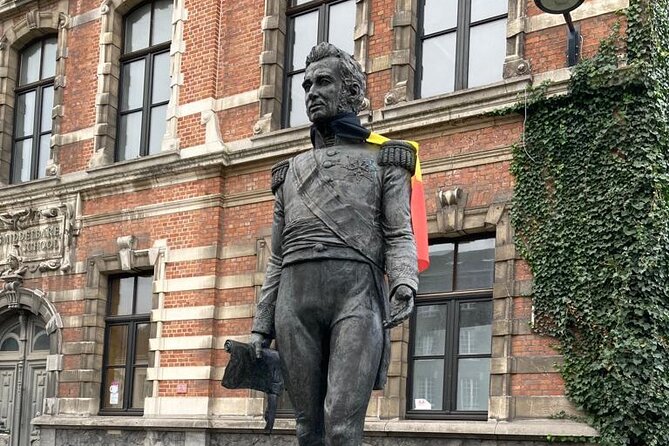
- The start is away from the usual central landmarks: Meet at Hagelandkaai 53, by the Napoleon De Pauw lock.
- Major sights are part of the route, not necessarily included inside: St. Bavo’s Cathedral, Hotel d’Hane Steenhuyse, and Gravensteen list admission separately.
- The finish is useful for the rest of your day: Vrijdagmarkt has bars and restaurants, while Patershol offers many small places to eat.
- You get practical local tips: The guide can suggest food, drinks, Sunday markets, and less familiar streets around Ghent.
Why this Ghent walk works so well for first-time visitors
I like walking tours that give you a city’s basic structure before you start exploring on your own. This one does that by connecting Ghent’s water, religious power, civic wealth, noble homes, medieval fortifications, working-class districts, and political history.
That broad span is the tour’s main strength. You are not simply taken from one postcard view to another. The route explains how different parts of Ghent fit together, and it gives you a way to read the city after the walk ends.
Jürgen’s background matters here. He is described as a history professor and a Ghent native, so he can combine dates and events with personal knowledge of the city. His approach is not just a recital of facts. He explains the stories behind the stories, responds to questions, and adjusts to the needs of the group.
The tone also sounds social rather than formal. Jürgen is described as friendly, thoughtful, humorous, and attentive. That matters on a two-hour walk, especially if your group includes people with different levels of interest in history. The route is substantial, but it does not appear to treat every stop like a lecture.
The walk has a maximum of 20 people. That is not the same as a guaranteed private tour, so you should check the group size when booking if privacy is important to you. At times, the experience can be very small scale, which makes it easier to ask questions and shape the conversation around your interests.
More Historical Tours in Ghent
- Ghent: 50-Minute Medieval Center Guided Boat Trip
★ 4.5 · 5,637 reviews - Historical Walking Tour: Legends of Gent
★ 5.0 · 1,761 reviews - Ghent: 40 Minute Medieval Center Guided Boat Tour
★ 4.4 · 884 reviews
Starting at Hagelandkaai and the old lock
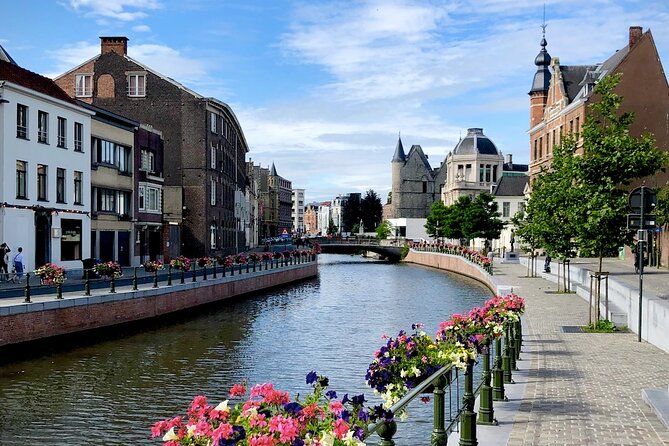
The meeting point is Hagelandkaai 53, 9000 Ghent, with a listed start time of 3:00 pm. The walk begins at the Napoleon De Pauw lock, where the moat around the Spanish Castle once ran in the 16th century.
That is a smart place to begin. Instead of opening at the city’s most famous square, the route starts with a piece of Ghent’s older defensive and water system. You begin by thinking about how the city was protected and organized, not just how it looks today.
The stop itself is short, about five minutes. Admission is not included, though this opening point is primarily a place for explanation rather than a separate attraction visit.
From a practical point of view, pay attention to the meeting address. Hagelandkaai is not the same as the finishing area around Vrijdagmarkt, so do not assume that the walk starts at the castle or cathedral. The route is designed as a point-to-point walk, ending elsewhere in the historic center.
Following Ghent’s waterways at Bisdomkaai
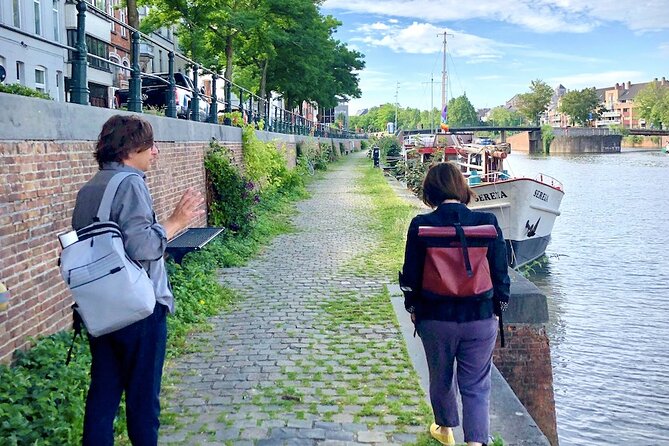
The next stretch passes the old St. Bavo’s Abbey and continues toward the meeting point of the Leie and Schelde rivers, the place associated with Ghent’s beginnings. The walk then follows Bisdomkaai for about ten minutes.
This is one of the most useful parts of the route because it gives you a geographic explanation for the city. Ghent did not appear at random. Its position at the confluence of two rivers shaped its growth, movement, and importance.
The old abbey adds another layer. You are looking at a site tied to religious life while also hearing about the waterways that helped form the city. Jürgen’s role here is to connect those subjects so the city feels like a living system rather than a collection of unrelated monuments.
The stop is free, but the value comes from the explanation. If you are the kind of person who wants to understand why a city developed where it did, this opening section should hold your attention.
St. Bavo’s Cathedral and the Lam Gods

St. Bavo’s Cathedral receives about ten minutes on the route. The cathedral houses the Lam Gods by the Van Eyck brothers, one of Ghent’s most important works of art.
The tour includes the cathedral as a sight, but admission is not included. That distinction is important. You can hear about the building and its artwork during the walk, then decide if you want to return for a separate interior visit.
A virtual tour is available inside the cathedral, and it is described as worth seeing. If the Lam Gods is high on your list, plan for extra time beyond the two-hour walk. The guided stop gives you context, but it is not a substitute for a full visit.
I like this arrangement because it lets you choose. Some people want a quick explanation before moving on. Others want to spend much longer with a major artwork. The walking tour gives you enough background to make that decision instead of passing the cathedral without understanding why it matters.
More Walking Tours in Ghent
- Ghent: Belgian Chocolate Walking Tour with Tastings
★ 4.9 · 259 reviews - Gastronomic Walking Tour of Gent – Tasters included
★ 5.0 · 199 reviews - Ghent: City Highlights and Hidden Gems Guided Bike Tour
★ 4.7 · 196 reviews - Ghent: Private 2-Hour Walking Tour
★ 4.7 · 134 reviews
Kouter and the city of the 18th and 19th centuries
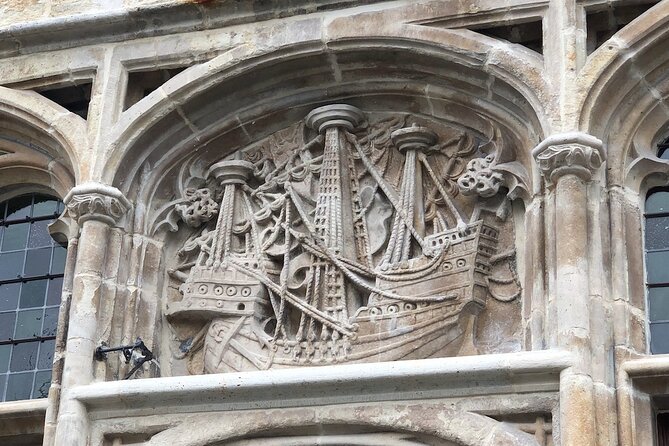
The route then reaches Kouter, with about ten minutes devoted to the square and its surroundings. Here the focus shifts to Ghent in the 18th and 19th centuries.
This change of subject keeps the tour from becoming only a medieval walk. Ghent is not just castles, churches, and old lanes. Kouter helps place the city in a later social setting, when elegant urban life and changing ideas shaped the streets around it.
For you, this stop provides useful contrast. The earlier sections focus on origins, religion, and medieval power. Kouter shows a different side of the city, one tied to later civic and social life.
The square is free to view, and the walk does not require an admission ticket here. Jürgen’s explanations are the main reason to pay attention, since the attraction is as much the historical setting as the physical space.
Hotel d’Hane Steenhuyse and an 18th-century city palace
Hotel d’Hane Steenhuyse is a short stop, about ten minutes, but it adds an elegant chapter to the route. This 18th-century city palace is known for ornate ceilings and decorations, along with a beautiful garden described as a little-known secret.
Admission is not included, so you should not expect a full interior visit as part of the basic walking tour. Still, the palace helps explain the world of wealthy residents and the style of Ghent’s later urban life.
I especially like this stop because it broadens the usual Ghent checklist. Many people come for the castle and cathedral. A city palace offers a different way to see the city, through rooms, ornament, and private garden space rather than fortification or worship.
If interiors are your priority, ask Jürgen how much access is possible on the day of your visit. The supplied details identify the palace as part of the route but do not promise entry.
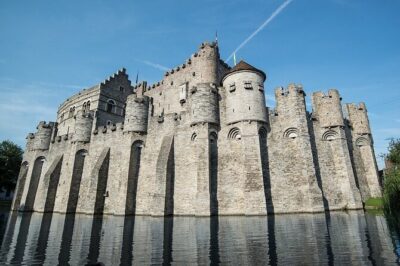
Gravensteen, the Castle of the Counts
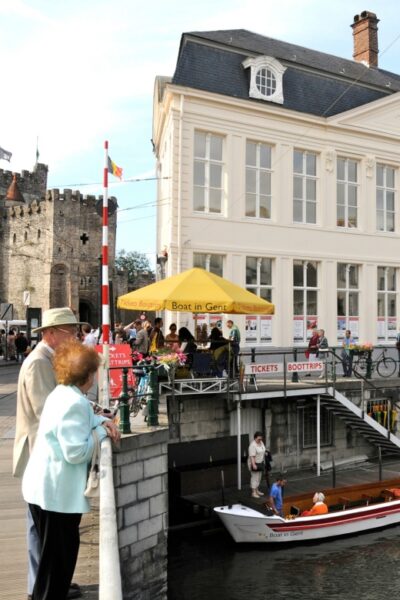
After a few additional sights that are not listed in detail, the walk reaches Gravensteen, the Castle of the Counts. The stop lasts about ten minutes, and admission is not included.
This is one of Ghent’s defining sights, so it makes sense that the route includes it. The castle brings the medieval story into sharp focus after the earlier discussion of waterways, abbeys, and civic life.
A ten-minute stop will give you an introduction, not a complete castle visit. If you want to explore the interior, exhibits, and rooms at a slower pace, plan a separate visit and budget for the ticket. The tour helps you understand the castle’s place in Ghent, while an independent visit lets you spend more time inside.
The mention of additional, unlisted sights is worth noting. The route is not limited to the eight named stops. Jürgen may point out other buildings or streets as you walk, which is useful if you prefer a natural city walk to a rigid checklist.
Patershol and Ghent’s oldest lanes
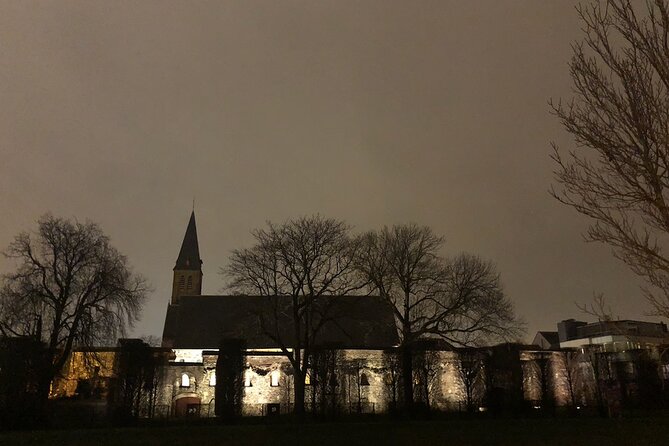
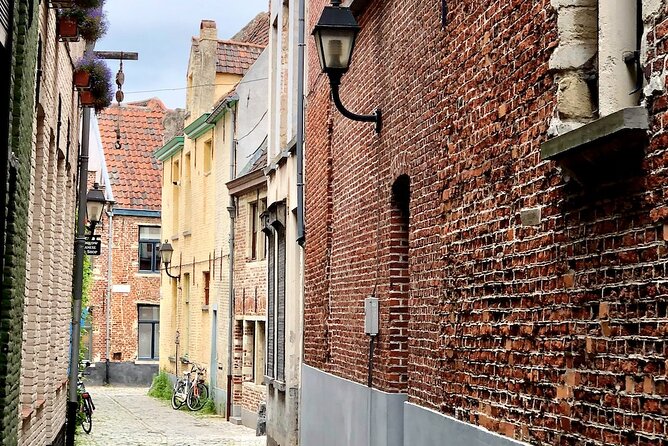
Patershol is described as one of the oldest parts of Ghent, and the walk spends about 15 minutes here. This is where the route shifts from major monuments to the texture of an older neighborhood.
Patershol is also practical for food. One street has many small restaurants, and the tour provider offers a 10 percent food discount at Enzo, from pizzeria Neapolis, if you present one of the provider’s business cards.
That tip gives the walk a useful local finish. You are not left with only historical facts. You receive a suggestion for what to do when hunger sets in after two hours on foot.
I would treat the restaurant discount as a bonus rather than the reason to book. The details do not explain every condition, so carry the business card and confirm the offer before ordering. The larger value of Patershol is that it shows you where to continue your evening after the formal route ends.
Finishing at Vrijdagmarkt and the Socialist movement
The final stop is Vrijdagmarkt, with about 15 minutes devoted to the square and an explanation of Ghent’s Socialist movement. The tour ends at Oudburg 17, 9000 Ghent, rather than returning to Hagelandkaai.
This ending is a strong choice. The walk begins with medieval water defenses and ends with modern political and social history. That arc reminds you that Ghent is not frozen in the past. Its story includes changing ideas about work, society, and political organization.
Vrijdagmarkt is also a convenient place to stop for a drink or meal. The square has restaurants and bars, so you can continue the conversation or use it as a base for your next outing.
Before booking, note the route’s point-to-point design. You may want to save the end location in your phone, especially if you have dinner plans elsewhere. The mobile ticket is convenient, but the addresses still matter.
What the $40.33 price buys you
At $40.33 per person, this is not the cheapest way to get a quick orientation to Ghent. Its value depends on how much you want from a guide.
You are paying for about two hours with a local historian who can explain the city across several periods, answer questions, and add personal suggestions. That is different from buying admission to a single monument. The walk gives you a framework for later visits to St. Bavo’s Cathedral, Gravensteen, and other sites.
The price makes the most sense for a first visit, or for anyone who wants more than surface-level facts. It is also useful for people who have moved to Ghent and want help finding less familiar streets, food options, and Sunday market suggestions.
The value is lower if you only want to see the main sights quickly and take photographs. Several stops do not include admission, and the cathedral and castle may require separate visits. You should think of this as a guided orientation with historical depth, not an all-inclusive attraction pass.
The mobile ticket makes the booking process simple. Free cancellation is available up to 24 hours before the start time for a full refund. Changes or cancellations inside that window are not accepted, and the experience requires a minimum number of participants. If that minimum is not reached, you are offered another date or experience, or a full refund.
Who will enjoy this walk most
I would choose this tour if you want a strong introduction to Ghent and enjoy asking questions. It suits first-time visitors, history fans, couples, families with older children, and people who prefer a local voice over an audio guide.
It also works for newcomers. The route goes beyond the best-known sights, and Jürgen can suggest food, drinks, and Sunday markets. That practical help can save you time during the rest of your stay.
You should think twice if you have difficulty walking for two hours, though the information says most people can participate and service animals are allowed. The tour is near public transportation, which helps with access to the meeting and finishing points.
The advertised group limit is 20 people. If you specifically want a private tour, confirm the arrangement before booking. The experience can be very personal with a tiny group, but that smaller format is not guaranteed by the stated maximum.
Should you book Historic Highlights in Ghent?
Book it if you want Ghent explained by a local historian rather than simply pointed out. Jürgen’s strength is the combination of formal history, local affection, flexible conversation, and practical advice for the rest of your visit.
The best reason to choose it is the range. In two hours, you move from the old moat and river confluence to St. Bavo’s Cathedral, Kouter, an 18th-century palace, Gravensteen, Patershol, and the Socialist story at Vrijdagmarkt.
Skip it if you want every major building entered as part of one ticket, since admission is separate at several stops. But if $40.33 feels fair for a thoughtful introduction and a useful local guide, this is a strong first-day choice. Schedule it early in your Ghent stay so you can return to the cathedral, castle, or restaurant suggestions that catch your interest.
FAQ
Where does the Historic Highlights tour start?
The tour starts at Hagelandkaai 53, 9000 Gent, Belgium, by the Napoleon De Pauw lock.
What time does the tour begin?
The listed start time is 3:00 pm.
Where does the tour end?
The tour ends at Oudburg 17, 9000 Gent, Belgium, near Vrijdagmarkt.
How long does the walking tour last?
The tour lasts approximately two hours.
Is admission to St. Bavo’s Cathedral included?
No. Admission to St. Bavo’s Cathedral is not included in the tour price.
Is admission to Gravensteen included?
No. Admission to Gravensteen, the Castle of the Counts, is not included.
Can I cancel for a full refund?
Yes. You can cancel at least 24 hours before the experience start time for a full refund. Cancellations or changes made less than 24 hours before the start time are not accepted.
More of the past around Ghent
- Evening Tour of the Dark Side of Gent
★ 5.0 · 646 reviews - Ghent: 40-Minute Historical Boat Tour of City Center
★ 4.3 · 430 reviews - Private Historical Tour: The Best of Ghent
★ 5.0 · 115 reviews - Bicycle tour in historic Ghent
★ 5.0 · 87 reviews
More guided walks around Ghent
- Ghent: Famous Belgian Chocolate Walking Tour with Tastings
★ 5.0 · 131 reviews - Ghent: Guided Walking Tour and Canal Boat Trip
★ 3.8 · 128 reviews - Ghent: Guided Walking Tour
★ 4.3 · 115 reviews - Ghent Beer Guided Walking Tour
★ 5.0 · 87 reviews
Just added in Ghent
- Discover Ghent while playing! Escape game – The Walter case★ 4.5 · 4 reviews
- Walking Food Tour in Ghent★ 5.0 · 13 reviews
- Discover Ghent while playing! Escape game – The alchemist★ 4.0 · 4 reviews
- Ghent Walking Tour with Audioguide on Your Smartphone★ 4.5 · 13 reviews
- e-Scavenger hunt Ostend: Explore the city at your own pace★ 4.5 · 10 reviews
- Discover Mons while playing! Escape game – The alchemist★ 4.0 · 5 reviews
- Private tour in historic Ghent★ 5.0 · 6 reviews
- Private Ghent Beer & Brewery Tour by a young local★ 5.0 · 12 reviews
Historical Tours, compared.

Historical Walking Tour with Chocolate & Waffle Tasting
Read our review →
THE Storytelling Tour of Bruges | First Day Must | History & Tips
Read our review →
Browse the lists this tour appears in