
Reviewed · HISTORICAL TOURS
Private Historical Tour: The Best of Ghent
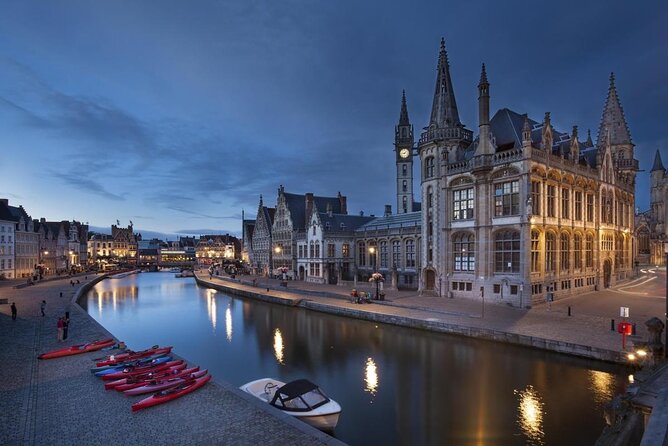
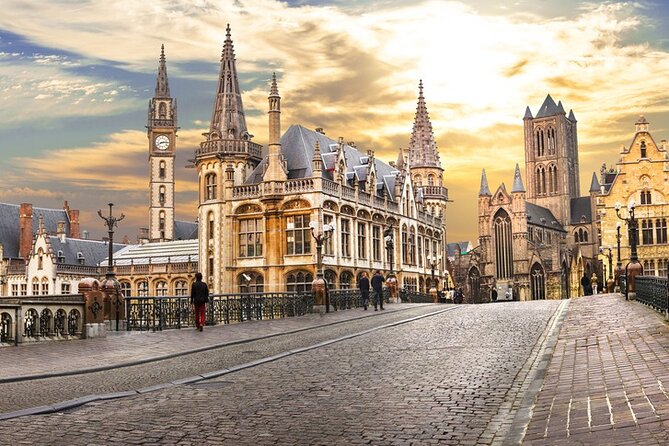
Ghent’s best feature is how much of its story appears in one compact walk. From St Michael’s Bridge, you get the classic view of the three towers, then follow canals, medieval trading streets, a castle, a cathedral, and a graffiti alley before finishing by the Belfry. It is a brisk lesson in how this once-powerful city worked.
I like the private format, since you can stop for questions and ask your guide to adjust the pace. I also like the local angle: guides such as Arn, Camila, Hans, Sonia, Kenny, and Onur have been praised for humor, city pride, useful restaurant tips, and clear explanations.
The main catch is price. At $105.82 per person, this makes the most sense for a small group that values a private guide. The walk does not include food, drinks, or admission to the attractions, so you are mainly paying for interpretation and personal attention.
Key points to know before booking
- The three towers appear at the start: St Michael’s Bridge gives you an excellent orientation to Ghent’s skyline.
- The walk covers a lot in two hours: Twelve stops take you from medieval port buildings to the Belfry and St Nicholas’ Church.
- It is private: Only your party takes part, so questions and pace changes are easier.
- Most sights are explained from outside: Entrance fees are listed as free for the stops, but admission into places such as the cathedral or castle is not included.
- Local storytelling is the real product: Expect legends, political conflicts, trade history, and odd details about Ghent’s buildings.
- The finish is central: The tour ends at the Belfry, a useful spot for continuing sightseeing on foot.
Why this short walk works in Ghent
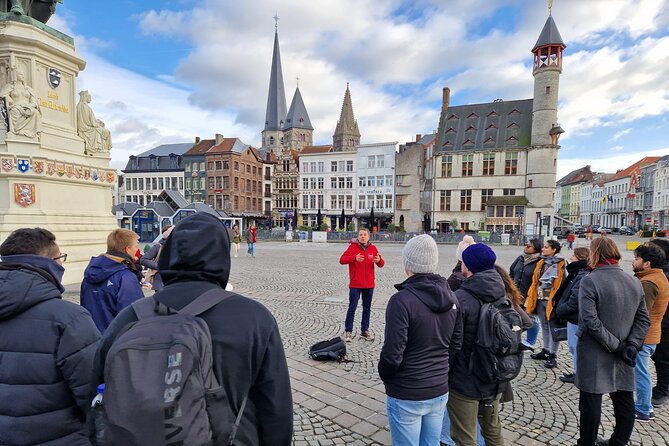
Ghent can feel confusing at first. Canals split the center, grand towers rise above narrow streets, and buildings from different centuries sit side by side. This tour gives you a clear route through the old center and, just as useful, a framework for understanding what you are looking at.
The walk begins at Hostel Uppelink on St Michielsplein. The listed end point is the Belfry on Sint-Baafsplein, so you finish near one of Ghent’s main landmarks rather than returning to the start. Hotel pickup and drop-off are included in the tour information, but the formal meeting point is the hostel, so confirm the arrangement if you want pickup at your accommodation.
You cover roughly two hours on foot. The scheduled stop times add up to about 115 minutes, leaving a little room for movement, questions, and transitions. That is enough time for a strong first look, but not enough for long interior visits.
More Historical Tours in Ghent
- Ghent: 50-Minute Medieval Center Guided Boat Trip
★ 4.5 · 5,637 reviews - Historical Walking Tour: Legends of Gent
★ 5.0 · 1,761 reviews - Ghent: 40 Minute Medieval Center Guided Boat Tour
★ 4.4 · 884 reviews
St Michael’s Bridge and the three towers
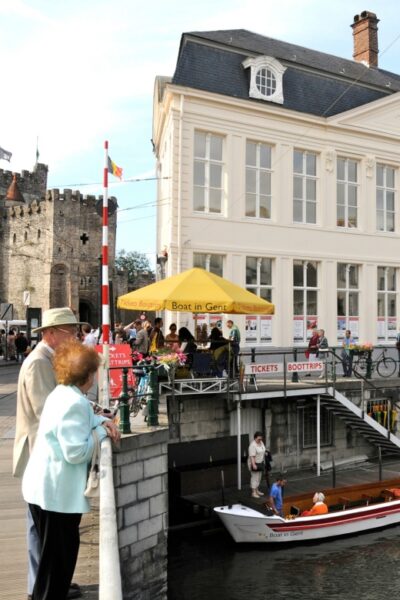
The opening view is one of the strongest moments of the tour. From St Michael’s Bridge, your guide introduces Ghent as a medieval trading center and points out the three famous towers that shape the skyline.
This is more than a photo stop. The view helps you understand the city’s layout before you begin walking. St Nicholas’ Church, the Belfry, and St Bavo’s Cathedral rise in sequence, showing the power once held by merchants, civic leaders, and the church.
Your guide also explains Ghent’s role in medieval commerce. That context matters because many later stops make little sense without it. The canals, warehouses, guild buildings, and public squares all grew from trade and from the city’s fierce desire to protect its independence.
Graslei, Korenlei, and the old port
At Graslei and Korenlei, the tour reaches the old port area. The canalfront is one of Ghent’s most attractive stretches, with historic façades facing the water and a steady flow of pedestrians.
The useful part of this stop is learning what the buildings once did. Your guide identifies the structures tied to trading activity when this was the city’s working harbor. You see the setting as more than a pretty row of façades: it was a place where goods arrived, were stored, taxed, sold, and moved onward.
The walk also includes a point connected with the Design Museum. The guide uses a detail there to explain the stubborn, rebellious character associated with the people of Ghent. It is a small stop, but it adds local personality to the larger political story.
The Great Butchers’ Hall and the city’s darker side
At Het Groot Vleeshuis, you look across the water toward the medieval covered Great Butchers’ Hall. The building gives the guide a chance to talk about the less pleasant side of city life and the regulations surrounding food and commerce.
This is a good example of the tour’s approach. You are not simply told that a building is old. You hear why it mattered and what happened inside. The darker details give the medieval center some edge, especially if you prefer social history to a parade of dates and architectural labels.
The stop is brief, so you should not expect a full architectural examination. It works best as part of the larger chain of stories linking Ghent’s economy, government, and daily life.
Other ways into the past around Ghent:
- Evening Tour of the Dark Side of Gent
★ 5.0 · 646 reviews - Ghent: 40-Minute Historical Boat Tour of City Center
★ 4.3 · 430 reviews - Bicycle tour in historic Ghent
★ 5.0 · 87 reviews - Private Tour: The Dark Side of Gent
★ 5.0 · 73 reviews
Gravensteen, an unusual castle in the city center
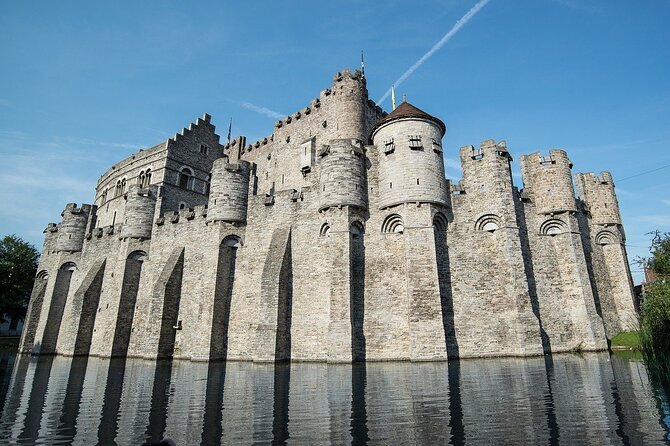
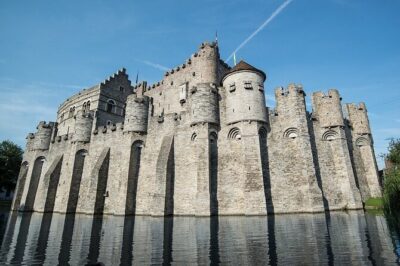
Gravensteen, the Castle of the Counts, is one of Ghent’s most striking sights. Unlike a castle set apart on a hill or beyond the city walls, this medieval fortress sits in the middle of the old center.
Your guide explains its past from outside and points out why its survival is so important. The strong walls and towers make the power of the counts easy to picture, even before you enter. The stop also breaks up the canal and street scenes with a reminder that Ghent was not only a merchant city. It was also a place of rulers, law, punishment, and military control.
The castle is preserved well enough to reward a separate visit. Since this walking experience does not include admission, decide in advance if you want to return for the interior. The private tour gives you context, but it is not a substitute for exploring the castle itself.
St Veerleplein, the square of death and life
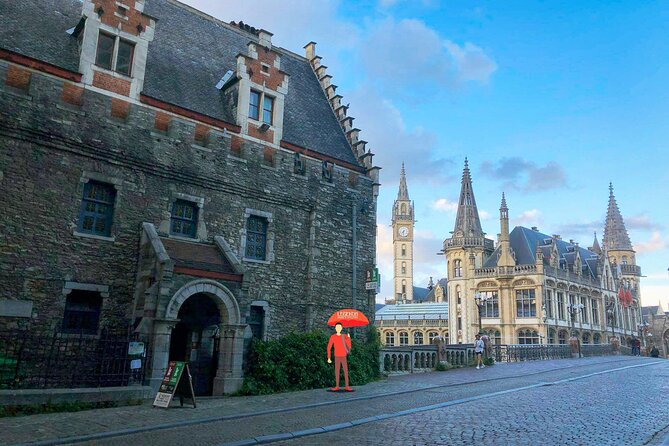
The square in front of Gravensteen is known by two grimly contrasting names: the square of death and the square of life. Your guide explains the reason behind both.
This stop shows why a local guide can be useful in Ghent. A quick photograph of the castle may leave you with a grand building and little sense of its human past. The stories connected with St Veerleplein add the city’s old justice system and public life to the picture.
The square also makes a natural pause between the castle and the next sections of the route. You remain close to the main sights, but the subject shifts from grand power to the treatment of ordinary people.
Huis van Alijn and the old god house
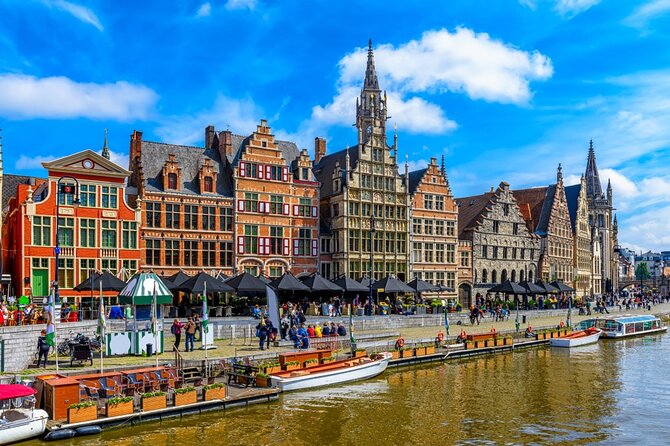
The House of Alijn is the only remaining god house in Ghent. It once served as a hospital, and the guide explains the unfortunate events that led to that use.
The phrase god house can be unfamiliar, so this is one of the stops where a short explanation adds real value. The building offers a glimpse of care, charity, and religious institutions in the old city. It is also a reminder that Ghent’s surviving buildings often changed purpose over time.
As with the other stops, the emphasis is on explanation rather than entry. If you want to visit the House of Alijn inside, plan that separately and check opening details before your visit.
Vrijdagmarkt and the politics of Ghent
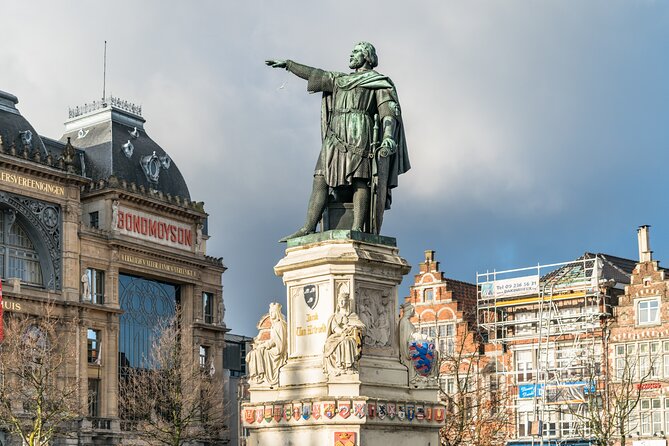
Vrijdagmarkt has played an important role in Ghent’s past. The statue in the center gives your guide a natural starting point for explaining the square and the figure it honors.
This is one of the more useful stops for understanding how public spaces carried political meaning. Markets, ceremonies, protests, executions, and civic gatherings all shaped the life of a medieval city. The guide connects the square to larger changes in Ghent, rather than treating it as another attractive place to pass through.
The private setup helps here. If a political story catches your interest, you can ask follow-up questions without holding up a large group. Guides such as Sonia have been especially effective at linking Ghent’s story to wider European events and explaining how the city influenced developments beyond Belgium.
Werregarenstraat, where graffiti has a place
Werregarenstraat is Ghent’s designated graffiti street. The city created this space so street artists could work without spraying the monumental buildings elsewhere in the center.
It is a welcome change of mood after so much medieval stone. The alley shows that Ghent is not preserved in amber. Old buildings and modern street art exist within the same city, and the guide explains the practical reason for this unusual arrangement.
Do not expect a polished gallery. The artwork changes, and the appeal is the raw, shifting character of the street. It is also a useful reminder that city preservation often involves compromise rather than strict control.
Town Hall and the conflict behind its mixed design
At Ghent Town Hall, your guide explains why the building looks confused. Different sections reflect different periods and styles, and the explanation leads into the most important conflict in Ghent’s past.
This short stop is valuable because the building itself becomes evidence. Instead of seeing a mismatched façade, you learn to read it as a record of political change. The tour does not spend long here, but the idea helps you notice how power struggles can leave physical marks on a city.
St Bavo’s Cathedral and the Van Eyck masterpiece
St Bavo’s Cathedral is one of the major highlights. It has a long religious history and holds important art, most famously the Ghent Altarpiece by Hubert and Jan van Eyck.
The guide introduces the cathedral and explains why the altarpiece matters. Even if you plan to go inside later, this background gives your visit more purpose. You will know what to look for rather than simply entering a large church and searching for the most famous object.
Admission is not included in the private walk. That is worth noting when weighing the price. The guide can explain the setting and the artwork’s importance, but seeing the interior treasures requires a separate plan.
The Belfry, the people’s tower
The Belfry of Ghent is described as the people’s tower, a symbol of the city’s power, independence, and stubborn character. It also once served as a prison, and its façade carries a strange legend that your guide explains.
The stop is short, but the tower is central to Ghent’s identity. It represents civic authority rather than church power, which makes it a useful counterpart to St Bavo’s Cathedral and St Nicholas’ Church. By this point, the three-tower view from the opening stop has gained meaning.
The tour ends in front of the Belfry. That makes the finish practical. You can continue to the tower, walk toward Sint-Baafsplein, or use the central location to choose a restaurant or another sight.
St Nicholas’ Church and the final legend
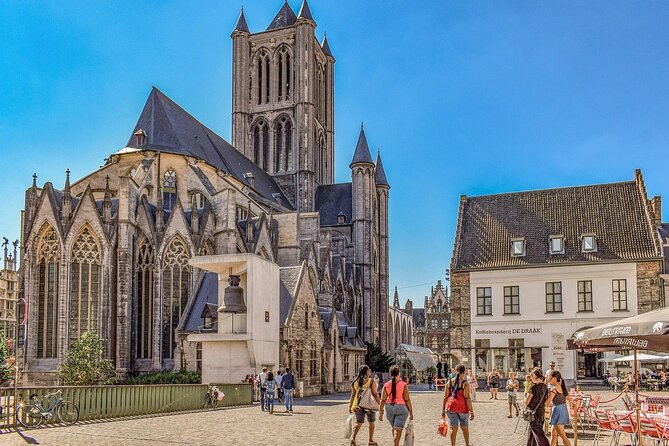
The last stop is St Nicholas’ Church, overlooking Korenmarkt. The church dates from the early 12th century and is dedicated to St Nicholas, the protector of merchants and sailors.
Its location brings the tour back to the commercial world introduced at the start. The façade also connects to a legend about St Nicholas, giving the walk a story-based ending rather than a simple final photograph.
The church is another place where outside commentary and an interior visit are different experiences. The tour explains the building and its patron saint, but it does not include admission fees or a long indoor examination.
Guides, pace, and the private advantage
The assigned guide varies. Past guides have included Arn, Camila, Hans, Sonia, Kenny, Maria, Julien, Julian, Onur, Kasia, Sebastian, Alex, Sophie, and others. Strong guides have been praised for warmth, humor, clear history, good local recommendations, and pride in Ghent.
That variety means you should not book around a particular name unless the operator confirms who will lead your date. The best guide moments come from the personal format: questions are easy, the pace can be adjusted, and a guide may reshape the route around your interests or end near a lunch spot.
The private structure also helps families and mixed-pace groups. One guide has accommodated people walking more slowly, and another adjusted the route to fit a group’s plans. Still, this is a walking tour, so comfortable shoes and attention to the weather are sensible.
There have been isolated service problems, including a late timing change, a tour that ended early, a guide distracted by personal matters, and one reported no-show. These are not reasons to dismiss the experience, but they are good reasons to confirm the meeting time and pickup details shortly before the walk.
Is $105.82 per person fair?
The price is easier to justify for two to four people than for one person. You are paying for a private professional guide, local interpretation, all listed taxes, and the ability to ask questions without a larger group setting.
The value drops if you mainly want entry into the castle, cathedral, and Belfry. Those admissions are not part of the walk, and the tour explains most places from outside. One practical alternative is to compare the cost with a small-group walk and then use the savings for a city or historical pass, if available for your dates.
I would book this private option when you have limited time, care about history, or want the route shaped around your group. I would choose a small-group tour if cost matters more than personal attention and you are happy with a fixed pace.
Who should book this Ghent walk?
This is a good first activity in Ghent if you want the city explained before exploring on your own. It suits couples, families, friends, and small private groups who enjoy stories about politics, trade, religion, architecture, and local legends.
It also works well for a one-day visit. The route covers the major historic center in about two hours and ends near the Belfry, so you still have time for lunch, a canal outing, museum visits, or a return to Gravensteen.
I would not choose it as your only activity if your main goal is extended time inside museums and monuments. For that, use the walk as an introduction, then return to the places that interest you most.
Should you book it?
Book this tour if you want a focused introduction to Ghent with a local guide, a private pace, and plenty of context behind the famous views. The route is well chosen, the finish is central, and the guide’s stories give meaning to buildings you might otherwise photograph and forget.
Think twice if $105.82 per person feels high or if you expect admission to the major sights. For the right small group, the private attention is the point. For budget-minded visitors, a shared walk followed by independent visits may offer better value.
FAQ
How long does the Private Historical Tour: The Best of Ghent last?
The tour lasts approximately two hours. The scheduled stops together take about 115 minutes, with the remaining time used for walking and questions.
Where does the tour start?
The stated meeting point is Hostel Uppelink, Sint-Michielsplein 21, 9000 Gent, Belgium.
Where does the tour end?
The tour ends in front of the Belfry of Ghent on Sint-Baafsplein.
Is this a private tour?
Yes. Only your group participates in the activity.
What language is offered?
The booking information lists English as the offered language, while the tour details also indicate that the experience is available in multiple languages. Confirm the language available for your date when booking.
Is hotel pickup and drop-off included?
Hotel pickup and drop-off are listed among the included services. The formal meeting point is Hostel Uppelink, so confirm how pickup will work for your accommodation.
Are entrance fees included?
All fees and taxes are included, but the stops are listed without admission charges and the tour does not promise entry into the castle, cathedral, Belfry, or other sights. Food and drinks are also excluded.
Can most people take part?
Yes. The tour information says most people can participate. Service animals are allowed, and the route is near public transportation.
How much does the tour cost?
The listed price is $105.82 per person. Group discounts may be available.
What is the cancellation policy?
You can cancel up to 24 hours before the start time for a full refund. Changes or cancellations made less than 24 hours before the local start time are not accepted for a refund.
Just added in Ghent
- Historic Highlights, by a local guide★ 5.0 · 9 reviews
- Discover Ghent while playing! Escape game – The Walter case★ 4.5 · 4 reviews
- Walking Food Tour in Ghent★ 5.0 · 13 reviews
- Discover Ghent while playing! Escape game – The alchemist★ 4.0 · 4 reviews
- Ghent Walking Tour with Audioguide on Your Smartphone★ 4.5 · 13 reviews
- e-Scavenger hunt Ostend: Explore the city at your own pace★ 4.5 · 10 reviews
- Discover Mons while playing! Escape game – The alchemist★ 4.0 · 5 reviews
- Private Ghent Beer & Brewery Tour by a young local★ 5.0 · 12 reviews
Historical Tours, compared.


Historical Walking Tour with Chocolate & Waffle Tasting
Read our review →
THE Storytelling Tour of Bruges | First Day Must | History & Tips
Read our review →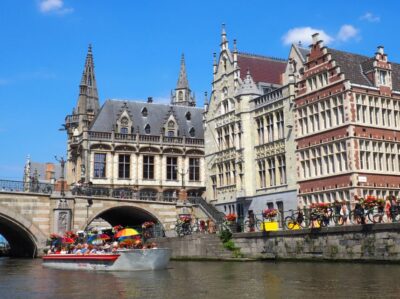
Browse the lists this tour appears in