
Reviewed · TOURS IN BRUSSELS
Guided tour: Brussels Crime Scenes
Brussels has a darker story beneath its chocolate shops and grand façades. This two-hour walk follows old crime cases through the city center, from a hotel murder and a legendary devil’s corner to a brutal 19th-century case that left three people dead. I like the strong historical setting and the way the guide connects each crime to police work, social customs, and everyday life in Brussels. I also like the small-group limit of 25, which should make the storytelling easier to follow.
The main consideration is tone. This is a factual walk about passion, violence, and death, not a light ghost tour. The presentation is respectful and serious, and anyone hoping for costumes or audience participation may find it more straightforward than theatrical.
Key points at a glance

- Five central Brussels crime stops: The route includes Rue de l’Amigo, Le Coin du Diable, Place Saint-Géry, and Place du Jardin aux Fleurs.
- History beyond the crimes: You hear about police methods, social customs, and the people of Brussels in the 19th and 20th centuries.
- A two-hour walking format: The route begins near the Grand Place and finishes in the center of Place Saint-Géry.
- A focused price: At $23.26 per person, the tour offers two hours of guided storytelling with all fees and taxes included.
- A serious, fact-based approach: The stories can be frightening and violent, but the tone aims to respect everyone involved.
- A manageable group size: No more than 25 people can join, and a mobile ticket is accepted.
Brussels after the Grand Place crowds thin out
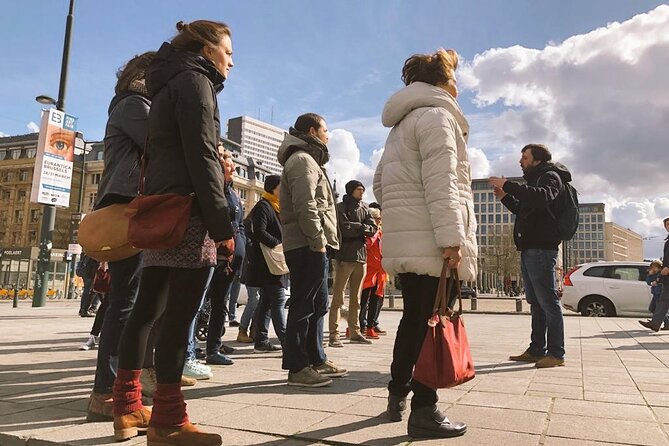
Most first walks through Brussels stay with the agreeable version of the city: gilded buildings, waffles, beer, and comic-book murals. This tour takes a different route through the same central streets. It uses real criminal cases to show how Brussels worked in earlier eras, including how people lived, how police responded, and what the public found shocking.
That larger setting is the reason I find the tour more worthwhile than a simple list of murders. The cases are the hook, but the real subject is Brussels society. A crime of passion in a hotel tells you something about personal relationships and public scandal. A notorious case in Place Saint-Géry shows how a violent event could grip the whole city. A story involving unusual stolen goods reveals what people valued and how crime could take strange forms.
The tour is described as sometimes frightening, bloody, and very violent. Take that seriously if you are sensitive to murder stories. The guide does not seem to treat the victims or suspects as cartoon characters. The focus stays on documented events and the society around them.
The route starts at Rue de l’Etuve 1, close to the city center, and crosses the Grand Place. That opening location is practical if you are already sightseeing nearby. You will not need to make a special trip across Brussels before the walk begins.
A few more things to do in Brussels worth a look
- From Brussels: Guided Day Trip to Bruges and Ghent
★ 4.6 · 8,353 reviews - From Brussels: Full-Day Antwerp and Ghent Guided Tour
★ 4.6 · 1,019 reviews - Brussels 3-Hour Guided Art Nouveau Tour
★ 4.0 · 282 reviews
Rue de l’Amigo and a hotel with two very different stories
The first two stops are both on Rue de l’Amigo, but they cover separate stories. The first concerns a hotel with an appealing past and a guest list that later included prestigious visitors. The setting gives the tour an immediate contrast: a street associated with comfort and status also carries a more troubling history.
The next stop examines the Hotel À la Ville de Courtrai, at the corner of Rue de l’Amigo. Here, the guide tells the story of a famous crime of passion. That phrase points to a case driven by intense personal emotion rather than an abstract mystery, so expect the human relationships behind the crime to matter as much as the act itself.
Each Rue de l’Amigo stop lasts about 10 to 15 minutes. That is enough time for a clear account without turning the walk into a long lecture at one address. It also means the opening section moves at a steady pace, with two related locations giving you an early sense of the tour’s method.
I like this part because the guide uses an ordinary street as a doorway into another Brussels. You are not only hearing about a crime in isolation. You are looking at the kind of place where people stayed, met, worked, and became part of the city’s public gossip.
Le Coin du Diable and the oldest tale on the route
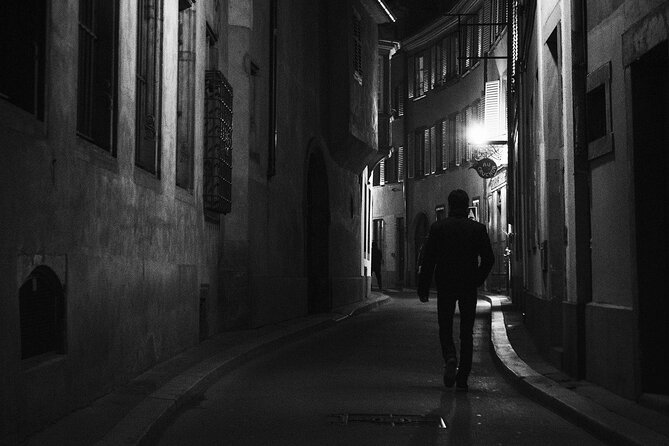
At Le Coin du Diable, the tour moves back to a legend dating from the 17th century. This is an important change of texture. The other main cases come from the 19th and 20th centuries, while this stop reaches further into Brussels’s past and introduces the way older urban legends could survive in local memory.
The name itself creates a natural pause in the walk. You can expect the guide to explain the famous story connected with the site and set it against the customs of the period. The stop lasts around 15 minutes, so there is room for context rather than just a quick mention of the legend.
This is also where the tour’s balance between fact and folklore matters. The overall experience is presented as scrupulously faithful to the facts, but Le Coin du Diable is specifically described as a legend. I would listen for the distinction between what is documented and what belongs to the story passed down through the city.
That distinction is useful for anyone who enjoys urban history. A city’s character comes from both official records and old stories, but they should not be treated as the same thing. This stop gives the guide a chance to show you how Brussels remembered its more unsettling places.
Place Saint-Géry and a case that shocked Brussels
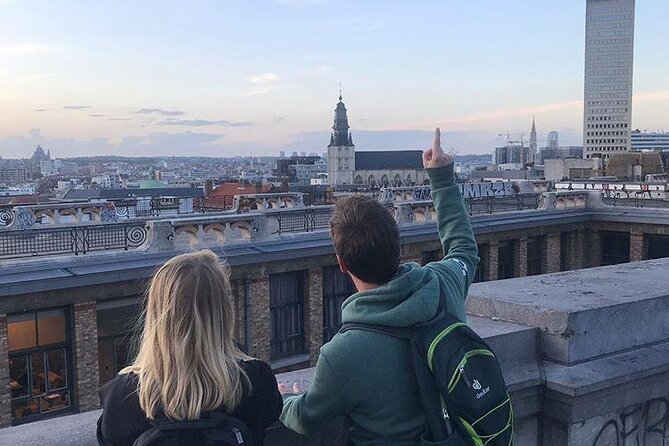
The stop at Place Saint-Géry covers the most severe case named on the route. It involved three deaths and fascinated Brussels in the middle of the 19th century. The description calls it particularly atrocious, so this is likely the point where the walk feels most disturbing.
You should expect the guide to spend about 15 minutes here. That time allows the case to be placed within the city of its period, rather than reduced to a grim headline. The public reaction matters. The fact that the crime fascinated Brussels tells you something about newspapers, rumor, public curiosity, and the way shocking events became shared city stories.
Place Saint-Géry is also where the tour ends, at number 1, in the center of the square. Ending here is convenient if you want to continue exploring central Brussels, find a place for a drink, or simply take a break after the darker material.
The finish gives the route a clear shape. You begin close to the Grand Place, move through several central locations, and end in a well-defined square rather than at an isolated address. Since no return transport is required, you can make your next plan from the same central area.
Same city, a different sort of day:
- Brussels: Atomium Entry Ticket with Design Museum Ticket
★ 4.4 · 9,254 reviews - From Brussels: Bruges & Ghent Day Tour – 2 Fairytale Cities
★ 4.7 · 8,242 reviews - Choco-Story Brussels: Chocolate Museum Entrance with Tasting
★ 4.3 · 4,883 reviews - Bruges and Ghent – Belgium’s Fairytale Cities – from Brussels
★ 4.0 · 4,809 reviews
Place du Jardin aux Fleurs and an unusual motive
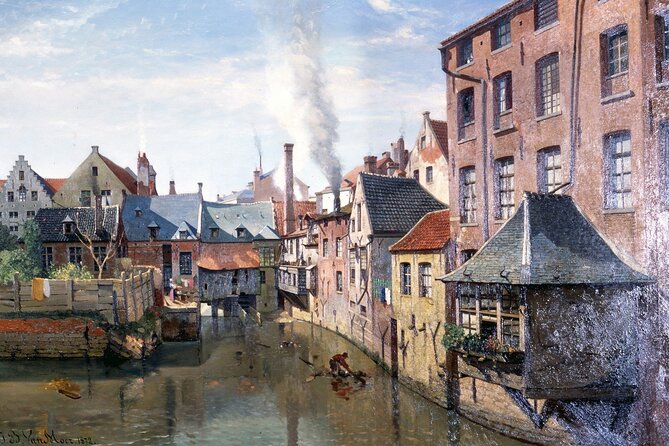
The final listed stop is Place du Jardin aux Fleurs, where the guide tells a villainous story involving an unusual loot. That wording suggests a case with a strange motive or an unexpected object at its center. It provides a change from the hotel crime and the three-death case, helping the tour avoid a single repeated pattern.
The stop lasts about 15 minutes. A story built around unusual loot can reveal what criminals considered valuable in a particular period, and what modern listeners might find surprising. It also reinforces the tour’s wider aim: crime can tell you about habits, money, class, and social values, not only about violence.
The published route information places this stop among the main locations, while the formal end point is in Place Saint-Géry. Because the exact walking order between every listed location is not fully spelled out, check the meeting instructions on the day and allow enough time to follow the guide’s route without rushing.
What the guide adds beyond the crime stories
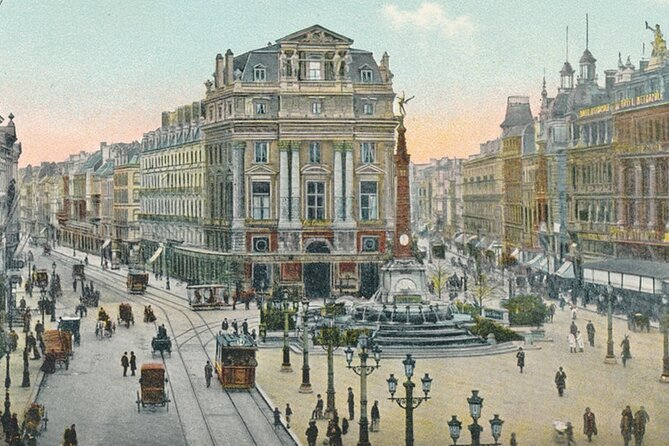
The strongest feature is the historical framing. One direct assessment praises the guide for adding context about the events, and that is precisely what makes this experience different from a string of sensational stories. You hear about the people of Brussels, the police, and the customs of each period covered.
That context can change how you hear a case. Police work in the 19th century did not take place in the same social world as police work in the 20th century. Public ideas about respectability, family, punishment, and scandal also changed. A guide who explains those differences gives you a better sense of Brussels as a living city rather than a backdrop for crime.
The guide is described as sympathetic and professional, with the ability to hold attention. No guide name is provided, so you should not expect to request a particular person when booking. The format relies on spoken explanation, timing, and atmosphere rather than a named celebrity guide.
The tour does not appear to use costumes or audience participation as a central feature. One assessment suggested that theatrical touches, such as costumes or interactive moments, could make the experience more playful. If you prefer a polished stage show, that is a fair point to keep in mind. If you prefer a calm walk based on facts, the current approach may suit you better.
Is $23.26 a fair price for two hours?
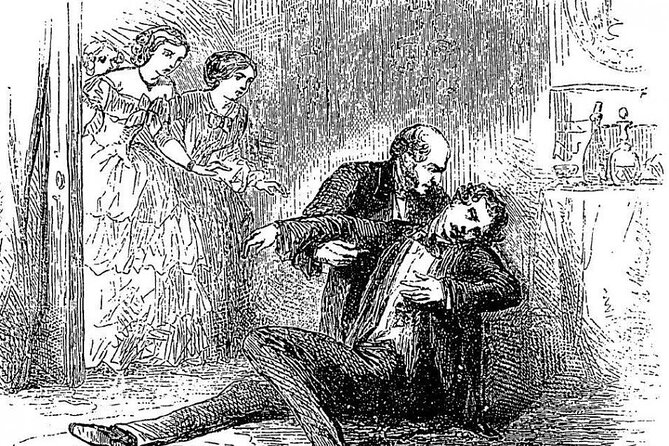
At $23.26 per person, the value is reasonable if you want an evening activity that combines walking with local history. The fee includes all taxes and fees, and the tour lasts about two hours. You are paying for a guide’s preparation and storytelling, not for admission to a museum or a paid monument.
That difference matters. The tour uses public streets and squares, so there is no separate attraction ticket built into the price. The value depends on how much you enjoy guided interpretation. If you are happy to read about old crimes on your own, the cost may feel less necessary. If you want the cases connected to real places and explained in sequence, two hours for $23.26 is a fair city-center experience.
Coffee and tea are not included. That is a minor point, but it helps set expectations. Plan to buy refreshments separately before or after the walk, especially since the tour finishes in Place Saint-Géry, a useful area for continuing your evening.
The 4.9 rating from 128 ratings and a 100 percent recommendation indicate very strong satisfaction, though you should still match the subject matter to your interests. The most praised qualities are the guide’s professional delivery, the unusual idea, and the historical context added to the cases.
Group size, timing, and practical comfort
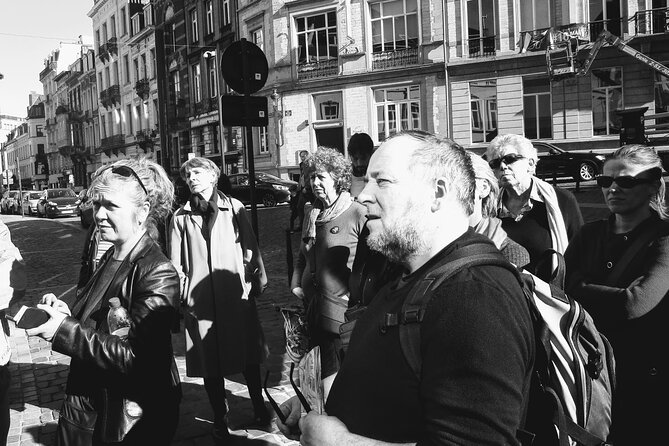
The maximum group size is 25. That is not an intimate private walk, but it is small enough to keep the guide’s voice and story structure manageable in central streets. Your experience can still depend on where you stand in the group, so arrive at the meeting point ready to join the walk promptly.
The duration is approximately two hours. This is long enough to cover five main stops and the Grand Place crossing, but short enough to fit around other Brussels plans. I would place it on a day when you already plan to be in the historic center, since the start and finish are both central.
The experience accepts a mobile ticket, which keeps the booking simple. Confirmation is sent at booking. Service animals are allowed, the route is near public transport, and most people can participate.
Free cancellation is available if you cancel at least 24 hours before the local start time. Cancellations or changes made inside that window are not refunded or accepted. That rule is worth noting if your Brussels schedule is still uncertain.
Who should book Brussels Crime Scenes?
I would choose this walk if you enjoy city history with a serious edge. It suits adults and older children who can handle stories about murder, violence, and disturbing events. It also works well for repeat visitors who have already seen the Grand Place and want a different way to read the central streets.
It is a good fit if you like guides who explain social context instead of simply announcing dates and names. The professional, engaging style is a major part of the value. You should also enjoy walking outdoors for two hours and listening at several stops.
I would skip it if you want a cheerful introduction to Brussels, a ghost story with lots of theatrical effects, or a museum-style experience with indoor seating. The route can be bloody and frightening, and its respectful tone does not make the subject matter light.
Final booking advice
Book Brussels Crime Scenes if real cases, old city customs, and the connection between crime and society appeal to you. For $23.26, you get a focused two-hour walk through central Brussels, with five story locations, a smallish maximum group, and a route that ends near places you may already want to visit.
The best reason to go is not simply the crimes. It is the chance to see how Brussels reacted to them and what they reveal about different eras. Just keep your expectations clear: this is a factual, sometimes grim walking tour, not a costumed performance. If that sounds like your kind of evening, it offers a memorable change from the city’s sweeter attractions.
FAQ
How long does the Brussels Crime Scenes tour last?
The tour lasts approximately two hours.
How much does the tour cost?
The listed price is $23.26 per person.
Where does the tour begin?
It begins at Rue de l’Etuve 1, 1000 Bruxelles, Belgium.
Where does the tour end?
It ends at Place Saint-Géry 1, 1000 Bruxelles, Belgium, in the center of Place Saint-Géry.
Does the route include the Grand Place?
Yes. The walk crosses the Grand Place.
Which locations are covered?
The listed stops include Rue de l’Amigo, Le Coin du Diable, Place Saint-Géry, and Place du Jardin aux Fleurs.
What historical periods does the tour cover?
The tour covers criminal cases from the 19th and 20th centuries, along with a legend from the 17th century.
Is the tour suitable for most people?
Most people can participate. The tour is near public transportation, and service animals are allowed.
How large can the group be?
The group has a maximum of 25 people.
Can I cancel for a full refund?
Yes. You can cancel for a full refund up to 24 hours before the experience begins. Cancellations or changes made less than 24 hours before the start time are not accepted or refunded.
Just added in Brussels
- Standard vehicle from Brussels airport to city of Antwerp★ 5.0 · 4 reviews
- Luxury vehicle from Brussels airport to the city of Brussels★ 4.0 · 5 reviews
- Transfer Brussels Airport (BRU) –> City Center 7 PAX (ONE WAY)★ 5.0 · 7 reviews
- PRIVATE MPV TRANSFER FROM/TO BRUSSELS AIRPORT (Max 6 pax) ONE-WAY★ 5.0 · 4 reviews
- Luxury Minivan from Brussels airport to the city of Brussels★ 4.0 · 7 reviews
- Transfer Brussels Airport –> Brussels MB V Class 7 PAX (ONE WAY)★ 5.0 · 4 reviews
- Transfer Brussels Airport –> City MB E Class 1-3 PAX (ONE WAY)★ 5.0 · 6 reviews
- Brussels: City Walk with Audioguide in 7 Languages on your Phone★ 3.5 · 4 reviews
Tours in Brussels, compared.

Atomium Entry Ticket with Design Museum Ticket
Read our review →
Choco-Story Brussels: Chocolate Museum Entrance with Tasting
Read our review →
Bruges and Ghent – Belgium’s Fairytale Cities – from Brussels
Read our review →

Hungry Mary’s Famous Beer and Chocolate Tour in Brussels
Read our review →Browse the lists this tour appears in