
Reviewed · WALKING TOURS
Ghent: Guided Walking Tour
Ghent’s medieval center packs a remarkable number of landmarks into a walkable area. In two hours, you move from the Belfry and Saint Bavo’s Cathedral to the canalside Graslei, the old markets, Patershol, and the imposing Castle of the Counts. The route gives you the city’s basic story without trapping you inside a coach or rushing you from one distant sight to another.
I like the way the tour combines famous buildings with useful local advice. You get an introduction to the Van Eyck brothers and The Adoration of the Mystic Lamb, then practical suggestions for Belgian beer, lunch away from the most touristy streets, and museums to visit later. I also like the modest price, $17, which makes a two-hour orientation easy to justify.
The main consideration is timing. Some departures have started late, and one reported tour lasted about an hour rather than the advertised two. A thick accent may also make parts of the commentary harder to follow for some listeners, so arrive ready to confirm the meeting point and keep expectations flexible.
Key points about the Ghent walking tour
- See the city’s major medieval sights in two hours, including the Belfry, Saint Bavo’s Cathedral, Graslei, Patershol, and Gravensteen.
- Learn the story behind Ghent’s noose-bearer nickname, linked to Charles V, who was born in the city before becoming Holy Roman Emperor and King of Spain.
- Hear about the Van Eyck brothers and the Mystic Lamb, one of Belgium’s best-known works of art.
- Choose an English or Spanish-speaking guide, with praised guides including Bruno, Mark, Pablo, and Lucas.
- Get advice for the rest of your visit, including Belgian beer, local restaurants, museums, and sights worth entering.
- Pay $17 for a useful city orientation, while remembering that food and museum admission cost extra.
Why Ghent is ideal for a walking tour
Ghent is one of those Belgian cities that rewards a bit of context. Its medieval streets, canals, churches, guild buildings, and castles sit close together, but the story is not always obvious when you first arrive. A guide helps turn an attractive collection of old facades into a readable city.
The tour begins near Sint-Baafsplein, the square beside Saint Bavo’s Cathedral and the Belfry. From there, the route moves through the historic center toward Gravensteen. You cover a lot of ground, but the walk is laid out in a sensible sequence rather than a random list of photo stops.
I see this as an orientation walk first and a sightseeing tour second. You are not paying for long indoor visits or detailed museum talks. You are paying to understand how Ghent fits together, then decide where to spend more time after the guide leaves.
That works especially well if you have only a day in Ghent. It also suits a first morning in the city, since the recommendations can shape your lunch and afternoon plans. Families can benefit from the moving pace, and one guide, Lucas, made a point of including children in the discussion.
More Walking Tours in Ghent
- Historical Walking Tour: Legends of Gent
★ 5.0 · 1,761 reviews - Ghent: Belgian Chocolate Walking Tour with Tastings
★ 4.9 · 259 reviews - Gastronomic Walking Tour of Gent – Tasters included
★ 5.0 · 199 reviews
The Belfry and Saint Bavo’s Cathedral
The Belfry of Ghent is an early highlight. Its tower has long represented the city’s civic power, and the 15-minute stop gives you a chance to understand its place in the historic center. You will also see how it relates to Saint Bavo’s Cathedral and the old Town Hall nearby.
This is not a Belfry tower visit. The tour includes guided commentary outside, but admission to museums and monuments is not included. If you want to climb or enter any site, plan a separate visit and budget for the ticket.
Saint Bavo’s Cathedral receives another 15-minute explanation. The Gothic facade is impressive on its own, but the larger draw is the Van Eyck brothers’ Adoration of the Mystic Lamb. The guide explains why the painting matters and gives you a reason to return for a proper look.
That distinction is useful. You get enough background to recognize the painting’s importance, but you should not expect a full art-history lecture or guaranteed viewing time inside. If the Mystic Lamb is high on your list, ask the guide about visiting it independently after the walk.
Town Hall and Saint Nicholas’ Church
The Ghent Town Hall is a good stop for seeing how the city’s architecture changed over time. Its facade brings Gothic and Renaissance forms together, so you can compare different periods in one building rather than treating the historic center as a single old-fashioned style.
The 15-minute stop is short, but it gives you a visual marker for later exploring. Look closely at the contrast between the ornate Gothic sections and the more restrained Renaissance work. The guide’s role here is to point out what you might otherwise walk past.
Saint Nicholas’ Church follows. Its location near the old commercial center made it an important landmark for merchants and guild members. The nearby Masons’ Guild House adds another small but memorable detail, with a facade that rewards looking upward.
These stops are especially helpful for visitors who want to understand Ghent’s public buildings, not just photograph them. The guide connects churches, guilds, civic power, and trade, giving the street plan more meaning.
Graslei, the view that explains Ghent
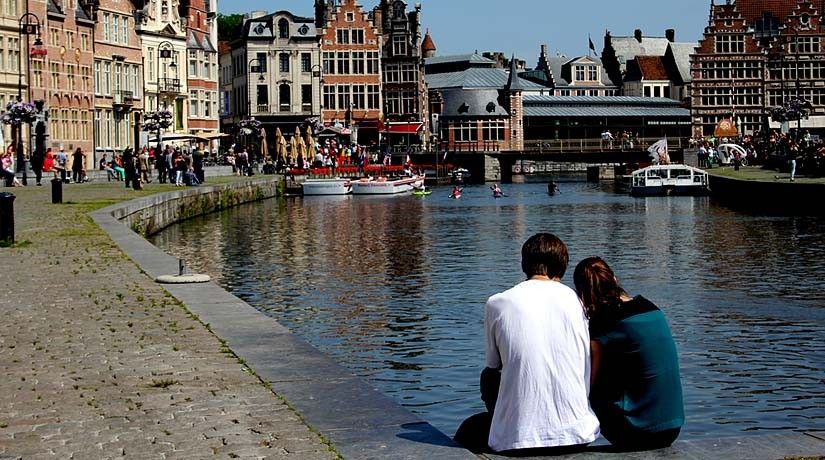
Graslei is likely to be one of the tour’s most enjoyable pauses. The embankment faces a row of historic buildings along the water, creating the classic Ghent view that appears on postcards and city guides.
The value here is not only visual. Graslei helps explain Ghent’s trading past and the importance of its waterways. It is also a useful place to get your bearings, since several major parts of the center connect nearby.
The guide can point out the buildings and explain how the waterfront fits into the city’s story. You will have time to take photographs, but remember that a walking tour keeps moving. If you want a long pause beside the canal, return later on your own.
I like this part of the route because it combines history with a simple travel pleasure: finding a handsome place and understanding why it looks that way. It is also a good moment to ask your guide about boat rides, museums, or the best place to continue after the tour.
Other guided walks around Ghent:
- Ghent: City Highlights and Hidden Gems Guided Bike Tour
★ 4.7 · 196 reviews - Ghent: Private 2-Hour Walking Tour
★ 4.7 · 134 reviews - Ghent: Famous Belgian Chocolate Walking Tour with Tastings
★ 5.0 · 131 reviews - Ghent: Guided Walking Tour and Canal Boat Trip
★ 3.8 · 128 reviews
The Old Fish Market and Friday Market Square
The Old Fish Market adds a different side of Ghent. Instead of grand church facades and civic buildings, this part of the route brings you closer to the city’s market life and food traditions.
The guide also points you toward Friday Market Square, another important public space. Together, these stops help you see Ghent as a working city, not only as a preserved medieval backdrop.
Food is not included, but the tour can help you decide what to try afterward. You might ask about typical Flemish dishes or where to find a good Belgian beer without staying in the most tourist-focused part of town. Specific restaurant advice is one of the more useful extras, especially if you have only one meal in Ghent.
You may also hear about De Dulle Griet, known as the shoe pub, where the famous Kwak beer comes with an unusual drinking ritual. The tour does not include a tasting, so treat this as a suggestion for later rather than part of the package.
Patershol and the Great Butchers’ Hall
Patershol brings you into one of Ghent’s older neighborhoods. Its narrow streets and historic character make it a pleasant change from the broad squares and monumental buildings earlier in the walk.
This is where the tour can feel more local in scale. You are looking at lanes and former working areas rather than only the grand buildings built to display wealth and power. The guide’s explanations help connect the neighborhood to Ghent’s long urban story.
The route also includes the Great Butchers’ Hall, with its open wooden truss roof. That roof is an architectural detail worth noticing, and the hall offers a useful reminder that historic cities were built around trade, food, and practical work as much as churches and palaces.
Patershol is a good place to ask about lunch. Your guide can suggest restaurants outside the most touristy zone, which may save you from choosing a meal based only on the first attractive menu you see.
Gravensteen, the powerful finish
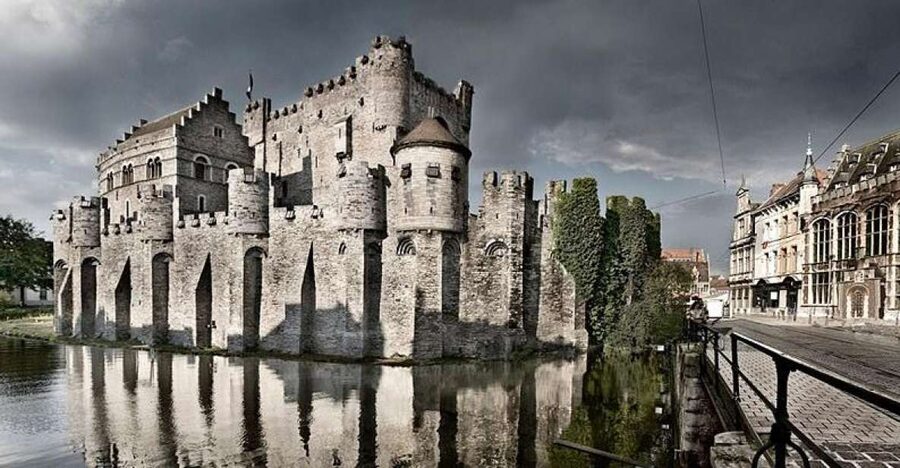
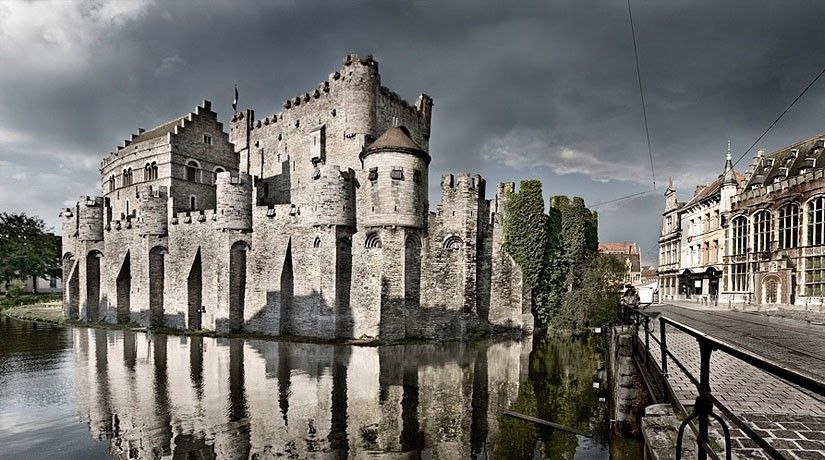
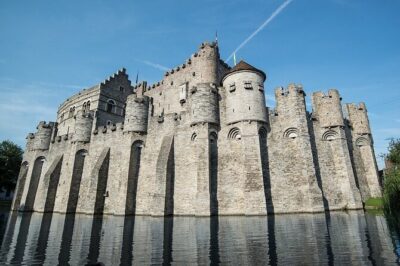
The walk finishes at Gravensteen, or the Castle of the Counts. Its battlements give the final stop a strong visual punch, especially after the softer canal views at Graslei and the narrow streets of Patershol.
The guide explains the castle from outside, but entrance is not included. If you want to explore the rooms, defenses, and displays inside, plan a separate visit. Ending here makes that choice easy, since you are already at the door.
The castle also helps explain Ghent’s political history. It is not simply an attractive fortress beside the water. Its presence shows the power once held by the counts and gives the city a more dramatic edge than the churches and guild houses alone.
According to the supplied route, the walk ends at Gravensteen, although meeting-point details can vary by booking option. Check the exact start and finish information before setting out, especially if you have a train, museum reservation, or restaurant booking afterward.
What the guides add to the experience
The tour is offered in English or Spanish. Guide quality matters on a history walk, and the named guides praised in the supplied feedback include Bruno, Mark, Pablo, and Lucas.
Bruno is described as friendly, humorous, and strong on Ghent’s history. His restaurant suggestions were especially useful. Mark made the walk fun and interactive, while Pablo brought an engaging approach to the tour. Lucas was attentive to children, though his strong accent was harder for some older listeners to follow.
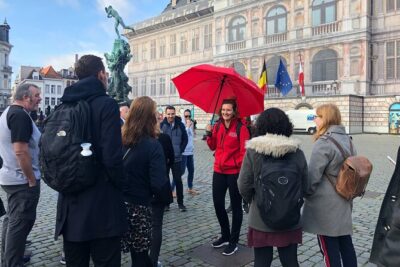
You should also expect different guide personalities from one departure to the next. Some guides may focus more on dates and buildings, while others may spend more time on food, beer, or questions. Ask questions as you walk. The experience specifically encourages you to seek advice about monuments, museums, lunch, and Belgian beer.
The best use of the guide is not to collect every date. It is to leave with a short list of places you want to revisit. The Mystic Lamb, Gravensteen, the Belfry, and a canal boat ride are all sights you may want to prioritize once you know the layout.
Price, pace, and practical value
At $17 per person, this is an inexpensive way to get a structured introduction to Ghent. You are not paying for attraction admission, food, or transport. You are paying for the guide’s time, the route, and the chance to ask questions.
That price makes sense for a day trip from Brussels or another Belgian city. If you arrived with no plan, the walk can prevent wasted time and help you choose one or two paid sights for the afternoon. It is less useful if you already know Ghent well or prefer to explore without a group.
The advertised duration is two hours, with several stops planned at about 15 minutes each. In practice, timing can vary. One departure began about 20 minutes late because day trippers arriving with the guide were given time to get coffee. Another account described a tour that ended after roughly an hour.
I would not book this if you have a tight connection immediately afterward. Arrive at the stated meeting time, wear comfortable shoes, and allow extra space in your schedule. Free cancellation up to 24 hours before the tour and the reserve-now, pay-later option make the booking less rigid, but you still need to check the exact departure details for your chosen option.
Pets are not allowed. Food and museum admission are extra. The tour is conducted on foot, so comfortable shoes matter more than any special equipment.
Who should book this Ghent walk?
I would recommend it most strongly to first-time visitors, day trippers, and anyone who wants a quick explanation of Ghent before exploring alone. The route covers the city’s key sights without demanding a full day.
Families may also like it because the guide keeps moving and can include children in the discussion. History fans will appreciate the links between Charles V, the Van Eyck brothers, the guild buildings, and the castle.
You should think twice if you need a precise finish time, dislike group walking, or want extended access inside the major monuments. This is an outdoor introduction, not a series of full museum visits.
The language choice is clear, with English and Spanish available. If listening to a strong accent is difficult for you, stay close to the guide and ask for clarification when needed.
Should you book the Ghent guided walking tour?
Book it if you want to get your bearings quickly and learn which parts of Ghent deserve more of your time. The route is well chosen, the price is fair, and the mix of famous monuments, quieter streets, food advice, and beer suggestions gives you more than a simple photo walk.
Do not book it expecting guaranteed two-hour precision or entry to the Belfry, cathedral, museums, or Gravensteen. Allow for a late start, confirm the meeting details, and treat the walk as a useful first chapter in your Ghent visit.
For $17, I think it is a sensible choice for most first-time visitors, especially on a one-day stop. Take notes, ask about lunch, and return to the sight that catches your interest most.
FAQ
How long does the Ghent walking tour last?
The advertised duration is two hours. Check the available departure times when booking, and allow some flexibility because start and finish times can vary.
Which languages are available?
The tour is offered with a live guide in English or Spanish.
Where does the tour start?
There are two starting location options listed at Sint-Baafsplein 2, but the exact meeting point may vary depending on the option you book. Check your booking details before arriving.
Where does the tour end?
The planned route finishes at Gravensteen, the Castle of the Counts. Confirm the exact finish details for your selected booking option.
Are food and museum tickets included?
No. Food and entrance to museums are not included in the $17 price.
Can I cancel the tour?
Yes. You can cancel up to 24 hours in advance for a full refund. The reserve-now, pay-later option is also available.
Just added in Ghent
- Historic Highlights, by a local guide★ 5.0 · 9 reviews
- Walking Food Tour in Ghent★ 5.0 · 13 reviews
- Discover Ghent while playing! Escape game – The Walter case★ 4.5 · 4 reviews
- Discover Ghent while playing! Escape game – The alchemist★ 4.0 · 4 reviews
- Ghent Walking Tour with Audioguide on Your Smartphone★ 4.5 · 13 reviews
- e-Scavenger hunt Ostend: Explore the city at your own pace★ 4.5 · 10 reviews
- Discover Mons while playing! Escape game – The alchemist★ 4.0 · 5 reviews
- Private Ghent Beer & Brewery Tour by a young local★ 5.0 · 12 reviews
Walking Tours, compared.

Small Group Boat Cruise and Guided Walking Tour
Read our review →
Walking Tour, Canal Boat Trip w/Beer Tasting Option
Read our review →

Historical Walking Tour with Chocolate & Waffle Tasting
Read our review →
Browse the lists this tour appears in