
Reviewed · CANAL CRUISES
Ghent: Guided Walking Tour and Canal Boat Trip
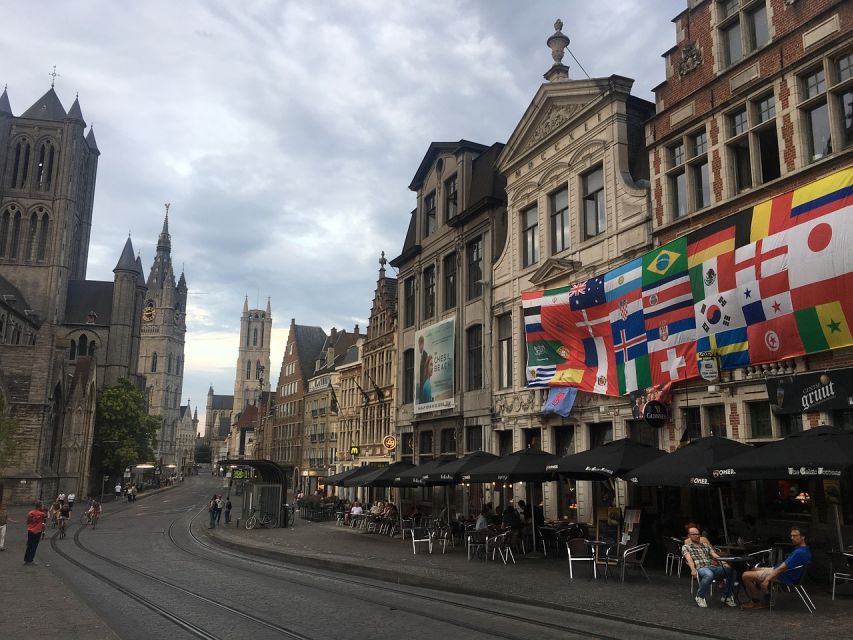
Ghent’s three-tower skyline gives this tour a fine opening act: the Belfry, St. Bavo’s Cathedral, and St. Nicholas’ Church rise close together at the heart of the city. You’ll then trade cobbled streets for a 30-minute boat ride, seeing Ghent from its canals and getting a useful first look at the old center.
I like the mix of walking and sitting. The tour gives you stories at the major sights, then a welcome break on the water. I also like the range of stops, from medieval churches and the castle to old food markets and the former weavers’ quarter. The main drawback is pace: 150 minutes is enough for an overview, not for long visits inside every church or museum.
Key points to know before booking

- The Belfry, cathedral, and St. Nicholas’ Church give you Ghent’s best central skyline in one compact walk.
- The Van Eyck altarpiece gets an explanation of its symbols at St. Bavo’s Cathedral.
- Graslei, the old markets, and Patershol show how trade and guilds shaped daily life.
- Gravensteen Castle brings legends and medieval power into the route.
- The canal cruise adds a different view of the Leie and Lieve waterways, with an audio guide and illustrated translations.
- English is the tour language, and a large black umbrella identifies the guide outside the Belfry.
Why this 150-minute Ghent tour works well
Ghent can feel confusing at first. Its center is compact, but the important sights sit among winding lanes, canals, squares, and several names that are easy to mix up. This tour gives you a clear route and a useful story for each place.
The walking portion takes about two hours, followed by a 30-minute boat trip. The listed stops are handled in roughly 15-minute sections, so you should expect focused explanations rather than extended sightseeing. That format suits you if you want to get your bearings on a first visit and then return to the places that catch your interest.
The tour costs $32 per person. For that price, you get a live English-speaking guide, a guided walk, and a canal trip. It is a good deal if you would otherwise book two separate activities. It is less appealing if you prefer to linger, take many photographs, or read every display at your own pace.
The guiding is one of the strongest parts. Guides including Ariel, Peter, Juliana, and Eros have brought a mix of facts, jokes, and local pride to the route. One especially useful practical touch is the small radio system used on some departures, which makes it easier to hear while walking through busy streets. Bring comfortable shoes. You will cover cobbled ground, and the route has enough stops that standing still for explanations adds to the work.
More Walking Tours in Ghent
- Historical Walking Tour: Legends of Gent
★ 5.0 · 1,761 reviews - Ghent: Belgian Chocolate Walking Tour with Tastings
★ 4.9 · 259 reviews - Gastronomic Walking Tour of Gent – Tasters included
★ 5.0 · 199 reviews
Meeting the guide outside the Belfry
The meeting point is Sint-Baafsplein 12, outside Ghent’s Belfort Tower. Look for a guide holding a large black umbrella. That detail matters in a crowded square, especially if several groups gather near the tower.
The tour is offered in English. Arrive with enough time to identify the group before departure, since the walk begins in the center and the route moves through several streets soon after. The tour does not include food or drinks, so eat beforehand or plan a meal during a break after the walking portion.
Rain is worth considering. The route continues in wet weather, and one recent departure had about an hour of rain. Comfortable shoes and a waterproof layer will make a bigger difference than fashionable footwear here.
The Belfry and Ghent’s three towers
The Belfry is the natural place to begin. Its tower served as a lookout and helped protect the city’s privileges, while its bells once regulated work and public life. Your guide spends about 15 minutes here, setting up the city’s political and commercial story.
From the square, you can see the three towers that define central Ghent. The Belfry rises between St. Bavo’s Cathedral and St. Nicholas’ Church, creating one of Belgium’s most recognizable urban views. The tour does not include a separate climb of the Belfry, so you should not expect an ascent or a long visit to the tower itself.
This first stop is useful because it connects architecture with civic power. These are not simply pretty medieval buildings. Together, they show how religious institutions, merchants, and city officials shared a small but important part of Ghent.
St. Bavo’s Cathedral and the Van Eyck altarpiece
St. Bavo’s Cathedral is the artistic high point of the walk. It is associated with The Adoration of the Mystic Lamb, the celebrated altarpiece by Hubert and Jan van Eyck.
Your guide explains the painting’s symbols, which helps you look beyond its surface detail. That is valuable because the work can feel crowded with figures, gestures, objects, and references. A short explanation gives you a way to read the scene rather than simply admire its color and craftsmanship.
The 15-minute stop is an introduction, not a full art study. If the altarpiece is your main reason for coming to Ghent, leave time to return on your own for a longer look. The guided explanation is best treated as a key that helps you understand what you see.
The cathedral also gives the tour a change of mood. After the open city square and tower views, you enter a quieter religious space tied to one of Europe’s best-known works of art.
Other boats out on the water around Ghent:
- Ghent: 50-Minute Medieval Center Guided Boat Trip
★ 4.5 · 5,637 reviews - Ghent: 40 Minute Medieval Center Guided Boat Tour
★ 4.4 · 884 reviews - Ghent: 40-Minute Historical Boat Tour of City Center
★ 4.3 · 430 reviews - Guided Boat Trip in Ghent
★ 4.0 · 181 reviews
City Hall and St. Nicholas’ Church
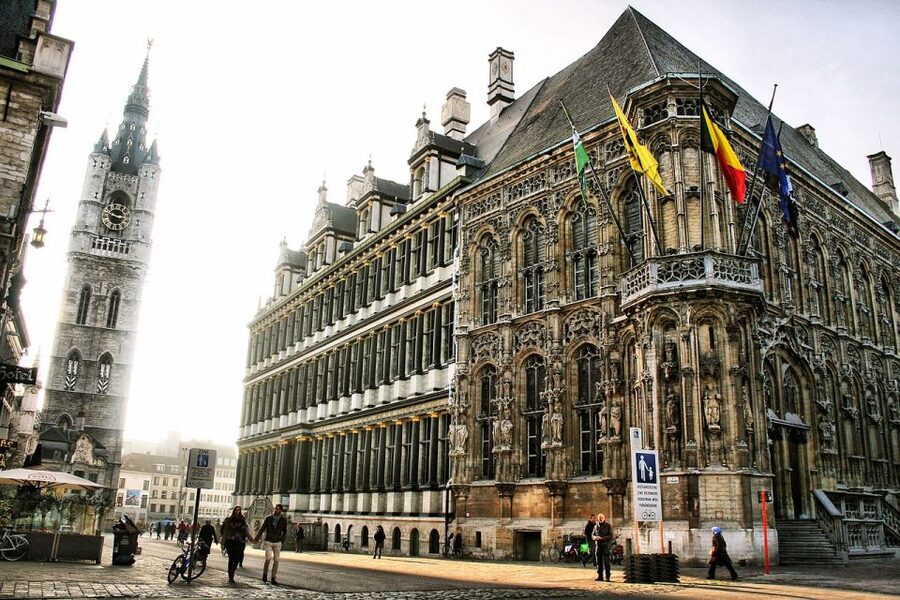
Ghent Town Hall brings civic architecture into the story. Your guide uses the building to explain how the city was governed and how its public institutions developed. The stop lasts about 15 minutes, enough to point out the building’s importance without turning the tour into a detailed architectural survey.
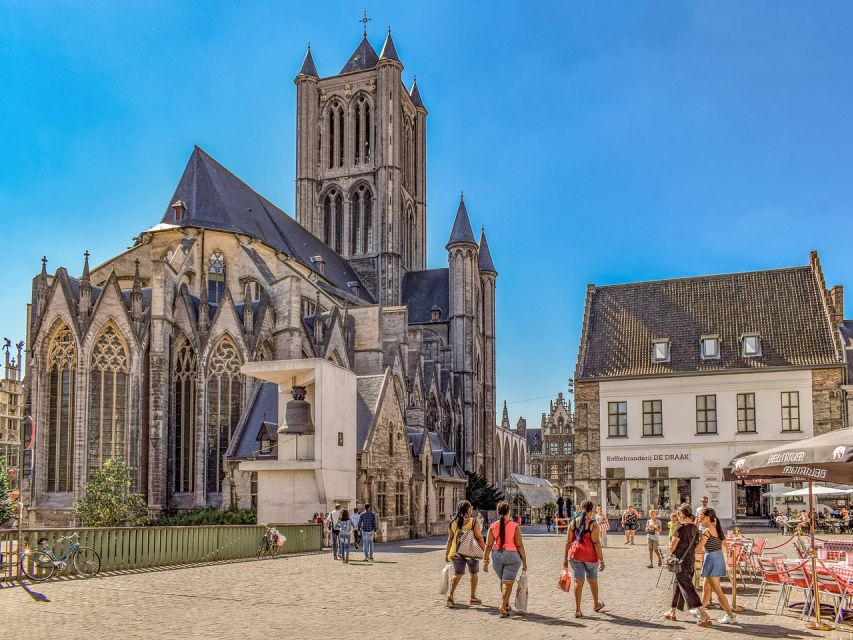
St. Nicholas’ Church adds another piece to the skyline. Its position near the Belfry makes it one of the easiest towers to compare from the central streets. The church is tied to the merchants who worked around the nearby trading areas, so it fits naturally with the tour’s later explanation of guilds and commerce.
This section of the walk is efficient. You see major buildings without losing the route’s larger story. The tradeoff is that you will not have much unstructured time inside either church. If you want quiet or detailed photographs, return later.
Graslei and the old trading waterfront
At Graslei, the tour shifts from religion and government to business. This historic waterfront was part of Ghent’s trading life, and the buildings along the water help explain how goods moved through the city.
The nearby Herb and Grain Quay is tied to sixteenth-century trade. Here, your guide discusses the old guild occupations and the systems that organized work. This is one of the more useful parts of the walk because it connects the handsome waterfront to ordinary economic life.
It is easy to look at Graslei as a postcard scene and stop there. The guide gives you a reason to notice the buildings as working spaces rather than background decoration. You learn to look for signs of storage, trade, and guild power in the architecture.
This is also one of the better places for photographs. The water, old façades, and nearby towers create a strong view, but the group keeps moving. Take quick pictures during the stop and plan to return later if you want a slower session.
The Fish Market and the food trade
The Old Fish Market and the former Meat Market show how food shaped the city. They functioned as the medieval and early modern equivalent of a central supermarket, with rules governing where goods were sold and how trade was controlled.
That detail makes the stop more than a quick look at old buildings. Markets tell you how a city fed itself, collected fees, protected trade, and brought different occupations into one public space. The guide explains why these places mattered to Ghent’s growth.
You do not receive food or drinks as part of the tour, so this is not a tasting experience. It is a historical stop, with the emphasis on commerce and city development. If you want lunch, the walking portion can be followed by a break before you head to the boat.
Patershol, the former weavers’ quarter
Patershol is one of the more atmospheric parts of the walk. The area is also described as the weavers’ quarter, linking its narrow streets to one of Ghent’s major working trades.
Here, you get a closer sense of the city beyond its grand squares. The route through the quarter helps balance the large churches, towers, and public buildings with smaller streets where workers once lived and worked.
The guide’s role matters especially in Patershol because the area does not explain itself as clearly as a major monument. A good story helps you understand why the streets look different and how craft workers fitted into the city’s economy.
The route is easy for many walkers, but cobbles and frequent stops can make it tiring. If you have limited walking ability, consider the 150-minute length carefully and wear shoes with good support.
Gravensteen, Ghent’s castle in the city center
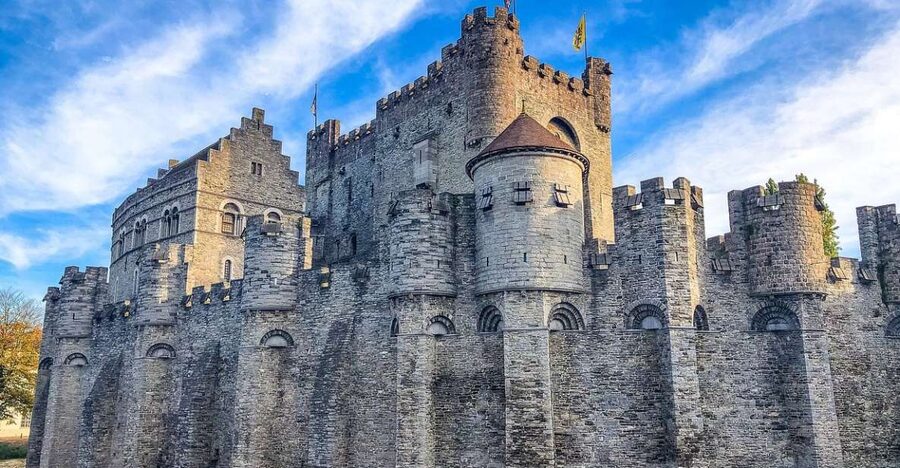
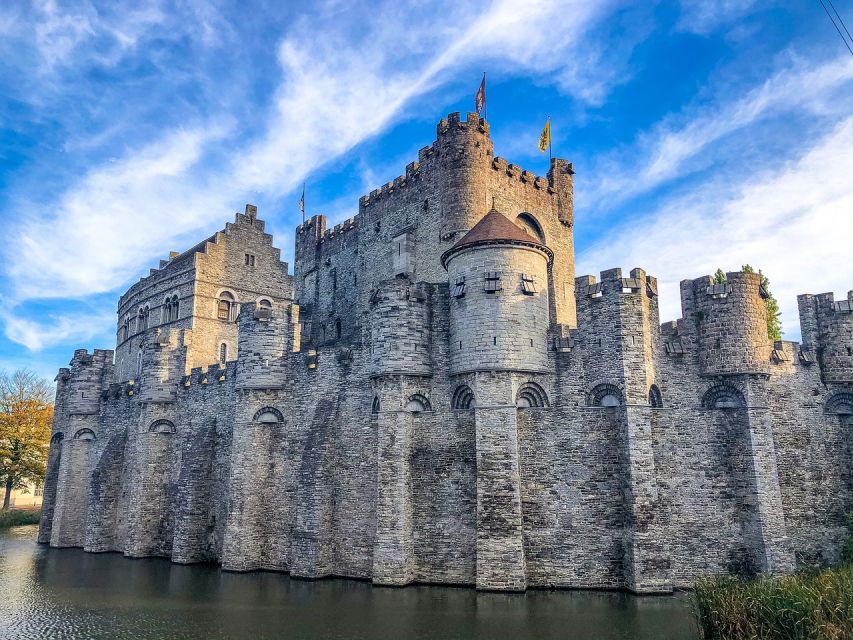
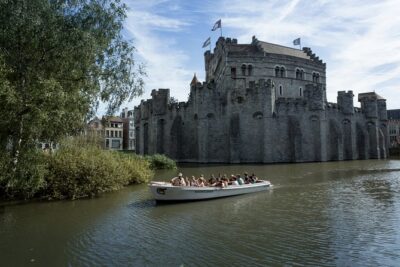
Gravensteen is the tour’s most dramatic stop. The Castle of the Counts of Flanders brings fortifications, power, and medieval legends into the modern city center.
Your guide explains stories connected with the castle and points out its place in Ghent’s political past. The visit is an exterior guided stop rather than a listed castle entry. You should not expect time to explore the interior rooms, climb the walls, or see every exhibit during this tour.
Even from outside, Gravensteen gives the route a strong finish to the walking section. After churches, markets, guilds, and waterfront trade, you see the building that represents authority and defense. It is a useful contrast with the commercial confidence of Graslei.
If the castle interests you most, use the guide’s recommendations for a separate visit. The tour is designed to explain the building and place it in context, not replace a full castle admission.
The 30-minute boat trip along the Leie and Lieve
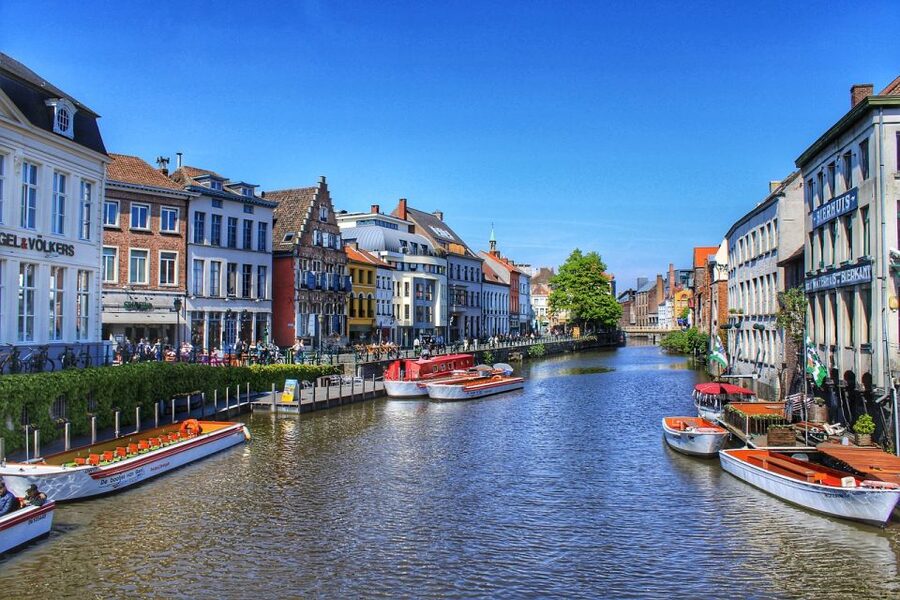
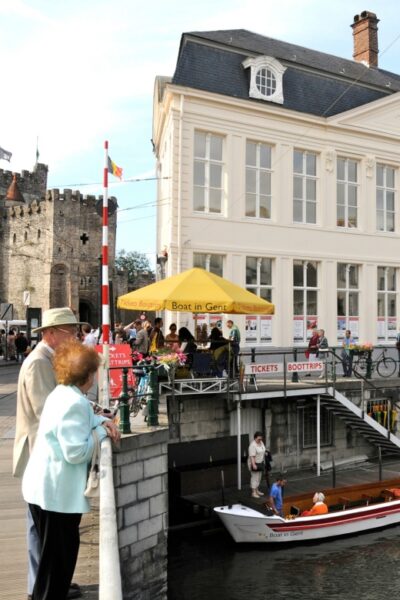
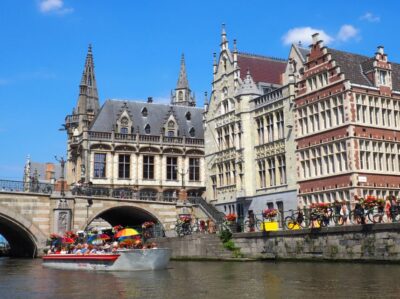
The canal cruise changes the rhythm. After a continuous walking route, you sit back and see Ghent from the water. The boat travels along the Leie and the Lieve, giving you views of both banks and the city’s waterfront activity.
I like this second half because it shows how the buildings relate to the waterways. From street level, you see façades one at a time. From the boat, you get wider views and a clearer sense of how the canals connect the center.
An audio guide with illustrated translations accompanies the ride. That helps keep the cruise informative even when the boat guide is not standing beside your seat. A boat guide has also given the commentary in four languages on some departures, though the walking tour itself is in English.
The boat portion also creates some flexibility. You can take a break after the walk, have lunch, and then make your way to the launch area that the guide points out. The endpoint is Gent Watertoerist, so you finish near the canal operation rather than returning to the Belfry.
Expect scenery and explanation, not a high-energy ride. The boat is a calm way to close the tour, and it gives you time to review the many names and dates from the walking section.
How the guiding affects the experience
The quality of this tour depends heavily on the person holding the umbrella. Strong guides make the city easier to read, and this route gives them plenty to work with.
Ariel has been described as witty and clear in English. Peter has used humor to make historical details easier to remember. Juliana has brought visible affection for Ghent to the walk, while Eros has presented the material in a calm, effective way. These names are useful examples of the style you may encounter, but the assigned guide can vary.
The best part of the format is the combination of facts and jokes. Ghent has many dates, guild names, religious references, and political changes. A guide who adds a little humor keeps the walk from becoming a list of buildings.
There is one caution. Some historical details can be simplified during a short city tour, and the route covers a lot in a limited time. Treat the tour as a clear introduction, then check a museum, cathedral guide, or castle visit later if you want academic detail.
Who should book this Ghent experience?
I would choose this tour if you are visiting Ghent for the first time and want a strong introduction without spending a full day on organized sightseeing. It suits couples, families with older children, and anyone who likes hearing the story behind a building instead of simply photographing it.
It is also a good fit for a short stay or a day trip from Brussels. The route covers the central sights quickly, and the boat gives you a second view of the city without adding another long walk.
You may want a different plan if you prefer independent exploration, long museum visits, or a very small private group. The 15-minute stops keep the tour moving, and the popularity of the city can mean a group setting. The overall score of 3.8 out of 5 suggests a generally positive experience, but not every departure will feel equally polished.
The tour is also a practical choice for anyone who wants an easy mix of land and water. One useful approach is to walk first, pause for lunch, then take the canal cruise. That lets you keep the sightseeing structure while avoiding two and a half hours of nonstop activity.
Should you book the Ghent walk and canal cruise?
Book it if you want history, orientation, and scenery in one compact outing. The $32 price is fair for a live English guide plus a 30-minute boat trip, especially if you value an explanation of the Van Eyck altarpiece and the story behind the markets and guild quarters.
Skip it if your priority is detailed interior sightseeing or complete freedom to set your own pace. The tour introduces the cathedral, Belfry, churches, castle, markets, and canals, but you will need a separate visit for a deeper look.
Reserve now and pay later if that flexibility helps your plans. Free cancellation is available up to 24 hours before the start, but arriving late or failing to appear does not qualify for a refund. Bring comfortable shoes, watch for the black umbrella outside the Belfry, and leave room in your day to revisit the place that catches your attention most.
FAQ
How long does the Ghent walking and boat tour last?
The experience lasts 150 minutes, including the guided walking tour and a 30-minute canal cruise.
What language is the tour offered in?
The live walking tour is conducted in English. The canal boat includes an audio guide with illustrated translations.
Where is the meeting point?
Meet outside the Belfort Tower at Sint-Baafsplein 12. The guide will be holding a large black umbrella.
What sights are included in the walking tour?
The route includes the Belfry of Ghent, St. Bavo’s Cathedral, Ghent Town Hall, St. Nicholas’ Church, Graslei, the Old Fish Market, Patershol, and Gravensteen.
Is food or drink included?
No. Food and drinks are not included in the tour price.
What should I bring?
Bring comfortable shoes. The tour involves walking through Ghent’s central streets and historic quarters.
Can I cancel the booking for a refund?
You can cancel free of charge up to 24 hours before the tour starts. No refund is offered for cancellations made later, late arrival, or no-shows.
More guided walks around Ghent
- Ghent: City Highlights and Hidden Gems Guided Bike Tour
★ 4.7 · 196 reviews - Ghent: Private 2-Hour Walking Tour
★ 4.7 · 134 reviews - Ghent: Famous Belgian Chocolate Walking Tour with Tastings
★ 5.0 · 131 reviews - Ghent: Guided Walking Tour
★ 4.3 · 115 reviews
Just added in Ghent
- Historic Highlights, by a local guide★ 5.0 · 9 reviews
- Discover Ghent while playing! Escape game – The Walter case★ 4.5 · 4 reviews
- Walking Food Tour in Ghent★ 5.0 · 13 reviews
- Discover Ghent while playing! Escape game – The alchemist★ 4.0 · 4 reviews
- Ghent Walking Tour with Audioguide on Your Smartphone★ 4.5 · 13 reviews
- e-Scavenger hunt Ostend: Explore the city at your own pace★ 4.5 · 10 reviews
- Discover Mons while playing! Escape game – The alchemist★ 4.0 · 5 reviews
- e-Scavenger hunt Mons: Explore the city at your own pace★ 5.0 · 4 reviews
Canal Cruises, compared.
Walking Tour, Canal Boat Trip w/Beer Tasting Option
Read our review →
Day trip to Bruges from Paris with canal cruise
Read our review →Browse the lists this tour appears in