
Reviewed · CITY TOURS
Brussels: Hop-On Hop-Off Bus Tour
Brussels spreads farther than its compact old center suggests. This open-top Tootbus route links the Grand Place, European Quarter, museums, Marolles, Tour & Taxis, and Atomium, giving you a useful first look at a city that can feel scattered. The bus is especially handy when rain, tired feet, or a short stay limits your walking.
I like the easy hop-on, hop-off setup and the TOOTbus app, which provides live bus locations, audio commentary, a ticket wallet, and self-guided walks. I also like that you can choose a 24-hour or 48-hour pass and ride a clean-energy vehicle. The main drawback is that the recorded narration can feel dated or poorly matched to what you are seeing, and service times change by season.
Key points at a glance

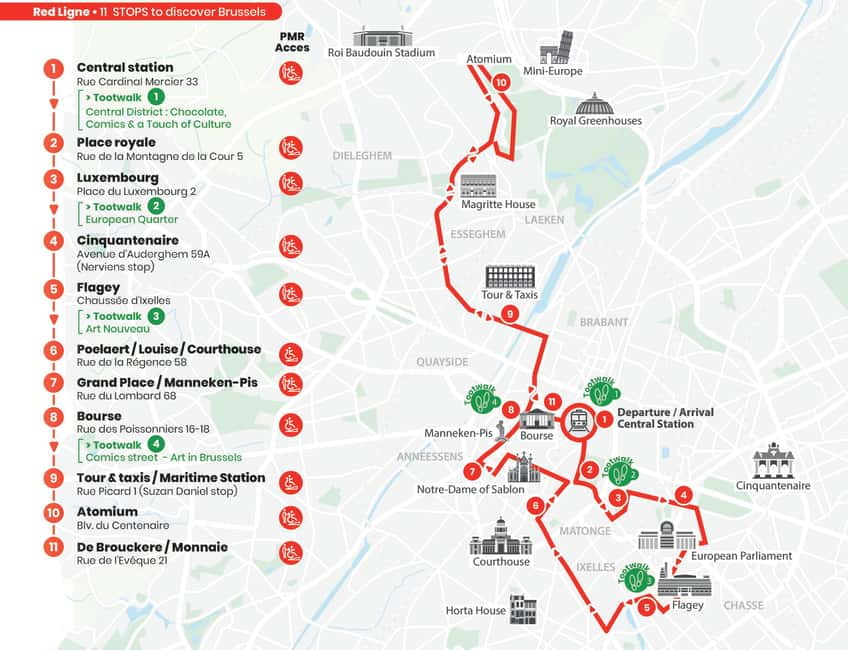
- The red route has 11 stops, including Central Station, Grand Place, the European Quarter, Marolles, Tour & Taxis, and Atomium.
- The full ride gives you a broad city overview, but the outer stretch toward Atomium takes time and is most useful if you plan to get off there.
- The app is a major help, with real-time bus tracking, audio commentary, an M-ticket wallet, and self-guided walking tours.
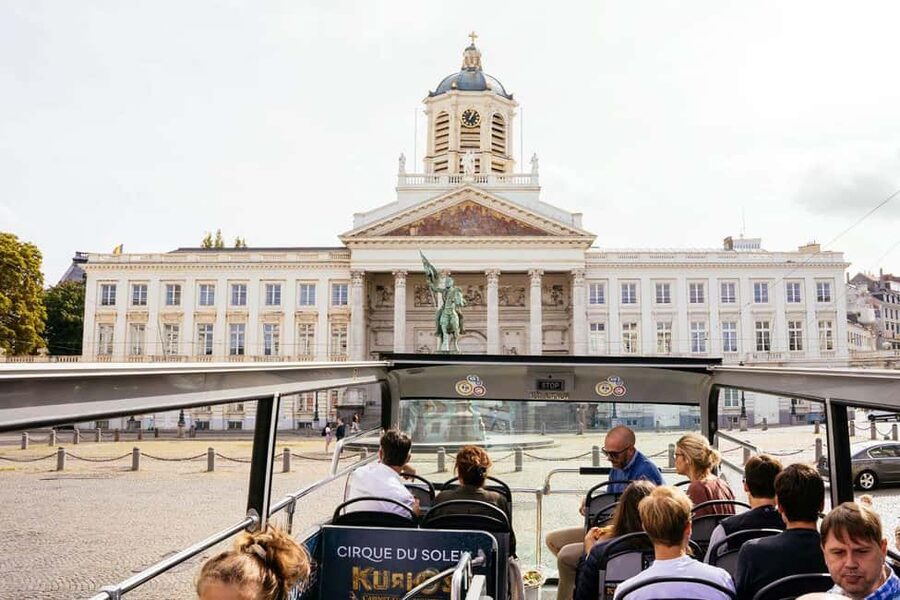
- The open top deck offers the best views, along with shade areas and a good chance for city photos.
- The audio guide covers 11 languages, and a separate kids’ version makes the ride easier for families.
- A 48-hour ticket offers better value if you want museums, neighborhoods, or Atomium rather than only a quick circuit.
Why this bus works well in Brussels
At $29 per person, this is not the cheapest way to move around Brussels if you only need one ride between two addresses. It becomes a better buy when you use it as both transport and sightseeing. A single pass can carry you from the historic center to the European Quarter, then onward to Atomium, while adding background through the audio system.
I would use the bus in two ways. On the first ride, stay aboard long enough to understand the shape of Brussels. On the second, get off at two or three places that deserve real time. That approach works far better than trying to visit every stop in one day.
The 24-hour pass suits a short visit or a first-day orientation. The 48-hour pass makes more sense if you want to enter museums, explore Marolles slowly, or leave room for bad weather. One useful pattern is to ride on a rainy morning, then return to the stops that caught your eye when the weather improves.
The bus is wheelchair accessible, and Wi-Fi is included. Earphones are provided, though you can bring your own. Food and drinks are not included, and oversize luggage, alcohol, and drugs are not allowed.
Other ways to see Brussels in a day:
- Brussels: City Highlights Walking and Tasting Tour
★ 4.9 · 505 reviews - Brussels Highlights Walking and Bus Tour w/ Waffle
★ 3.5 · 430 reviews - Brussels: City Highlights and Hidden Gems Bike Tour
★ 4.8 · 344 reviews
Starting at Central Station or Grand Place
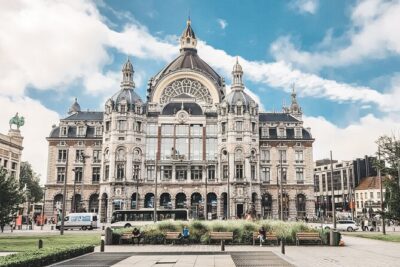
You can board at any stop, so do not feel tied to one formal meeting point. For many people, Central Station is the easiest start, at 33 rue Cardinal Mercier. It puts you close to the old center and works well if you arrive by train.
Place Royale is another smart starting point. From there, you are near the Royal Museums of Fine Arts of Belgium, the Musical Instruments Museum, and the upper part of the historic center. The stop is at 5 rue de la Montagne de la Cour.
The Grand Place and Manneken-Pis stop, at 68 rue du Lombard, is the most useful choice if you are already sightseeing in the old center. The Grand Place is best explored on foot, so I would not use the bus as a substitute for walking here. Ride to this stop, see the square and Manneken-Pis, then take time for the narrow streets around it.
Bourse, at 16 to 18 rue des Poissonniers, is another central option. It places you near restaurants, beer spots, and the lively streets around the old stock exchange. The De Broukere and Monnaie stop, at 21 rue de l’Evêque, helps connect the central area with the theater and shopping districts.
Place Royale, Sablons, and the museum quarter
Place Royale gives you one of the strongest early views of Brussels. The square sits above the lower town, so the bus ride here helps explain the city’s changing levels and broad layout. It is also a good place to get off if art and design are high on your list.
The nearby Sablons quarter is known for antiques, cafés, chocolate shops, and handsome old buildings. The bus only gives you an introduction. You will need to walk to find the details, but that is exactly where a hop-on, hop-off ticket earns its keep.
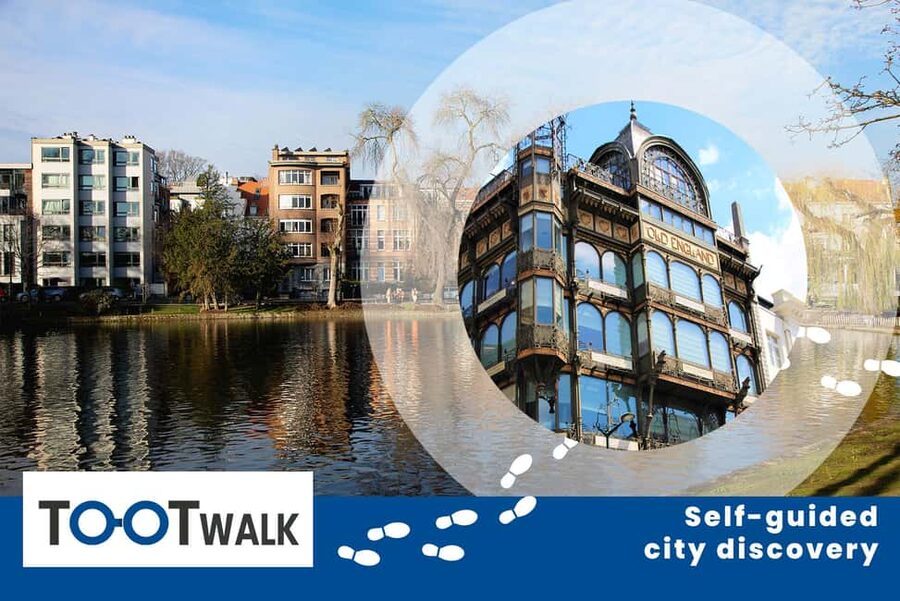
The museum stops are useful for a selective visit. The Royal Museums of Fine Arts of Belgium cover major art collections, while the Musical Instruments Museum is housed in an eye-catching former department store building. The Horta Museum, dedicated to the Art Nouveau architect Victor Horta, is farther from the central museum cluster and rewards a planned stop rather than a rushed visit.
One caution: the audio commentary may name a museum without giving enough detail to help you decide if you should get off. I would check the app before boarding and mark the stops that match your interests.
European Parliament and the eastern route
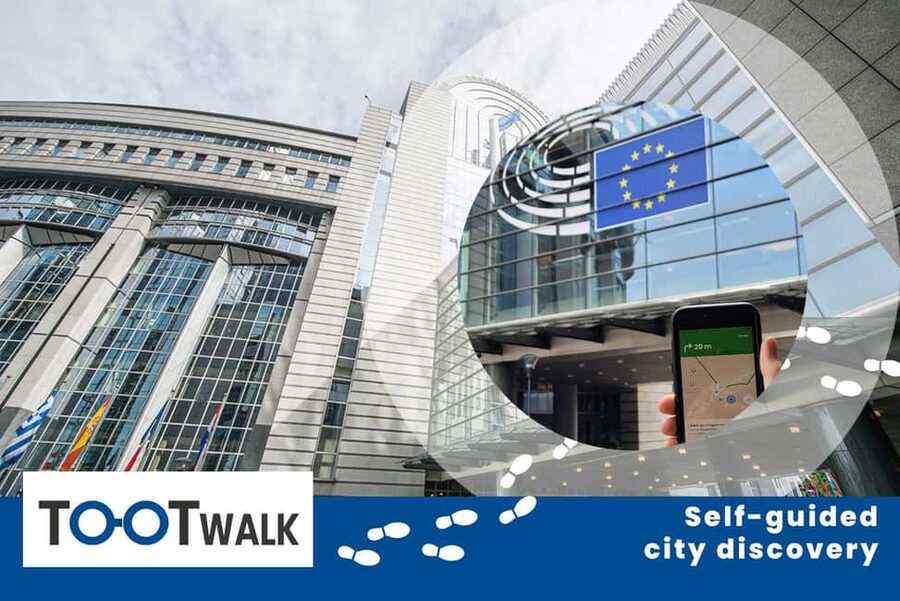
The Luxembourg stop, at Place du Luxembourg, puts you beside the European Quarter. The European Parliament is the main draw, along with the open spaces and modern institutions around it.
Cinquantenaire, at 59A Avenue d’Auderghem, gives you another reason to leave the bus. The area is known for its monumental arch and museums, and it feels quite different from the old center. The ride here is valuable because Brussels changes from medieval streets to broad avenues and formal civic buildings.
The route also passes the Saints-Michel-et-Gudule Cathedral. It is one of the city’s key landmarks, with a grand exterior and a central location near the upper town. If you are using the bus for orientation, listen carefully around this part of the route, since it helps connect the cathedral, Central Station, Place Royale, and the old center.
Traffic can slow the ride, especially on busy weekdays. Sunday morning is a particularly good time to use the bus, since lighter traffic can make the circuit more comfortable and predictable.
Same city, a different sort of day:
- Brussels: Atomium Entry Ticket with Design Museum Ticket
★ 4.4 · 9,254 reviews - From Brussels: Guided Day Trip to Bruges and Ghent
★ 4.6 · 8,353 reviews - From Brussels: Bruges & Ghent Day Tour – 2 Fairytale Cities
★ 4.7 · 8,242 reviews - Choco-Story Brussels: Chocolate Museum Entrance with Tasting
★ 4.3 · 4,883 reviews
Louise, the Courthouse, and Marolles
The Poelaert, Louise, and Courthouse stop is at 58 rue de la Régence. This part of Brussels offers a fine contrast between grand city planning, shopping streets, and older neighborhoods.
The Marolles is the stop I would save time for. It has traditional food, vintage shops, older streets, and a more local feel than the formal center. You can use the bus to reach the area, then walk without a fixed plan. That is where you are most likely to find the less polished, more ordinary side of Brussels.
The Courthouse area also offers wide views over the lower city. The stop is useful for photos, though the exact view depends on your position and the weather. The open top deck makes it easier to spot these views than a standard city bus, but bring a layer. Even a mild day can feel cool on the upper deck.
The walking tours included with the ticket can add value here. They are accessed through the app, although the availability of a live guide may not always be clear. Treat them as self-guided walks unless the current schedule confirms an in-person guide.
Tour & Taxis and the long ride to Atomium
Tour & Taxis, at 1 rue Picard, is one of the more useful outer stops. The former industrial area has been redeveloped, and the Maritime Station is a notable building to see. This stop is better for people interested in architecture, urban change, and places beyond the postcard center.
The route continues to Atomium at Boulevard du Centenaire. Atomium is one of Brussels’ unmistakable landmarks, and the bus offers a simple way to reach it without arranging separate public transport. Mini-Europe is also nearby, though it is not included in the bus ticket.
Here is the practical warning: the trip out to Atomium can take a large part of your day. Some passengers find the stretch less interesting when they stay on board, since there is less to see between the central districts and the attraction. I would only make the full outward ride if you plan to get off at Atomium or want a broad view of the city’s outer areas.
If Atomium is on your list, check the timetable before you leave the center. Missing a return bus can mean a long wait, particularly outside the busiest service period. The app’s live tracking helps, but it is still smart to confirm the last departure.
What the upper deck is really like
The open top deck is the best place for photographs and a clear view of Brussels’ streets. You can see more from above, especially when the bus passes broad avenues, squares, and the European Quarter.
Seats may have shade areas, which matter on sunny afternoons. The ride can also be cool and occasionally bumpy, depending on traffic and road surfaces. I would bring a light jacket and avoid assuming that the upper deck is always the most comfortable choice.
If the weather turns poor, the bus becomes a useful shelter. One long loop takes about two hours and 20 minutes according to the published experience details, though actual times can vary with traffic. You can stay aboard for the full circuit, then decide where to get off on the next ride.
The bus is described as clean and spacious, and the clean-energy vehicle is a welcome touch. Drivers are generally a strong part of the experience. Individual drivers such as Imad, Eddie, Sulaiman, and Bruno received warm praise for careful driving, courtesy, and useful information. Bruno in particular was singled out for making the history engaging, though the service is mainly built around recorded commentary.
Audio guides, app tools, and walking tours
The audio guide is available in Dutch, English, French, German, Spanish, Italian, Chinese, Japanese, Arabic, Portuguese, and Russian. A kids’ audio guide is included, which gives families an easier way to keep younger passengers interested.
The English narration provides a useful outline of the city, but do not expect the depth of a private guide. Some cultural references feel dated, and the commentary can occasionally seem out of step with the building or view in front of you. The voices and delivery may also feel rehearsed.
I would download the app before boarding. It includes:
- Real-time bus tracking
- Audio commentary on your phone
- An M-ticket wallet
- Additional city information
- Self-guided walking tours
The app is especially helpful when you are trying to identify the next stop or decide how long to spend off the bus. Some riders have found it hard to know exactly where they are from the narration alone, so follow the route map as well.
The photo prompts are a nice touch. The commentary sometimes signals an upcoming place to take a picture, which is useful when the bus is moving and you have only a few seconds to prepare.
Timetables, frequency, and smart planning
Schedules change with the season, so check the Tootbus timetable before you go. The supplied winter schedule for September 30 through December 31, 2025, lists a first red-route departure at 10:00 a.m. and a last departure at 5:00 p.m., with buses every 30 minutes.
Those times are not a guarantee for every date. Seasonal changes have caused confusion in the past, so do not plan a museum visit around an old timetable copied from another page.
Start early if you want to combine Atomium with central Brussels. For a relaxed day, I would choose one outer stop and two central stops rather than trying to cover everything. If your time is very short, stay aboard for a full overview and use the remaining time at Grand Place or Place Royale.
The bus is also a practical backup on a wet day. You can see much of the city without walking between every district, then use the dry periods for indoor sights.
Who should book this Brussels bus tour
I would recommend it most strongly for:
- First-time visitors with one or two days in Brussels
- Families who want an easy overview
- People who find long city walks tiring
- Anyone staying outside the central area
- Visitors who want a simple connection to Atomium
- Sightseers who prefer transport with recorded background
It is less useful if you are already comfortable with Brussels public transport and plan to spend most of your time inside the old center. Grand Place, Manneken-Pis, Sablons, and the cathedral are close enough to combine on foot.
The service also depends on your expectations. If you want detailed architectural discussion or the chance to ask questions at every stop, the automated guide may feel thin. If you want a practical city overview with the freedom to get off, it does the job well.
Should you buy the 24-hour or 48-hour ticket?
Choose 24 hours if you have only a few hours, want a city overview, or plan to ride mainly between major districts. At $29, it can be good value when it replaces several taxis or separate transport rides.
Choose 48 hours if you want to visit museums, spend time in Marolles, see Atomium without rushing, or keep a weather backup. The second day also lets you use the bus as transport rather than trying to squeeze every stop into one circuit.
Free cancellation up to 24 hours ahead and the reserve-now, pay-later option make the booking more flexible. Just remember that food, drinks, museum admission, and Atomium entry are separate costs.
FAQ
How long is the Brussels hop-on hop-off ticket valid?
You can choose a ticket valid for 24 or 48 hours. Check the current schedule when booking because operating times can change by season.
Where can I board the red route?
You can board at any of the 11 red-route stops. They include Central Station, Place Royale, Luxembourg, Cinquantenaire, Flagey, Poelaert/Louise/Courthouse, Grand Place/Manneken-Pis, Bourse, Tour & Taxis/Maritime Station, Atomium, and De Broukere/Monnaie.
Is Atomium included in the route?
Yes, Atomium is one of the red-route stops. Entry to Atomium is not included in the bus ticket.
What languages are available for the audio guide?
The audio guide is available in Dutch, English, French, German, Spanish, Italian, Chinese, Japanese, Arabic, Portuguese, and Russian. A separate kids’ audio guide is also included.
Is the bus wheelchair accessible?
Yes, the bus is wheelchair accessible.
Can I cancel the booking?
You can cancel up to 24 hours in advance for a full refund. The reserve-now, pay-later option lets you book without paying immediately.
My verdict
I would book this tour if I had one or two days in Brussels and wanted a quick grasp of the city’s scale. The strongest points are the broad red route, easy access to Atomium, useful app, clean bus, and the freedom to step off when a neighborhood catches your attention.
I would plan around the timetable, use the app, and treat the narration as a helpful introduction rather than a full guided tour. For the best value, take one overview ride, get off at Marolles or a museum stop, and use the 48-hour ticket when you want time for both the center and the outer sights.
Just added in Brussels
- Standard vehicle from Brussels airport to city of Antwerp★ 5.0 · 4 reviews
- Luxury vehicle from Brussels airport to the city of Brussels★ 4.0 · 5 reviews
- Transfer Brussels Airport (BRU) –> City Center 7 PAX (ONE WAY)★ 5.0 · 7 reviews
- PRIVATE MPV TRANSFER FROM/TO BRUSSELS AIRPORT (Max 6 pax) ONE-WAY★ 5.0 · 4 reviews
- Luxury Minivan from Brussels airport to the city of Brussels★ 4.0 · 7 reviews
- Transfer Brussels Airport –> Brussels MB V Class 7 PAX (ONE WAY)★ 5.0 · 4 reviews
- Transfer Brussels Airport –> City MB E Class 1-3 PAX (ONE WAY)★ 5.0 · 6 reviews
- Brussels: City Walk with Audioguide in 7 Languages on your Phone★ 3.5 · 4 reviews
City Tours, compared.

Brussels Highlights Walking and Bus Tour w/ Waffle
Read our review →
Browse the lists this tour appears in