
Reviewed · MUSEUMS
Brussels Train World Museum Entrance Ticket
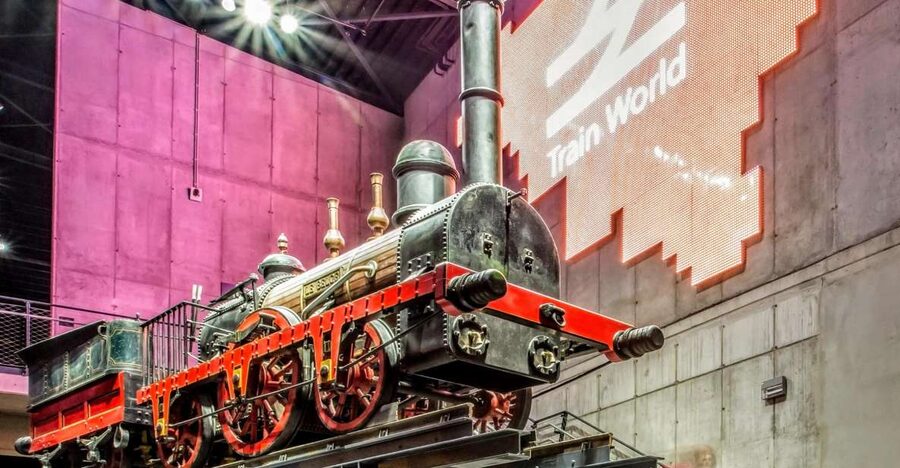
Train World is no ordinary room full of locomotives. It is a theatrical trip through Belgian railway history, staged inside and around the old Schaerbeek station. You’ll see five full steam engines, royal carriages, railway cottages, signals, and working displays that give the collection a sense of life.
I like the way the museum mixes grand objects with hands-on moments, especially the chance to operate a train simulator near the end. I also like the setting: the station itself gives the visit a genuine railway feel, and the FilouSophe restaurant makes lunch or a coffee easy.
The main drawback is that the museum can feel confusing to navigate, and two hours is only a rough minimum. Some displays and videos may not be available in English, so an audio guide can make a real difference. Also check the ticket price carefully, since some visitors found cheaper admission available directly from Train World.
Key points to know before you go
- Five steam engines: The large locomotives are the museum’s main event, with plenty of metal, machinery, and scale to admire.
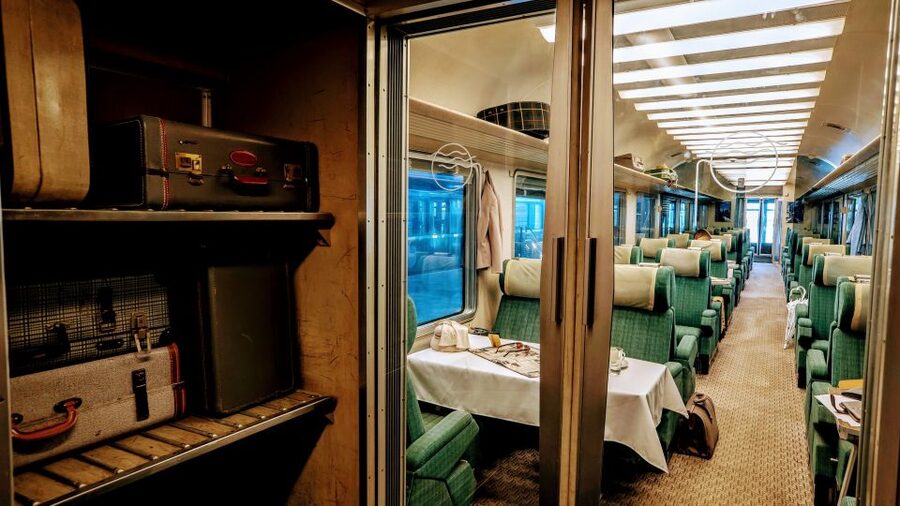
- Royal railway carriages: Belgian royal cars show off careful woodwork, decoration, and the comfort once reserved for the highest-ranking passengers.
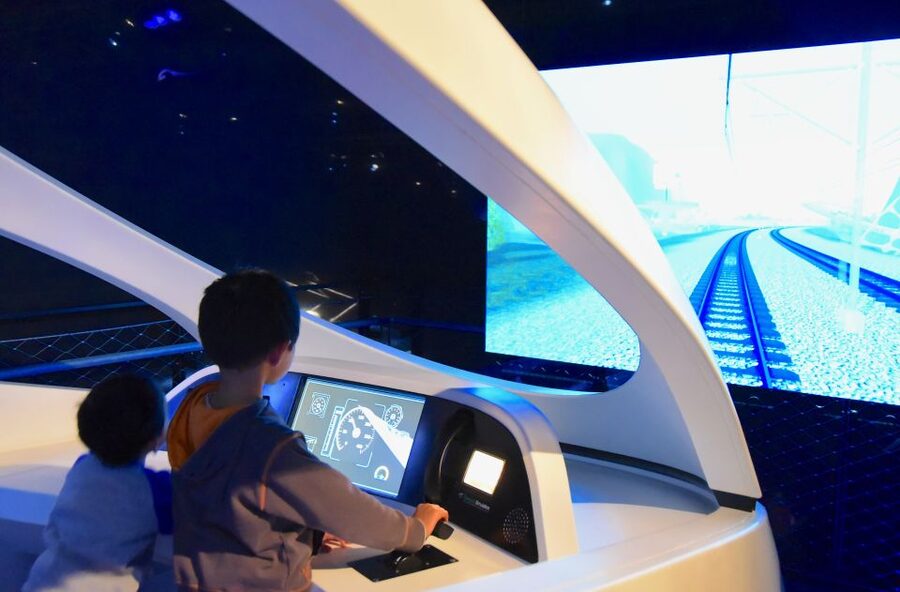
- A train simulator: Children and adults can finish the visit by trying to drive a train.
- Historic railway settings: Railway cottages, signals, crossings, and station spaces make the displays feel more like a railway world than a standard gallery.
- Timed entry: Booking a time slot helps secure admission, but compare the price with direct museum admission and any eligible museum pass.
- Schaerbeek location: The museum is close to Schaerbeek station and reachable by train, tram, bus, or bicycle.
Entering Train World at Schaerbeek Station
Train World is in Schaerbeek, just outside central Brussels, and the setting matters. You are not entering a plain modern museum box. You arrive near an old station building, with railway architecture and working transport links setting the tone before you even reach the exhibits.
Schaerbeek Station is the simplest reference point. Train World is easy to reach on foot from there. Tram lines 7 and 92 stop nearby, as do buses 58 and 59. If you cycle, bike stop 160 is listed as another option.
The timed ticket is useful on a busy day because it gives you a planned entry window. You receive confirmation when booking, and the admission ticket is included. Still, I would compare the price before paying. The listed online price is $18.10 per person, while some ticket buyers discovered that direct admission or a museum pass could cost less. The convenience of pre-booking may be worth the difference, but it is not automatically the cheapest choice.
Allow at least two hours. A quick visit can take about an hour and a half, but the collection rewards a slower pace. If you stop for the audio material, examine the carriages, try the interactive sections, and spend time with the simulator, two and a half hours is quite reasonable.
Other collections worth an hour in Brussels:
- Brussels: Atomium Entry Ticket with Design Museum Ticket
★ 4.4 · 9,254 reviews - Choco-Story Brussels: Chocolate Museum Entrance with Tasting
★ 4.3 · 4,883 reviews - Brussels: 2.5-Hour Chocolate Museum Visit with Workshop
★ 4.6 · 1,263 reviews
Five steam engines that set the tone
The first major pleasure is simply scale. Early railway engines are not dainty museum pieces. They are huge machines of iron, pipes, wheels, and mechanical detail, and Train World gives them enough room to make an impression.
The five steam engines form the backbone of the collection. You can study how the machines were built and think about the engineering problem they solved: moving people and goods over long distances with power that once seemed almost magical.
The museum also presents the development of rail travel across different periods. That makes the visit more useful than a simple display of old locomotives. You see how railway design changed, how passenger comfort improved, and how the train moved from early steam technology toward newer ideas about transport.
Look closely at the smaller details. The appeal is not only the size of the locomotives. It is the workmanship, the fittings, the signals, and the practical objects that made a railway function. One of the most interesting themes is the amount of material and labor involved in creating these machines and carriages.
If you have little interest in engineering, the first engines may still win you over through their physical presence. If you already love trains, plan extra time here. You will want to inspect wheels, controls, boiler structures, and the construction choices that are easy to miss when you rush.
Royal carriages and the human side of rail travel
The royal railway carriages shift the mood from industrial power to ceremony and comfort. These cars are among the most admired objects in the museum, not because they move faster than other trains, but because they show how rail travel could become a formal public stage.
The decoration, woodwork, and marquetry deserve a close look. The craftsmanship helps you understand the gap between ordinary railway travel and the private world created for royalty. You are seeing both transportation and interior design.
I find these carriages useful because they add a human scale to the engines. A locomotive tells you how a train works. A royal carriage tells you how people chose to live, meet, dine, and display status while the train moved beneath them.
Several historic cars can be viewed from close range, and some carriages allow you to enter or look inside. That makes the visit more physical than a line of sealed objects behind glass. You can picture the movement of passengers, staff, and railway workers through the spaces.
The royal cars are also a good reason for adults to visit even if they are not train fans. The interiors, decoration, and social story offer more than technical information. Children may hurry toward the next large engine, but you will probably want to slow down here.
Railway cottages, signals, and working details
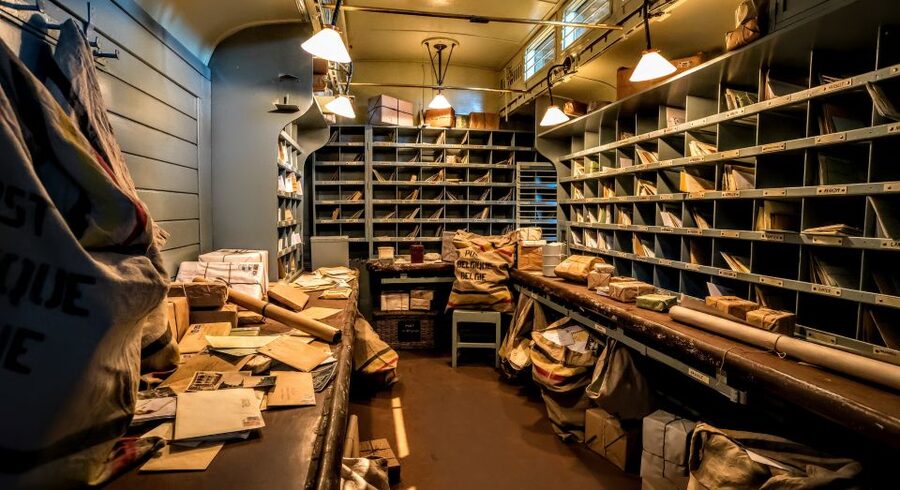
Train World’s railway cottages help explain the people behind the railway system. The old crossing keeper’s house is a particularly memorable display because it shows the small, practical world built around the tracks.
Signals and level crossings add another layer. You can see how railway staff warned people of approaching trains and controlled movement across the line. The sound of a warning bell and the movement associated with a crossing make safety feel like a real problem rather than a dry museum topic.
This is one of the strongest parts of the visit for families. A child may not read every panel about railway development, but a signal, bell, or barrier gives an immediate action to follow. The museum connects history to simple questions: How did people know a train was coming? Who operated the crossing? What happened when the system failed?
The displays also show that rail travel depended on more than locomotives. Stations, signs, cottages, signaling equipment, and railway workers all formed part of the system. That wider view is what gives the museum its character.
The route can be hard to follow. You might find yourself wondering where to go next, and signs directing you toward the exit are not always obvious. I would pay attention to the layout as you move through the galleries rather than assuming the route will explain itself.
Other trips by rail from Brussels:
- Brussels: Train World Museum Entrance Ticket
★ 4.7 · 524 reviews - From Brussels: Bruges and Ghent Full-Day Trip by Train
★ 4.3 · 103 reviews - Bruges: 2.5-Hr Walking Tour from train station to Markt
★ 4.6 · 44 reviews
The audio guide and language question
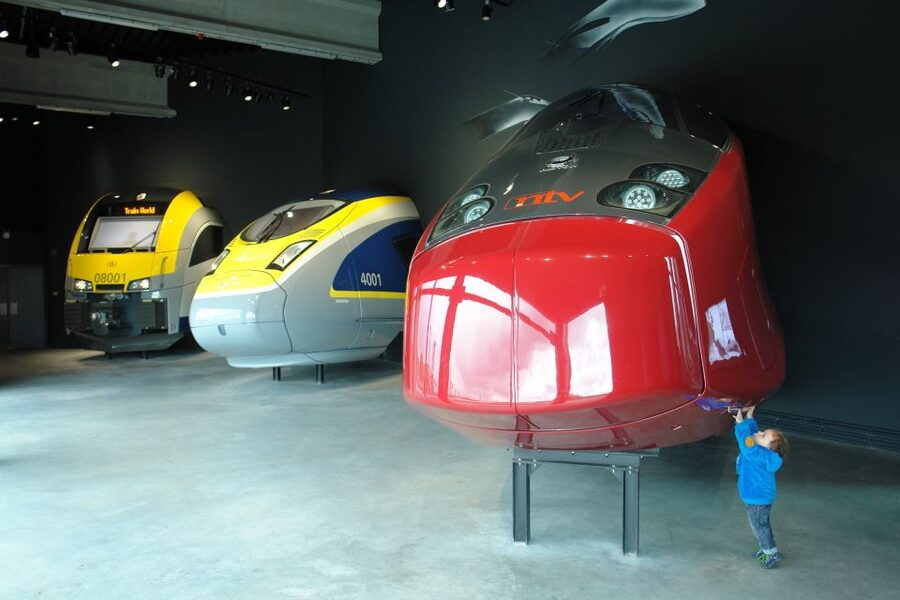
The audio guide is worth considering if you want more than labels. It adds stories and facts that may not appear on the written panels, which is helpful when the museum’s visual displays leave you curious about a particular carriage or machine.
The ticket information describes the audio guide as free, but one admission account reported paying 2 euros for it. Since arrangements can change, confirm the current policy when you arrive. Either way, the extra commentary can be useful, especially if English is not your reading language for the museum’s written material.
English availability is not perfectly consistent across every video and display. Some visitors found that videos were not offered in English, which can make parts of the visit less clear. An audio guide may help, but I would not assume every piece of media has an English version.
You can enjoy the museum without listening to everything. The engines, royal cars, and railway settings communicate plenty on their own. Still, I would use the guide for the technical sections and for objects whose purpose is not immediately clear.
Interactive features and the final train simulator
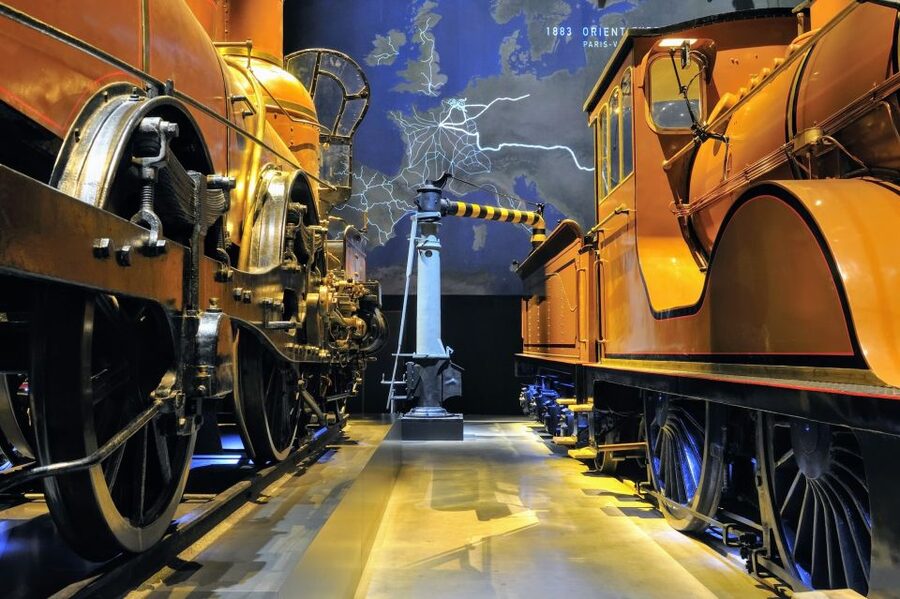
Train World is not entirely static. Interactive features bring the railway system to life, including displays related to safety and railway operation.
The train simulator is the obvious finale. Near the end of the visit, you can try driving a train, and this is often the moment children remember best. Adults can enjoy it too, especially after seeing how much work went into the real machines.
This simulator gives the museum a useful change of pace. You have spent time looking at historic objects, reading explanations, and examining interiors. Then you get an active task that lets you pretend to operate the system yourself.
The museum’s family appeal depends on your child. Some children will enjoy the engines, simulator, signals, and crossing displays. Others may find portions of the exhibition too static or difficult to follow. I would recommend it most for children already curious about trains, transport, machines, or how things work.
For very young children, the large objects and sounds may be more engaging than the written history. For older children, the simulator and safety displays provide a clear goal. Adults who enjoy design, engineering, or social history will find more to hold their attention than the family label alone suggests.
The Draw me a train! exhibition
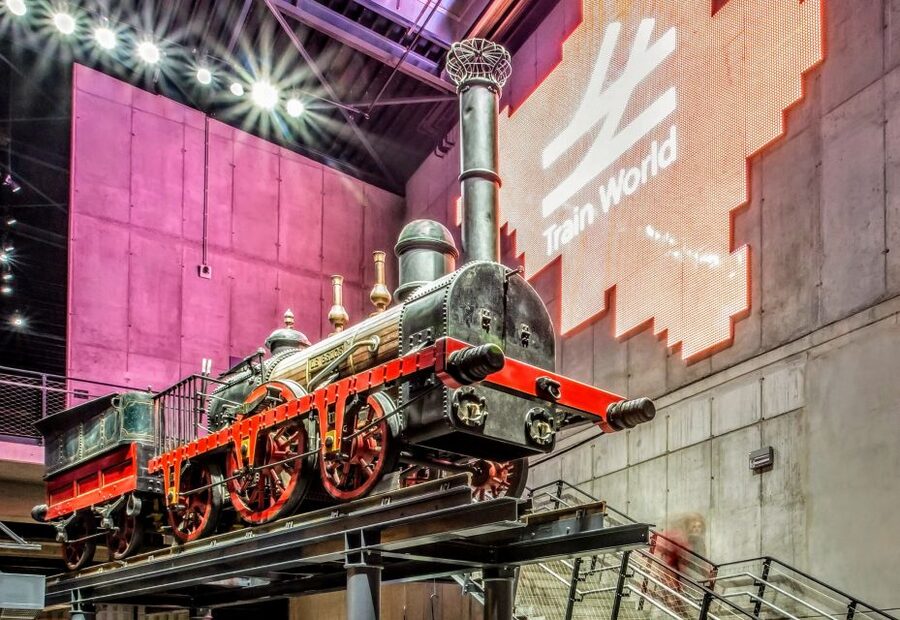
The temporary exhibition Draw me a train! is scheduled from September 19, 2024, through May 11, 2025. It looks at the way trains have inspired artists, using work by thirteen artists from fields such as comic art, architecture, painting, poster design, sculpture, and product design.
This section changes the focus from railway technology to imagination. You can see how artists picture trains, stations, and the railway world, then take part by drawing some of the museum’s trains and historical objects yourself.
If your visit falls within those dates, this exhibition may be especially useful for families and creative visitors. It gives children a reason to stop and look closely, rather than simply walking from one large machine to another.
The exhibition is temporary, so do not assume it will be present outside the stated period. The permanent collection remains the main reason to visit, but the art display can add a more personal and playful layer to the day.
Lunch at FilouSophe and how long to stay
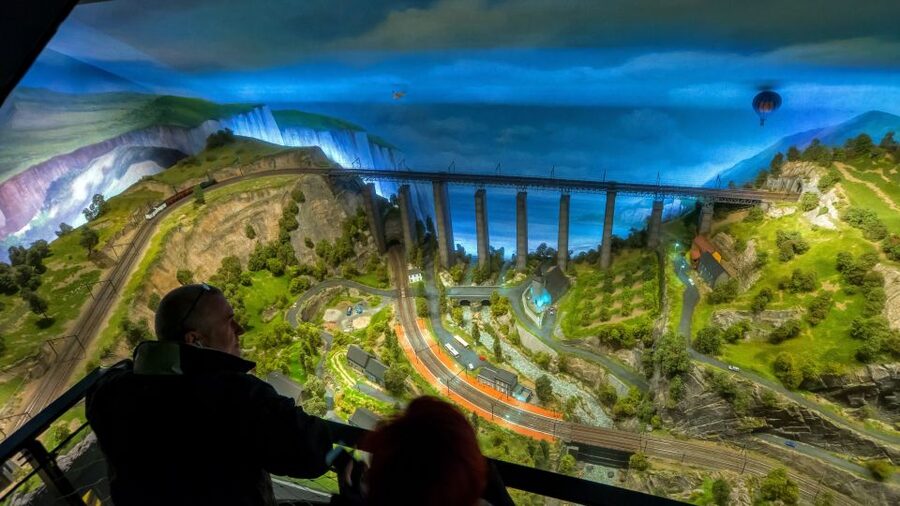
The FilouSophe restaurant-brewery is in the old Schaerbeek station building, making it a practical place for a drink or meal before or after Train World. Its location is part of the appeal. You remain in a railway setting instead of leaving the area to search for food.
I would plan the museum first and then decide how much time you have for lunch. A two-hour museum visit can easily grow if you use the audio guide and stop at the simulator. Some people finish in about an hour and a half; others stay two and a half hours.
The museum involves a fair amount of walking. Wear comfortable shoes, especially if you plan to inspect every gallery and carriage. The physical demand is moderate, but the route is long enough that tired feet can affect the final part of the visit.
You can make this a focused museum stop or a half-day outing with lunch. The second option works better if you are traveling with children or anyone who likes to read the displays carefully.
Who will get the most from this ticket?
I would recommend Train World first to train enthusiasts, families with children who already like trains, and adults interested in engineering, design, or Belgian railway history. The collection has enough scale and variety to reward repeat inspection.
It also works well as an indoor activity on a rainy Brussels day. The museum gives you several hours out of the weather, and the interactive elements prevent the visit from becoming only a sequence of labels and static machinery.
You may want to choose another activity if you need a tightly guided route, a fully English-language presentation, or a very active children’s attraction from beginning to end. Parts of the museum are quiet and display-focused, and the route can be confusing.
The timed admission is most useful if you value certainty or have a fixed Brussels schedule. At $18.10 per person, I consider it fair for a two-hour museum with major locomotives, historic interiors, interactive displays, and a simulator, but I would check direct prices and museum-pass options before booking.
Free cancellation is available if you cancel at least 24 hours before the experience begins. Changes or cancellations inside that 24-hour window are not accepted for a refund.
Should you book Train World?
Book it if you want to see real railway machinery at close range, not just read about trains in a gallery. The five steam engines, royal carriages, railway cottage, signals, and simulator give the museum enough variety for a solid two-hour visit.
I would be more cautious if your group needs a perfectly clear route or expects every video and explanation to be available in English. Bring comfortable shoes, consider the audio guide, and compare the online price with direct admission before paying.
For a child who loves trains, the simulator may be worth the admission by itself. For adults, the royal carriages and industrial detail provide the stronger reason to go. If those interests match your day in Brussels, Train World is a practical and memorable stop.
FAQ
Where is Train World located?
Train World is in Brussels, near Schaerbeek Station. You can reach it by train, tram lines 7 and 92, bus lines 58 and 59, or bicycle using bike stop 160.
How long should I plan for the museum?
Plan at least two hours. A quicker visit may take about one and a half hours, while a careful visit with audio material and interactive displays can take around two and a half hours.
What is included with the admission ticket?
Admission to Train World is included. The booking information also describes a free audio guide, though one account reported a 2 euro charge, so confirm the current arrangement at the museum.
Can children enjoy Train World?
Yes, children can see large locomotives, railway signals, crossing equipment, interactive displays, and a train-driving simulator. Children must be accompanied by an adult, and some parts of the exhibition may feel more static than others.
Is Train World accessible for visitors with limited mobility?
Visitors should have a moderate level of physical fitness, and the museum involves walking. A wheelchair has been made available at the museum, and calling ahead to reserve one is advised.
Are service animals allowed?
Yes, service animals are allowed at Train World.
Can I eat at the museum?
The FilouSophe restaurant-brewery is located in the old Schaerbeek station building and welcomes visitors for a drink or lunch before or after the museum visit.
Just added in Brussels
- Standard vehicle from Brussels airport to city of Antwerp★ 5.0 · 4 reviews
- Luxury vehicle from Brussels airport to the city of Brussels★ 4.0 · 5 reviews
- Transfer Brussels Airport (BRU) –> City Center 7 PAX (ONE WAY)★ 5.0 · 7 reviews
- PRIVATE MPV TRANSFER FROM/TO BRUSSELS AIRPORT (Max 6 pax) ONE-WAY★ 5.0 · 4 reviews
- Luxury Minivan from Brussels airport to the city of Brussels★ 4.0 · 7 reviews
- Transfer Brussels Airport –> Brussels MB V Class 7 PAX (ONE WAY)★ 5.0 · 4 reviews
- Transfer Brussels Airport –> City MB E Class 1-3 PAX (ONE WAY)★ 5.0 · 6 reviews
- Brussels: City Walk with Audioguide in 7 Languages on your Phone★ 3.5 · 4 reviews
Museums, compared.
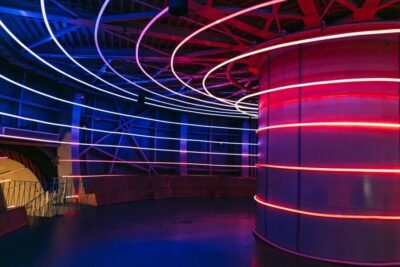
Atomium Entry Ticket with Design Museum Ticket
Read our review →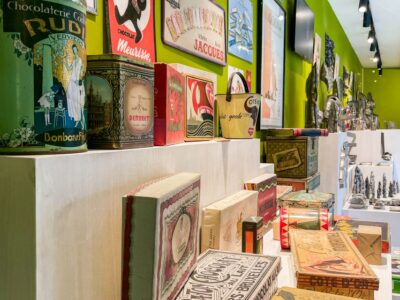
Choco-Story Brussels: Chocolate Museum Entrance with Tasting
Read our review →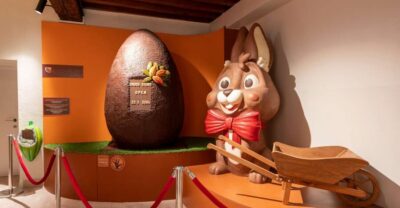
Choco-Story Chocolate Museum Guided Tour w/Tastings
Read our review →
2.5-Hour Chocolate Museum Visit with Workshop
Read our review →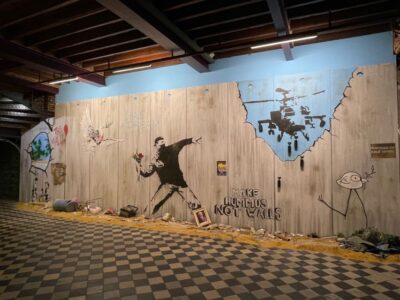
The World of Banksy Museum Permanent Exhibition
Read our review →

Chocolate Making Workshop and Chocolate Museum Entry
Read our review →Browse the lists this tour appears in