
Reviewed · BELGIAN BEER TOURS
Brussels 2.5-Hour Belgian Beer Tasting Experience
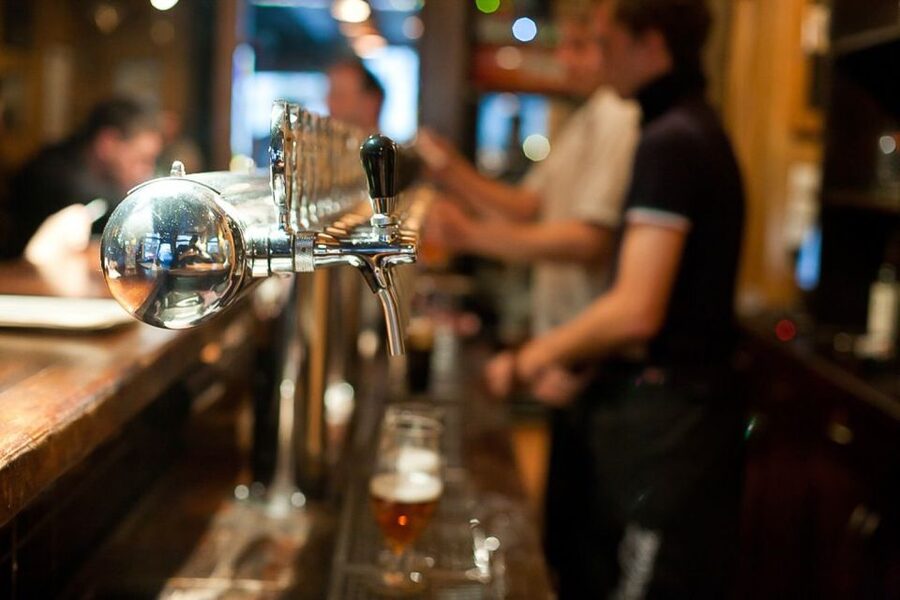
Belgian beer is not just one drink style. On this 2.5-hour Brussels tasting, you move from a powerful Trappist ale to three more modern brews, seeing how wide the country’s beer culture can be. The format is social, lively, and built around two central bars rather than a lecture room.
I like the small groups of up to 10 and the way guides such as Tom, Fraser, Adelin, and Julia turn brewing history into an entertaining conversation. I also like the clear contrast between the first bar’s Trappist beer and the second venue’s tasting flight, which gives you a useful sense of variety.
The main consideration is strength. Belgian beers can pack a punch, and four tastings in 150 minutes may feel like plenty, especially if you arrive hungry. Eat first, pace yourself, and remember that extra drinks are not included.
Key points to know before booking
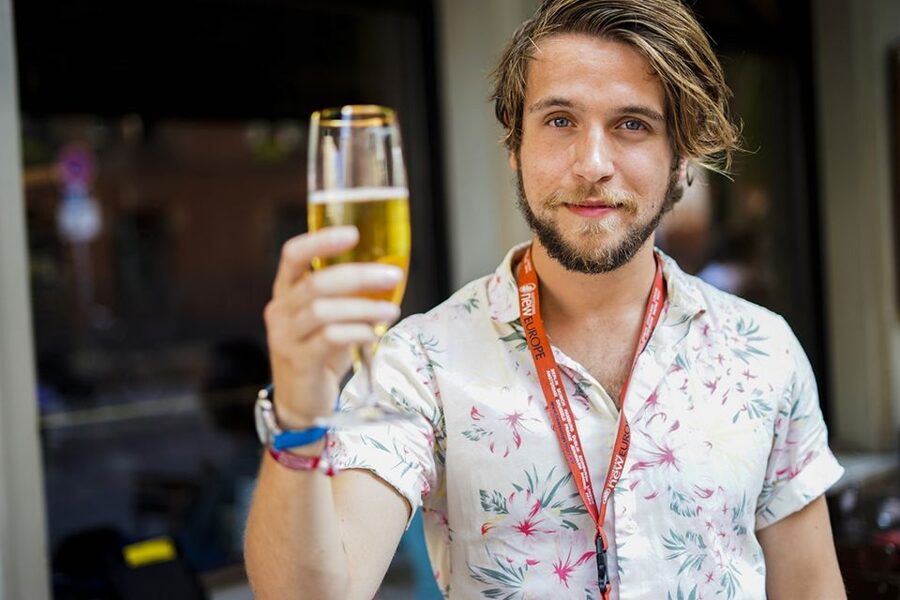
- Taste four different Belgian beers: One Trappist ale comes first, followed by a three-beer flight of newer or more contemporary styles.
- Visit two central Brussels bars: The route includes a stop near the Royal Gallery of Saint Hubert and finishes around Place Fontainas, though the exact end point can change.
- Expect a lively English-speaking guide: Tom, Fraser, Adelin, and other guides have been praised for humor, stories, and clear explanations of brewing.
- Small groups make a difference: With no more than 10 people, you have room to ask questions and meet people without losing the guide in a crowd.
- Bring photo ID: Beer tasting is for people aged 18 and older, and you must bring a passport or valid ID card.
- Good for solo visitors: The group setup makes it easy to chat with others, but children under 18 may join without taking part in the beer tasting.
Why Belgian beer deserves a two-bar introduction
Belgium’s beer culture is unusually broad. A Belgian beer menu can move from monastery-linked Trappist ales to fruit beers, farmhouse styles, strong blondes, dark beers, and experimental modern brews. This experience gives you a compact introduction without asking you to spend several evenings figuring out the city’s beer scene alone.
The order matters. You begin with a Trappist ale, a beer style tied to the brewing work of Trappist monasteries. That first bottle is described as powerful, so it is not simply a light welcome drink. It sets up a discussion about tradition, brewing methods, strength, and the role of monastic brewing in Belgium.
At the second bar, the focus shifts. You receive three beers together as a tasting flight, giving you a chance to compare them rather than drinking each one in isolation. I like this structure because it turns the tasting into a lesson in contrast. You can ask why one beer tastes sweeter, sharper, fruitier, darker, or stronger while the guide has the bottles in front of you.
This is not a brewery tour, and you should not expect to see production equipment or a working brewhouse. Its value is different: you get context, guided tasting, and two places in the city where you can continue exploring after the formal experience ends.
More Beer Tours in Brussels
- Hungry Mary’s Famous Beer and Chocolate Tour in Brussels
★ 5.0 · 2,258 reviews - Brussels: Pub Crawl and Nightlife Party Experience
★ 4.5 · 1,501 reviews - Belgian Beer Tasting in Brussels
★ 5.0 · 1,280 reviews
Starting at Scott’s Bar & Kitchen
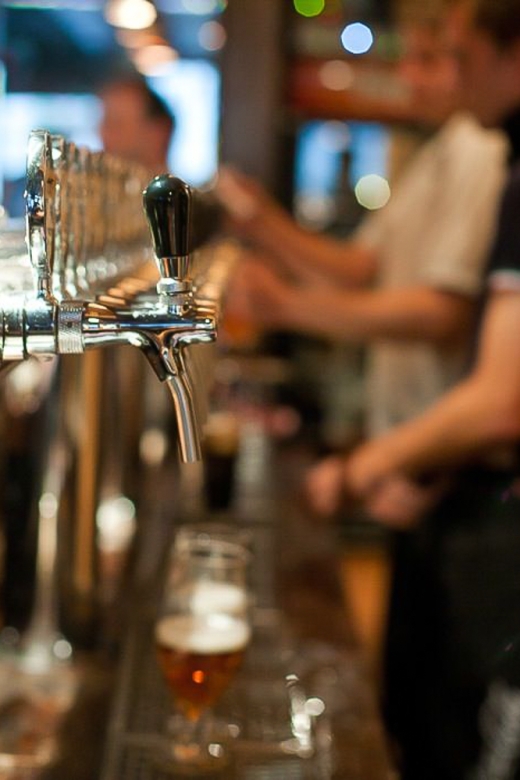
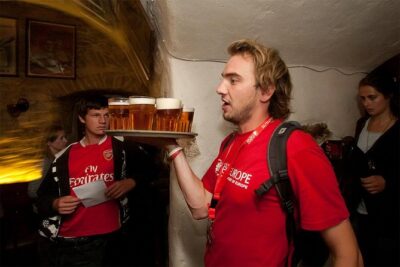
The meeting point is inside Scott’s Bar & Kitchen. Look for a guide wearing a red T-shirt. That simple detail matters in a busy city center, especially if you arrive close to the start time and do not know the guide’s face.
The guide leads in English. The strongest part of the experience is likely to be the guide’s delivery, so the named guides are worth noting, even though you cannot assume which one you will receive. Tom has been praised for mixing beer history with jokes and for making solo visitors feel part of the group. Fraser is known for engaging storytelling and practical beer suggestions. Adelin has also been singled out for keeping the mood friendly and energetic.
You will not get a dry classroom talk. The guides explain brewing and beer history while keeping the group involved. That suits people who want useful information but do not want every minute packed with technical terms.
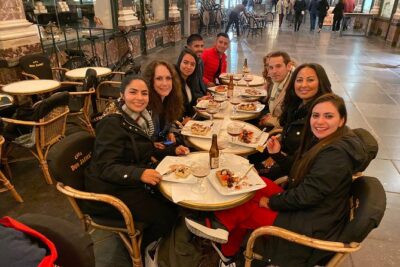
Arrive ready to talk with strangers. Groups can include people from several countries, and the social side is a real part of the evening. If you are traveling alone, this may be one of the better ways to meet people over a shared activity. If you are with friends, the small group still leaves room for conversation beyond your own table.
The first pour: a strong Trappist ale
The first major tasting is a bottle of Trappist ale. The beer is presented alongside an explanation of what makes Trappist brewing different and why these beers have such a strong place in Belgian beer culture.
This is where the tour moves beyond simply naming a beer style. You learn how Belgian brewing developed through tradition and how monastic beer became part of the country’s wider identity. The guide also discusses how beer is made, giving you a basic framework for understanding ingredients, brewing choices, and flavor.
The beer itself may be more intense than what you normally order. Several comments about the experience point to the strength of the pours, and one useful piece of advice is to eat before arriving. You do not need to be a serious beer fan, but you do need to treat the tasting as alcohol consumption rather than a series of harmless samples.
I would take small sips and let the guide explain the beer before deciding what you think. Belgian beer often rewards patience, and a strong ale can taste very different after it warms slightly. The point is not to finish quickly. It is to understand why the beer has its reputation.
The exact label is not specified in advance, so you should not book this expecting one particular Trappist brewery. The selection can vary with the guide and the day. That flexibility lets the guide match the beer to the group, but it also means the tasting is not a fixed collector’s menu.
Through the Royal Gallery of Saint Hubert
The route passes by the Royal Gallery of Saint Hubert for about an hour. This gives the experience a bit of Brussels context rather than keeping you inside bars from start to finish.
The gallery is one of the city’s recognizable central landmarks, and passing through it helps you connect the beer discussion with the streets around the historic core. Do not expect a separate sightseeing tour or a detailed architectural talk, though. The focus remains beer, and the gallery is part of the route rather than the main attraction.
This section also breaks up the tasting. You are not seated in one place for 150 minutes, and the change of setting keeps the evening moving. The activity takes place in central Brussels, so it works well as part of a day spent around the old center.
Because the exact route can vary according to what the guide thinks works best for the group, the gallery stop should be treated as part of the general plan rather than a guarantee of a fixed sequence. The bars visited during the experience are in the city center, and the final location can change.
Other breweries and beer cafes around Brussels:
- Brussels Walking and Tasting Tour (Beers,Chocolates&Fries/Waffle)
★ 5.0 · 929 reviews - Marc’s Brussels Beer Tasting Tour
★ 4.5 · 645 reviews - Brussels Chocolate Beer Waffle and Belgian Whiskey All-in-One (Small Group) Tour
★ 5.0 · 551 reviews - Brussels: The Belgian Beer World Experience & Beer Tasting
★ 4.5 · 530 reviews
Three beers at the second Brussels bar
The second stop is where the tasting becomes more comparative. You receive a flight of three contemporary Belgian beers, giving you a broader look at what Belgian brewers are doing now.
I like this contrast with the Trappist ale. If the first beer represents tradition and strength, the flight lets you test more varied flavors and approaches. The guide can explain how the beers differ and suggest what to notice, from aroma and body to bitterness, sweetness, acidity, and alcohol.
Do not assume every beer will suit your taste. That is part of the point. One person may prefer a dark, heavy ale, while another may respond to something fruity or lighter. The guides are encouraged to move people beyond their usual choices, and one account of the experience describes a participant trying a beer style they would not normally order and finding a new favorite.
This makes the tasting suitable for beginners, not just beer enthusiasts. You can ask basic questions without feeling out of place. You can also ask more specific questions if you already know the difference between a lambic, a dubbel, a tripel, or another Belgian style. The guide’s role is to make the tasting useful at several levels.
The bars themselves are part of the appeal. You visit two different venues rather than being shown only one famous beer hall. One of the places has been described as a particularly enjoyable stop, and some people have stayed for additional drinks afterward. Extra drinks are your responsibility and are not part of the price, so decide in advance how much more you want to drink.
What the guide adds to the beer
Beer tasting can be dull when it becomes a list of dates, ingredients, and brewing terms. This experience works best when the guide connects the beer to a story.
Tom has been repeatedly praised for humor, enthusiasm, and his ability to handle a mixed group. Fraser has received similar praise for explaining brewing and beer history through storytelling. Other guides, including Adelin, Julia, Sybil, and Adri, have also been described as friendly and engaging.
That range matters because the guide shapes the tone. You may get a lively evening that feels almost like a comedy show with beer, or a calmer conversation with more room for questions. The common thread is an emphasis on participation rather than a speech delivered at the group.
You also receive local suggestions beyond the tasting. Guides have given advice about what to do in Belgium and which beers to try next. That can be more useful than a generic printed list because you can ask about your own taste and the rest of your itinerary.
The group size helps here. Ten people is small enough for questions and large enough to create a social atmosphere. On an unusually quiet date, the group may be much smaller. That can mean more direct time with the guide, though it may also feel less like a group outing.
Is $48 a fair price?
At $48 per person, the price is reasonable if you value explanation and company as much as the beer. You receive four included tastings, a live guide, and visits to two central bars over 150 minutes. Buying four beers separately might cost less or more depending on the labels and serving sizes, but that comparison misses the main benefit: someone is choosing the progression and explaining what you are drinking.
The first Trappist bottle and the three-beer flight give the experience a clear structure. You are not simply paying for a pub crawl where the guide points at a menu. You are paying for an introduction to Belgian beer culture, plus a route through central Brussels.
Still, the price is less attractive if you already know Brussels beer bars well and prefer choosing your own drinks. It is also not the right choice if you want a brewery visit, a full meal, or unlimited beer. Additional drinks are not included.
For a first visit, I think the value is strongest. You can use the guide’s suggestions to plan later beer stops on your own, which makes the tasting useful beyond the 2.5 hours.
Who should book this Brussels beer tasting?
You should consider it if you fit one of these groups:
- You want a fast introduction to Belgian beer without planning several bar visits yourself.
- You enjoy history and brewing stories but prefer them delivered with humor.
- You are traveling alone and want a low-pressure way to meet people.
- You are curious about Belgian beer but do not usually drink beer.
- You want a central Brussels activity that fits into an evening.
- You already like beer and want to test styles you might not order alone.
I would be more cautious if you are avoiding alcohol, dislike strong beers, or need a quiet, formal tasting. The activity is social and can be animated. It is also not a food tour, so eat before you go.
The experience is wheelchair accessible. People under 18 can join the route without taking part in the beer tasting, but anyone tasting beer must be at least 18 and carry a valid photo ID. A passport or ID card is required.
Cancellation is free up to 24 hours before the start, and you can reserve now and pay later. That flexibility is useful if your Brussels plans are still shifting.
My verdict: book it for context, not just quantity
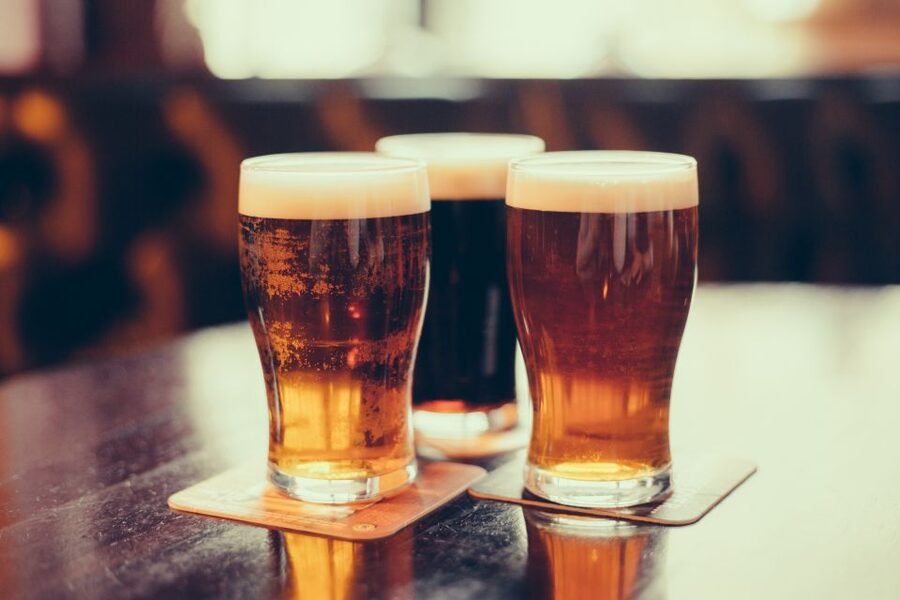
I would book this experience if I wanted a friendly, well-organized introduction to Belgian beer and did not want to spend an evening guessing which bars to choose. The two-stop format, strong Trappist opening, and three-beer flight give you a better sense of Belgium’s range than ordering four random beers at one counter.
The best reason to book is the guide. Tom, Fraser, Adelin, and the other named hosts have a record of making the material funny, approachable, and useful. You may leave with a favorite beer, a few new bar ideas, and a better sense of why Belgian beer is so varied.
Skip it if you want a brewery production tour or a quiet tasting with precise, fixed pours. Choose it if you want stories, social energy, and four carefully introduced beers in the heart of Brussels.
FAQ
How long does the Belgian beer tasting last?
The experience lasts 150 minutes, or 2.5 hours.
Where does the tour begin?
Meet your guide inside Scott’s Bar & Kitchen. The guide will be wearing a red T-shirt.
Where does the tour finish?
The planned finish is at Place Fontainas in Brussels, though the exact end point can vary. The bars used during the experience are in the city center.
How many beers are included?
Four beers are included: one bottle of Trappist ale and a three-beer tasting flight.
Are extra drinks included?
No. Additional drinks are not included in the price.
What language is the tour conducted in?
The live tour guide speaks English.
Do I need to bring identification?
Yes. Anyone taking part in the beer tasting must be at least 18 years old and bring a passport or valid photo ID.
Can children join the experience?
Children under 18 may join the tour, but they cannot take part in the beer tasting.
Is the experience wheelchair accessible?
Yes, the activity is listed as wheelchair accessible.
More to eat and drink around Brussels
- Choco-Story Brussels: Chocolate Museum Entrance with Tasting
★ 4.3 · 4,883 reviews - Brussels: Historical Walking Tour with Chocolate & Waffle Tasting
★ 5.0 · 1,165 reviews - Brussels: Historical Tour with Chocolate & Waffle Tasting
★ 4.8 · 642 reviews - Brussels Chocolate Tasting Tour
★ 5.0 · 568 reviews
Just added in Brussels
- Standard vehicle from Brussels airport to city of Antwerp★ 5.0 · 4 reviews
- Transfer Brussels Airport (BRU) –> City Center 7 PAX (ONE WAY)★ 5.0 · 7 reviews
- Luxury vehicle from Brussels airport to the city of Brussels★ 4.0 · 5 reviews
- PRIVATE MPV TRANSFER FROM/TO BRUSSELS AIRPORT (Max 6 pax) ONE-WAY★ 5.0 · 4 reviews
- Luxury Minivan from Brussels airport to the city of Brussels★ 4.0 · 7 reviews
- Transfer Brussels Airport –> Brussels MB V Class 7 PAX (ONE WAY)★ 5.0 · 4 reviews
- Transfer Brussels Airport –> City MB E Class 1-3 PAX (ONE WAY)★ 5.0 · 6 reviews
- Brussels: City Walk with Audioguide in 7 Languages on your Phone★ 3.5 · 4 reviews
Belgian Beer Tours, compared.
Walking Tour, Canal Boat Trip w/Beer Tasting Option
Read our review →
Hungry Mary’s Famous Beer and Chocolate Tour in Brussels
Read our review →
Belgian Waffle-Making Workshop with Beer Tasting
Read our review →
Brussels Walking and Tasting Tour (Beers,Chocolates&Fries/Waffle)
Read our review →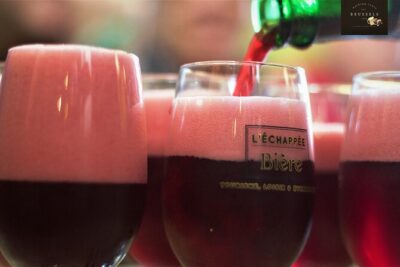
Brussels Chocolate Beer Waffle and Belgian Whiskey All-in-One (Small Group) Tour
Read our review →Browse the lists this tour appears in