
Reviewed · WORKSHOPS
Bruges: Silver Ring-Making Workshop
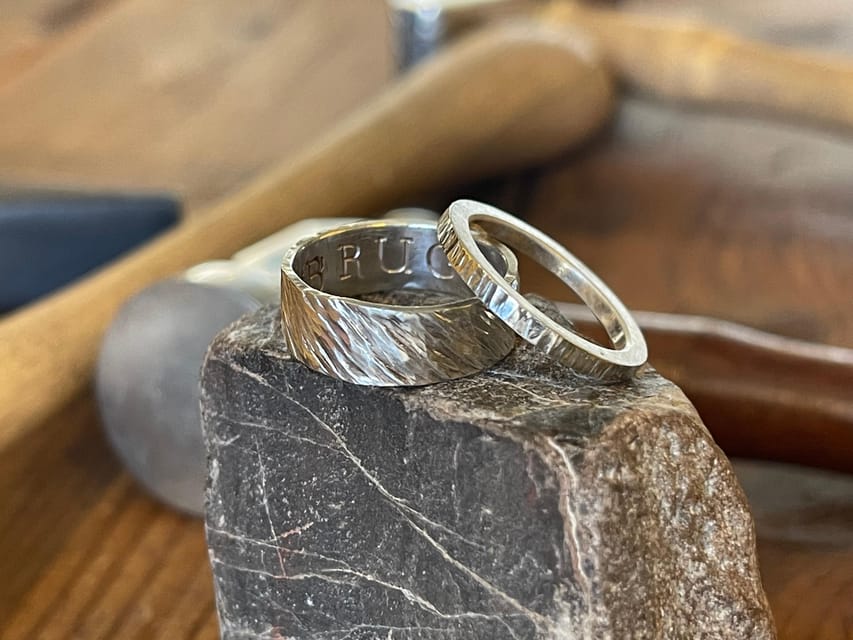
Making a silver ring in Bruges gives you something better than another souvenir: a keepsake shaped by your own hands. You’ll measure, saw, hammer, stamp, and finish recycled sterling silver in a small workshop inside Bennett & Mason, right in the city centre. The custom message inside the band and the choice of a polished, satin, or rough forged finish make the result personal.
I like the small group of no more than four, since jewellery work calls for close guidance. I also like the relaxed pace and friendly instruction, which have helped make this a favorite for couples, honeymooners, and first-time makers. The main consideration is the price: at $206 per person, this is not a cheap craft class, and you need to be comfortable using saws, hammers, files, and heat.
- Make a real sterling silver ring: You do the cutting, shaping, texturing, and finishing yourself.
- Stamp a private message inside: Add a name, date, or even your favorite Belgian beer.
- Choose three finishing styles: Pick bright polished silver, a soft satin sheen, or a rough forged look.
- Work in a group of four or fewer: The instructor can give practical help as you handle each tool.
- Meet at Bennett & Mason: Look for the large double red-framed windows and store logo in central Bruges.
- Leave with a personal souvenir: Your ring is both wearable and tied to your time in the city.
A Silver Ring Made in the Centre of Bruges
This workshop takes place at Bennett & Mason, the retail store and working studio of The Silver Hand. The shop is easy to identify by its large double red-framed windows, each marked with the store logo. If the door is closed, ring the bell.
The central location matters. You do not need to arrange a separate ride across town, and the workshop fits neatly into a day of sightseeing in Bruges. You can visit the Markt, canals, museums, or nearby cafés before or after the session. Transportation to and from the workshop is not included, so plan to walk or arrange your own ride.
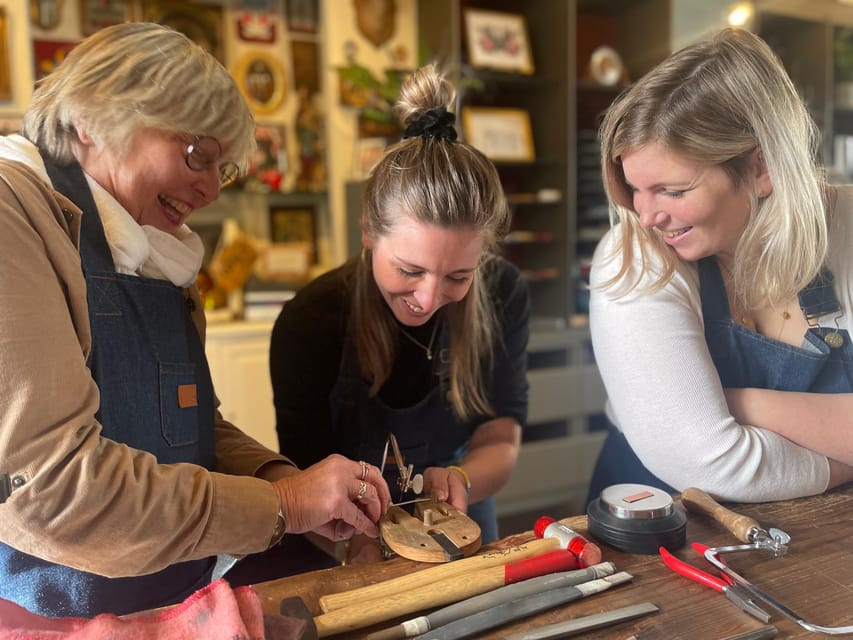
The room is a working jewellery studio, not a staged attraction. You will wear an apron, handle real tools, and work at the bench for most of the 150 minutes. That gives the experience a useful sense of purpose. You are not simply watching someone make a ring. You are learning the basic actions that turn a strip of silver into a finished piece.
The class is taught in English. No previous jewellery or silverworking experience is required, which makes this a good choice if you have never used a triblet, jeweller’s saw, or soldering equipment. The instructor demonstrates each unfamiliar step and gives guidance as you work.
Choosing the Ring You Actually Want
The first creative decision is the style of the ring. You can consider different shapes and design options before cutting the metal, so take a moment to think about how you want the finished piece to look and feel.
You also choose which finger will wear it. This is more important than it sounds. A ring intended for a little finger has different size needs from one intended for a thumb or middle finger, and comfort matters when you are shaping the band. The instructor helps measure the finger and calculate the amount of silver needed.
The material is recycled 925 sterling silver. The 925 mark means the metal is sterling standard, with 92.5 percent silver. You are not working with a decorative substitute or a pre-made ring blank. The band begins as silver material that you measure and cut.
At this stage, you can also think about the ring’s personality. Do you want a smooth, simple band? Would you like visible hammer marks? Are you interested in a texture or a small pattern? The class allows room for those choices, though your final design will depend on the options and time available during the session.
Gold options can be arranged for an additional cost, but you must ask about that before booking and request a quote. The standard workshop is built around sterling silver.
More Workshops in Bruges
- Bruges: Belgian Waffle-Making Workshop with Beer Tasting
★ 4.9 · 960 reviews - Belgian Chocolate Workshop in Bruges
★ 5.0 · 660 reviews - Bruges: Belgian Praline and Mendiants Chocolate Workshop
★ 4.7 · 620 reviews
Sawing and Stamping Your Personal Message
Once the size and shape are settled, you use a handsaw to cut the silver to length. This is one of the first moments when the class feels like real bench work rather than a craft demonstration. You will need a steady hand and patience, especially if you have never handled a fine saw.
The instructor provides help with the tools and safety. You should listen closely and work carefully, but you do not need to arrive with technical skills. Comfortable clothing and shoes are sensible. Closed-toe shoes are required, and high heels and open-toe shoes are not suitable for the workshop.
Before the ring is formed, you can stamp a message on the inside. The available hand stamps let you add a name, date, or another short reminder. The supplied examples include the name of a favorite beer, which is a fitting choice for a Belgian city and a cheerful alternative to a more traditional inscription.
This is one of the strongest parts of the experience because it gives the ring a private detail. The outside can be simple, but the inside carries a message only you need to see. If you want a specific word, date, or name, think it through before the class begins. The session has a fixed length, and deciding in advance will leave more time for careful work.
Stamping is also a step where alignment matters. A slightly uneven mark may become part of the handmade character, but it is worth listening to the instructor before striking the metal. Use reading glasses if you need them for close work.
Hammering the Band Around the Triblet
After stamping, you use mallets and a triblet to shape the silver into a rough ring. A triblet is a tapered metal tool that supports the band as it is formed. You work the strip around it, gradually bringing the ends together and rounding the shape.
Hammering is active and satisfying, but it is not a job for rushing. Too much force can leave marks you did not intend or make the shape harder to correct. The aim is to work gradually, checking the curve as you go.
This is also where your chosen finish begins to take shape. Hammer marks may remain visible for a rough forged look, or you can refine the surface later for a cleaner finish. You can experiment with textures and markings, but every mark changes the final appearance, so ask for guidance before committing to a pattern.
The class is limited to four people, which is useful here. You can work at your own pace and ask for help when the band does not bend as expected. The small format also suits couples who want to make matching or related rings without producing identical pieces.
Soldering, Fitting, and Rounding the Ring
The instructor demonstrates soldering, the process used to heat and join the two ends of the silver. You will see how the ring becomes a complete loop, but the heat involved means you should follow the safety directions carefully.
This is a practical distinction to understand before booking. The workshop is hands-on, yet it is still a supervised jewellery class. You will use saws, hammers, files, and other specialist tools, but you must pay attention when heat and sharp equipment are involved. The activity is not passive, and it is not suitable for someone who wants to sit back and watch.
After the join is complete, you check the fit on your chosen finger. This is a useful point in the process because the ring can still be adjusted. The instructor helps refine the shape until it is more comfortable and properly round.
That fitting stage gives the class a personal feel. You are not simply following a standard template. The size, curve, interior message, and surface treatment all depend on your decisions and the adjustments made at the bench.
Other things you can make yourself in Bruges:
- The Waffles ‘n Beer Workshop in Bruges Centre
★ 5.0 · 429 reviews - Bruges: Chocolate Making Workshop and Chocolate Museum Entry
★ 4.6 · 395 reviews - Bruges: Belgian Chocolate Making Workshop with Beer Tasting
★ 4.9 · 203 reviews - Chocolate Workshop at Choco-Story Brugge
★ 5.0 · 84 reviews
Finishing the Silver: Polished, Satin, or Rough Forged
The final finish changes the entire character of the ring.
A polished finish gives the silver a bright shine and a more traditional jewellery appearance. Choose it if you want the ring to catch the light and look crisp.
A satin finish has a softer sheen. It is less reflective than a high polish and gives the band a quieter, modern appearance.
The rough forged finish keeps more of the marks from the making process. It suits you if you like a rustic look and want the ring to show that it was shaped by hand.
You can also add texture or markings before the final finish. This is where the ring becomes less like a standard band and more like your own object. The choice is not just cosmetic. It determines whether the result feels sleek, understated, or visibly handmade.
The session lasts 150 minutes, so you have enough time for the full process but not unlimited time for repeated redesigns. I recommend arriving with a general idea of your preferred finish and message, while keeping enough flexibility to respond to the metal as you work.
What the $206 Price Includes
The workshop costs $206 per person. That is a serious price for a two-and-a-half-hour activity, so the value depends on what you want from a Bruges souvenir.
You are paying for more than the silver itself. The price includes recycled 925 sterling silver, use of the jewellery tools, instruction, an apron, and the chance to make the ring from start to finish. You also leave with a wearable object that cannot be exactly duplicated.
Tea, coffee, water, and small snacks such as biscuits and chocolates are provided. These are welcome during a hands-on session, though they do not replace a meal. Food and drinks beyond the supplied refreshments are not included, so do not book this as a lunch activity.
For a couple, the cost can feel worthwhile if the rings mark a honeymoon, anniversary, or shared trip. One participant described the experience as a highlight of a honeymoon, and that makes sense: two people can create objects that share a memory without needing matching designs.
For a solo visitor, the value is more personal. You are paying for instruction and a creative experience as much as for the finished silver. If you mainly want an inexpensive souvenir, a shop-bought item will cost less. If you want to understand how your souvenir was made and carry home a ring shaped by your own choices, the price is easier to justify.
A secure place to store luggage is available, which helps if you are moving between hotels or transport connections. Still, avoid arriving in uncomfortable clothes. You will be standing or working at a bench and using hand tools throughout the session.
Who Will Enjoy This Workshop Most
This is a strong pick for couples, honeymooners, friends, and solo visitors who like making things. It also suits people who prefer a small activity with a clear result rather than a large group tour.
You do not need artistic training. The process is broken into practical steps, and the instructor provides guidance in English. The calm, patient teaching style is especially helpful if you are nervous about making a mistake.
It is less suitable if you dislike tools, close-up work, or a little physical effort. You will use a saw, hammer, files, mallets, and other jewellery equipment. Bring reading glasses if you need them, since some parts of the work are small and detailed.
Children under nine cannot take part, and the workshop is not suitable for wheelchair users. Larger groups may be possible by contacting the provider in advance, but the normal format is limited to four participants.
Free cancellation is available up to 24 hours before the activity, and you can reserve now and pay later. Starting times vary, so check availability for the date you want.
My Advice Before You Book
Choose your finger, message, and rough finish before you arrive. You can still change your mind, but early decisions make the 150-minute session feel relaxed rather than hurried.
Wear comfortable clothes and closed-toe shoes. Leave high heels at the hotel, and do not wear anything you would worry about around dust, tools, or silver filings. The apron helps, but this is still a working studio.
Most of all, expect a handmade result. Your ring may have small variations, and that is part of its value. The goal is not factory perfection. It is a silver band with your marks, your inscription, and the memory of making it in Bruges.
Should You Book the Silver Ring Workshop?
Book it if you want a personal Bruges souvenir, enjoy hands-on work, and can accept the $206 price. The small group, careful instruction, custom stamping, and three finish options give the class more depth than a quick souvenir-making activity.
Skip it if you want a low-cost attraction, dislike using tools, or would rather spend your time on museums and historic sights. For everyone else, this is a thoughtful choice, particularly for couples and honeymooners. You leave with something useful, personal, and made by you rather than simply bought in Bruges.
FAQ
Where does the silver ring workshop take place?
It takes place at Bennett & Mason, a retail store and workshop in central Bruges. You can identify it by the large double red-framed windows with the store logo on each window.
How long does the workshop last?
The workshop lasts 150 minutes.
How much does the activity cost?
The price is $206 per person.
Is the workshop taught in English?
Yes. The instructor teaches the workshop in English.
Do I need previous jewellery-making experience?
No. You do not need prior experience with jewellery tools or silverworking.
What metal do I use?
The standard workshop uses recycled 925 sterling silver.
Can I add a message to the ring?
Yes. You can use hand stamps to add a custom message inside the ring, such as a name, date, or favorite beer.
Which ring finishes are available?
You can choose a polished finish, a satin finish, or a rough forged finish.
What should I wear?
Wear comfortable clothes and comfortable closed-toe shoes. High heels and open-toe shoes are not suitable.
Are refreshments included?
Yes. Water, soft drinks, tea, coffee, and a small selection of biscuits and chocolates are provided. Meals and other food and drinks are not included.
Just added in Bruges
- 2-Hour Private Walking Tour of Bruges★ 5.0 · 13 reviews
- Ticket Expo Body Worlds in Bruges, Belgium★ 4.5 · 11 reviews
- 6 Hour Bruges Shore Excursion from Zeebrugge Cruise Port★ 4.5 · 23 reviews
- Explore the Instaworthy Spots of Bruges with a Local★ 5.0 · 3 reviews
- The Waffles ‘n Coffee Breakfast in Bruges Centre★ 4.5 · 9 reviews
- Australian Battlefields Private Tour in Flanders from Bruges★ 5.0 · 15 reviews
- Discover the secrets of Bruges by playing!★ 4.5 · 7 reviews
- Bruges Walking Tour with Audioguide on Your Smartphone★ 4.5 · 14 reviews
Workshops, compared.
Belgian Chocolate Making Workshop with Tastings
Read our review →
2.5-Hour Chocolate Museum Visit with Workshop
Read our review →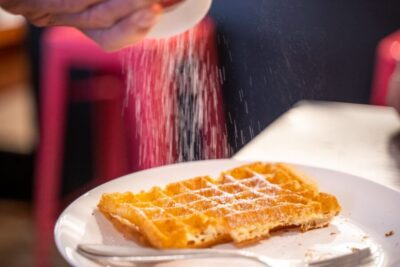
Belgian Waffle-Making Workshop with Beer Tasting
Read our review →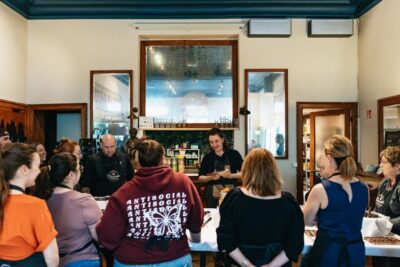
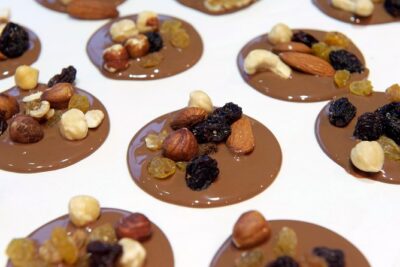
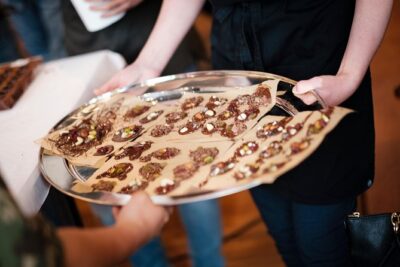
Belgian Praline and Mendiants Chocolate Workshop
Read our review →
Browse the lists this tour appears in