
Reviewed · CHOCOLATE TOURS
Discover authentic Ghent with historian & taste the best chocolate
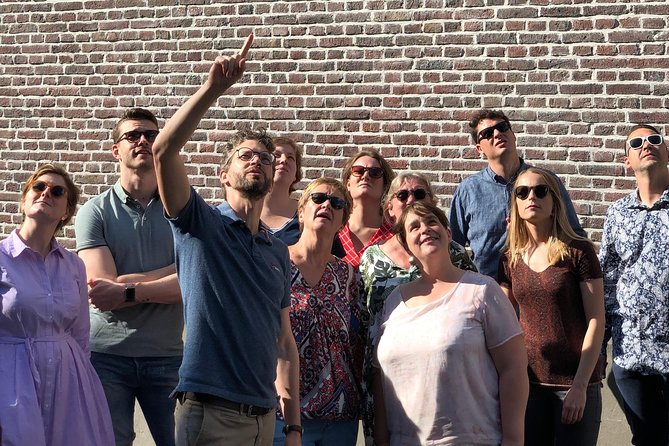
Ghent’s medieval center makes far more sense when someone explains why its churches, guild halls, castle, and riverfront sit where they do. This two-hour walk with historian and teacher Wim connects the city’s big sights with stories about trade, rebellion, religion, and the curious nickname noose bearers.
I like the small group limit of 15, which should make it easier to hear and ask questions. I also like the route itself: it links the major center sights without wasting time on long transfers, then finishes at the beautiful Graslei and Korenlei waterfront with a chocolate tasting along the way.
The main catch is the chocolate. This is a history walk with a chocolate stop, not a two-hour tasting tour. If you want repeated samples and a long visit with a chocolatier, you may find the food portion brief.
Key things to know before booking
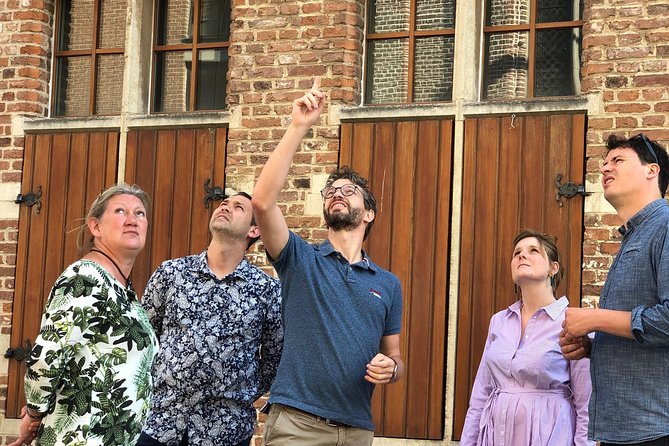
- Historian-led storytelling: Wim brings a teacher’s grasp of Ghent’s political, religious, economic, and cultural past.
- A compact central route: The walk covers Sint-Baafsplein, St. Bavo’s Cathedral, the Town Hall, Korenmarkt, Gravensteen, and the medieval harbor.
- Chocolate is a supporting feature: You get a Belgian chocolate experience, but the main subject is Ghent itself.
- A group of no more than 15: The size suits people who prefer a personal walking tour over a large crowd.
- English-language tour: The experience is offered in English, with the meeting point at the white statue on Sint-Baafsplein.
- Finish at Saint Michael’s Bridge: The endpoint places you beside one of Ghent’s best-known views, near the Graslei and Korenlei.
Why this two-hour Ghent walk works
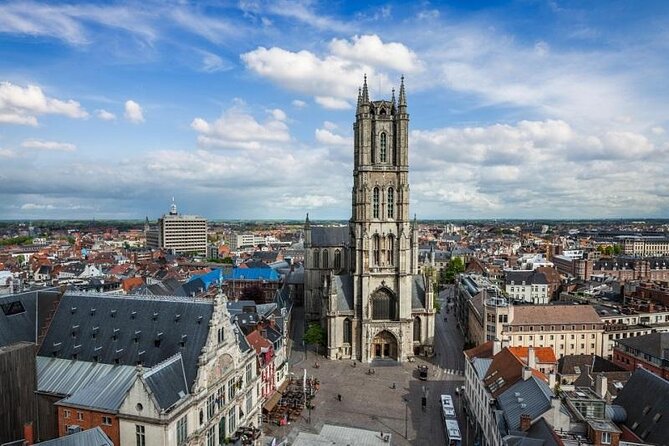
The strength of this tour is its order. You begin at Sint-Baafsplein, where several layers of Ghent meet in one place, then move through the old center toward the river. The route does not treat each sight as an isolated photo stop. It shows how power, trade, worship, defense, and civic pride shaped the city.
That matters in Ghent. The buildings are handsome enough to occupy you, but without context, it is easy to see only a collection of ornate façades. Wim’s approach gives you a framework for understanding them. His background as a historian and teacher is especially useful for people who want more than names and dates.
The pace is also sensible. Many stops last only five minutes, while the opening introduction takes about 20 minutes and the cathedral area receives about ten. You get a broad orientation rather than an exhaustive visit inside every building.
The tour is listed at $42.05 per person. That is a fair price if you want an English-speaking guide, a tightly planned route, historical explanation, and a chocolate stop in one package. It is less appealing if you mainly want a long food tasting or prefer to explore independently with a guidebook.
More Chocolate Tours in Ghent
- Ghent: Belgian Chocolate Walking Tour with Tastings
★ 4.9 · 259 reviews - Ghent: Belgian Waffle-Making Workshop with Beer Tasting
★ 4.8 · 256 reviews - Ghent: Famous Belgian Chocolate Walking Tour with Tastings
★ 5.0 · 131 reviews
Starting at Sint-Baafsplein: Ghent in one square
Meet at the white statue in the middle of Sint-Baafsplein. This is a useful starting point because the square lets Wim introduce several sides of Ghent at once.
The opening discussion covers the city’s economic, political, cultural, and religious story. You are not simply told that Ghent was important. You begin to see how its wealth, church power, civic government, and proud local identity were tied together.
Allow yourself to settle in here. The first 20 minutes are the longest single stop, and they set up much of what follows. If you arrive early, you can get your bearings around the square before the walk begins.
St. Bavo’s Cathedral and the Van Eyck connection
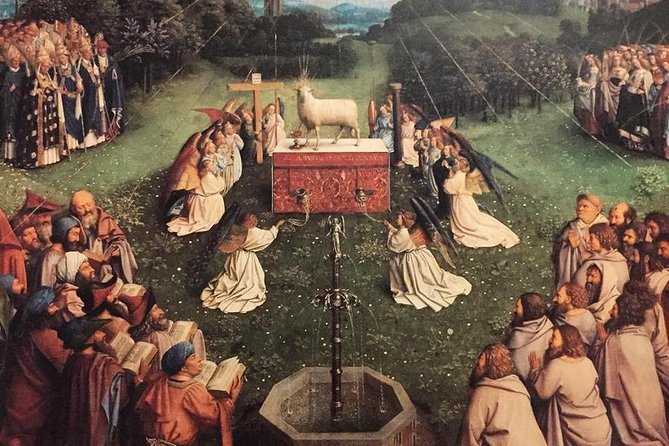
The group then walks around St. Bavo’s Cathedral, focusing on the building’s development and its art treasures. The stop lasts about ten minutes, so expect an exterior discussion and an introduction to the cathedral’s artistic importance rather than a full interior visit.
From there, the route reaches Maaseikplein, where the Van Eyck brothers enter the story. The stop is short, about five minutes, and centers on an image of the brothers. It is a quick pause, but it adds an important artistic thread to the tour.
This section suits you if you like seeing art in its city setting. Ghent’s cultural story is not separated from its streets and public spaces. The guide uses the places around you to explain why certain figures and artworks matter.
The Castle of Gerald the Devil and the Scheldt
At Geeraard de Duivelsteen, also called the Castle of Gerald the Devil, the story turns toward the Scheldt and the people associated with Ghent’s darker past. Vikings and Geeraard De Duivel appear in the tale.
The stop lasts only about five minutes, so do not expect access to a full castle visit. Its value is the story attached to the building and its position near the river. It gives the walk a touch of drama before the route moves back into the civic center.
You will find this kind of short stop throughout the tour. Wim uses a building as a prompt for a compact historical story, then keeps you moving. That works well for a first look at Ghent, though people who prefer long visits at fewer sights may want more time at individual locations.
Other chocolate shops and tastings in Ghent:
- A Taste of Ghent: Beer & Chocolate with storytelling by a local
★ 5.0 · 77 reviews - The Waffles ‘n Beer Workshop in Ghent Centre
★ 5.0 · 67 reviews - Ghent: Guided City Tour with Chocolate Tastings
★ 4.8 · 36 reviews - Charlie’s Private Chocolate Tour (Ghent)
★ 5.0 · 34 reviews
Hoogpoort and the long life of Ghent’s buildings
On Hoogpoort, the focus shifts to ancient buildings dating from the 13th century. This is one of the moments when the city’s age becomes practical rather than abstract. You are looking at structures that have survived across many generations, alongside streets still used as part of the modern center.
The stop takes about five minutes. The guide’s role here is to help you notice details you might otherwise pass without understanding. Look up as you walk, since the point is not just to reach the next major monument but to read the older fabric of the street.
Ghent Town Hall and the noose-bearer story
The Town Hall is a particularly useful stop because its construction stretched across centuries. The building’s mixed appearance is tied to its long building history, and the tour connects that history to Emperor Charles V.
Ghent’s revolt against Charles V is also linked to the city’s nickname, noose bearers. The story gives local identity a memorable human edge. Instead of hearing a dry account of civic resistance, you get a tale about how a city remembers conflict with a powerful ruler.
This is one of the tour’s better examples of history made easy to retain. You may forget a date, but the image behind the nickname is much harder to lose. The stop lasts about ten minutes, giving it more time than several of the smaller street-side pauses.
The Stadshal, a modern building with a nickname
The Stadshal is described as Ghent’s most contested building, and the guide asks you to consider its nickname. This creates a useful contrast with the older structures around it.
Ghent is not only a preserved medieval center. It is also a living city that continues to argue about new architecture and public space. The Stadshal gives Wim a chance to show how local identity is still being shaped, rather than ending the story in the Middle Ages.
The stop takes about five minutes. You will not get a long architectural lecture, but you will get a clear prompt for looking at the building with more curiosity.
Korenmarkt and the marks left by 800 years
At Korenmarkt, the focus returns to the old commercial center. The houses here carry about 800 years of history, and some have mysterious inscriptions.
This is an appealing stop for anyone who enjoys small clues. In a city center filled with grand buildings, an inscription can pull your attention toward a detail at eye level. You are encouraged to inspect the façades instead of treating the square as a simple route between attractions.
Korenmarkt is also a practical point in the walk. It helps connect the civic center to the old trade areas and the riverfront that comes later. The stop lasts five minutes, so keep moving with the group and save any longer independent look for after the tour.
Het Groot Vleeshuis and medieval food control
At Het Groot Vleeshuis, the guide explains how Ghent dealt with meat quality before refrigeration. Butchers worked together in one building, creating a way to control the sale of meat in a period when storage was difficult.
This stop is valuable because it connects a familiar modern concern, food safety, with medieval city organization. You see that old buildings were not merely decorative. They served practical systems that helped a large city function.
The explanation takes about five minutes. It is a short but memorable example of how guilds and public rules shaped daily life.
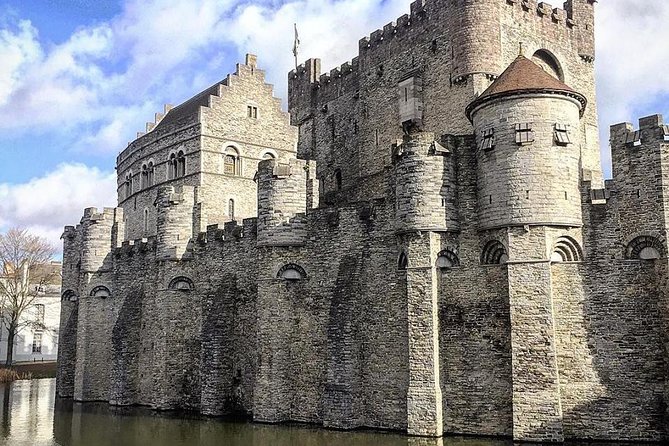
Gravensteen, a castle with a message
Gravensteen is one of the route’s major visual highlights. The Count of Flanders built the castle to show strength to the people of Ghent. That purpose gives the fortress more meaning than simply being an impressive stone building.
The castle’s position and design point to power, control, and the uneasy relationship between rulers and the city. The stop is about five minutes, so this tour does not replace a separate visit inside Gravensteen. If you want to explore the rooms, defenses, and exhibits at length, plan another visit on your own.
Still, seeing Gravensteen as part of the city’s political story improves the experience. You understand why a fortress was placed there and what message it was meant to send.
St. Veerleplein and the odd creatures of Ghent
At St. Veerleplein, the group searches for Neptune, seahorses, and strange dolphins. This is a lighter stop, but it keeps the walk from becoming a march through solemn history.
Public sculpture and decorative details often reward a slower eye. Wim directs your attention to figures that might otherwise blend into the architecture. The stop lasts about five minutes and gives the route a bit of visual play before its final, most scenic section.
Graslei and Korenlei: the best finish
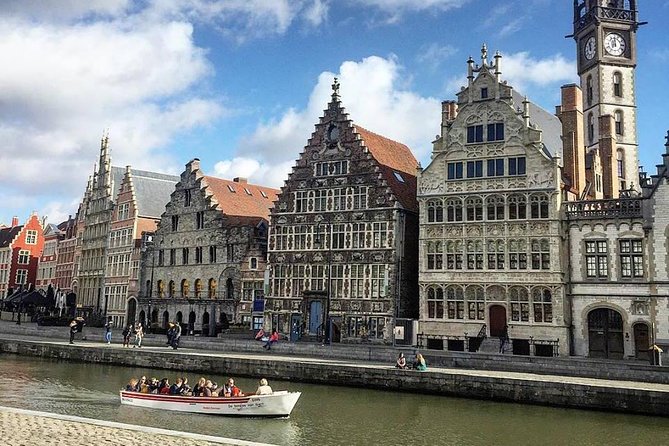
The tour ends at Saint Michael’s Bridge, after reaching Graslei and Korenlei. For many people, this will be the strongest part of the route.
The two quays form Ghent’s famous old harbor area. Skippers worked here for centuries, and the waterfront also offered places for people to meet and seek entertainment. The setting brings together the themes introduced earlier: trade, work, movement, civic wealth, and public life.
Saint Michael’s Bridge is also a useful endpoint because it gives you a clear view of the riverfront and nearby historic buildings. You can continue exploring from here, return toward the center, or stop for photographs without needing to find your way back to the starting point.
What the chocolate stop is really like
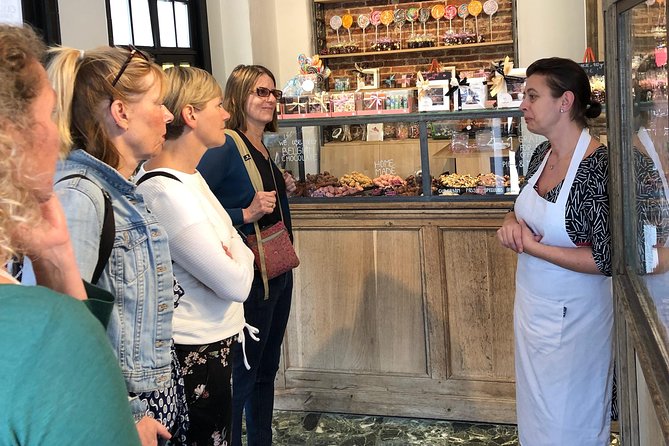
The chocolate element adds a pleasant Belgian flavor, but you should set your expectations correctly. The experience includes a stop with a chocolatier or chocolate tasting, yet the available details do not promise a long series of samples or a full workshop.
That balance is important. One person could reasonably wish for more chocolate, while another could appreciate the small refresher in the middle of a history walk. If chocolate is your main reason for booking, this may feel too brief. If you want a strong introduction to Ghent with a sweet pause, it fits the tour well.
The chocolate also breaks up the historical material. Two hours of dates, rulers, churches, and civic disputes can feel dense. A tasting gives you a change of pace before the walk continues.
Wim’s guiding style and the group size
Wim is the named guide, and his background as a historian and teacher shapes the experience. The strongest feature of his approach is his command of Ghent’s story and his enthusiasm for the city. The walk is designed to be informative without losing its human stories.
His delivery is described as friendly, professional, passionate, and natural. That combination matters on a walking tour. You want enough structure to follow the story, but not so much formality that the city feels like a classroom.
The maximum group size is 15. That is small enough for a more personal feel, especially at street corners and busy squares. You should still expect a real group walk, not a private tour. The tour is offered in English, and the confirmation is provided when you book.
The starting point is Sint-Baafsplein in Ghent. The endpoint is Saint Michael’s Bridge on Sint-Michielshelling. The route is near public transportation, and most people can take part. Service animals are allowed.
Who should book this experience
I would choose this tour if you are visiting Ghent for the first time and want a clear two-hour introduction before exploring on your own. It is also a good fit if you like architecture but want the politics, trade, and daily life behind the façades.
You will get the most from it if you enjoy stories and ask questions. The short stops work best for people who want a broad view of the city rather than a detailed interior visit at every monument.
Families and mixed-age groups may also appreciate the variety. Castles, villains, emperors, strange dolphins, food control, and chocolate give the guide several ways to hold your attention.
I would hesitate if your main goal is a dedicated chocolate tour, a deep visit inside St. Bavo’s Cathedral, or a full Gravensteen admission. Those are not the focus here. The tour provides outside context and city orientation, then leaves room for you to return to the sights that catch your interest.
Free cancellation is available up to 24 hours before the start time for a full refund. Changes or cancellations inside that 24-hour window are not accepted for a refund. The experience requires a minimum number of participants, so a cancellation by the operator for that reason leads to another date or experience, or a full refund.
Should you book the Ghent history and chocolate walk?
Book it if you want a well-paced introduction to central Ghent led by someone who knows the city from the inside. The route covers a lot in two hours, and the best value comes from the connections between the sights: trade leads to wealth, wealth leads to civic power, civic power leads to conflict, and the buildings preserve the evidence.
The chocolate is a bonus, not the headline. For a first visit, that is a sensible balance. You get a taste of Belgian chocolate, a strong overview of Ghent, and a finish at the Graslei and Korenlei waterfront.
Skip it if you want a long tasting session or extensive time inside each major monument. For everyone else, the $42.05 price is reasonable for a small English-language group, a historian’s explanation, and a route that helps you see Ghent as a living city rather than a row of pretty façades.
FAQ
How long does the Ghent tour last?
The tour lasts approximately two hours.
Where does the tour begin?
It begins at Sint-Baafsplein in Ghent, where you meet in front of the white statue in the middle of the square.
Where does the tour end?
The tour ends at Saint Michael’s Bridge on Sint-Michielshelling.
Is the tour offered in English?
Yes. The experience is offered in English.
Who leads the tour?
The guide is Wim, a historian and teacher who leads the walk through Ghent.
Is chocolate included?
Yes. The tour includes a chocolate stop or tasting with a chocolatier, though the main focus is Ghent’s history and sights.
How large is the group?
The tour has a maximum of 15 participants.
Can I cancel for a full refund?
Yes. You can cancel at least 24 hours before the start time for a full refund. Cancellations or changes made less than 24 hours before the start time are not refunded.
Just added in Ghent
- Historic Highlights, by a local guide★ 5.0 · 9 reviews
- Discover Ghent while playing! Escape game – The Walter case★ 4.5 · 4 reviews
- Walking Food Tour in Ghent★ 5.0 · 13 reviews
- Discover Ghent while playing! Escape game – The alchemist★ 4.0 · 4 reviews
- Discover Mons while playing! Escape game – The alchemist★ 4.0 · 5 reviews
- Ghent Walking Tour with Audioguide on Your Smartphone★ 4.5 · 13 reviews
- e-Scavenger hunt Ostend: Explore the city at your own pace★ 4.5 · 10 reviews
- Private tour in historic Ghent★ 5.0 · 6 reviews
Chocolate Tours, compared.
Choco-Story Brussels: Chocolate Museum Entrance with Tasting
Read our review →
Hungry Mary’s Famous Beer and Chocolate Tour in Brussels
Read our review →
Belgian Chocolate Making Workshop with Tastings
Read our review →
Choco-Story Chocolate Museum Guided Tour w/Tastings
Read our review →
2.5-Hour Chocolate Museum Visit with Workshop
Read our review →
Historical Walking Tour with Chocolate & Waffle Tasting
Read our review →
Belgian Waffle-Making Workshop with Beer Tasting
Read our review →
Browse the lists this tour appears in